Pre-order
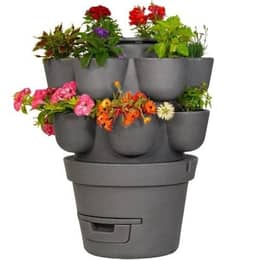
Wormery WORMgarden | 2 levels
From 1 to 3 planters with 6 growing pots per level
255,23 €
Fast and odourless, compost worms eat your waste and turn it into worm casting for your plants.

From 2 to 4 trays with optional planter.

Up to 18 growing zones with central wormery.

Terracotta with flower pot.

From 2 to 4 shelves with a low shelf.

Urbalive, Worm Cafe, WORMcube, Tiny Worm, WORMwood, ...

Turn your planters into a Wormery: WORMacotta, In-Ground.
From the kitchen to the garden, your compost becomes simple, quick, and effective for everyone.
Live animals (worms and bait) and products to feed and look after pets and farm animals.

Compost worms Eisenia for your wormery or worm compost bin.

Ultra-fresh worms: Compost, Dendros and Canadian from 100 g up to 1 kg.

Natural solutions dedicated to the well-being of horses, ponies, and donkeys.

Optimise the health and performance of your farm.

Mealworms, natural and nutritious supplements.
Enhance your home with our decorative items and care for your house in a natural and sustainable way.
Tend your garden in an eco-friendly and nature-conscious way, for healthy and lasting plantings.
EM-based products created to enrich soils, protect plants, support animal health, and make everyday well-being and maintenance easier.

Contains a blend of 80 families of beneficial microorganisms.

Revitalise, purify and improve water quality in all your applications.

Stimulate soil microbial activity and plant growth.

Cleanse and maintain your environment naturally.

For the well-being and health of pets, livestock, and horses.

Enrich your body or dietary routines with essential enzymes.
Vermicomposting produces one of the most powerful natural fertilisers there is — so why not deliver it straight to where it's needed? Several of our models are designed for exactly that, from a simple accessory that transforms your existing wormery to a product built entirely around combining composting and growing.
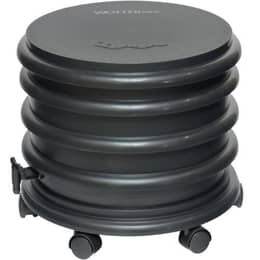
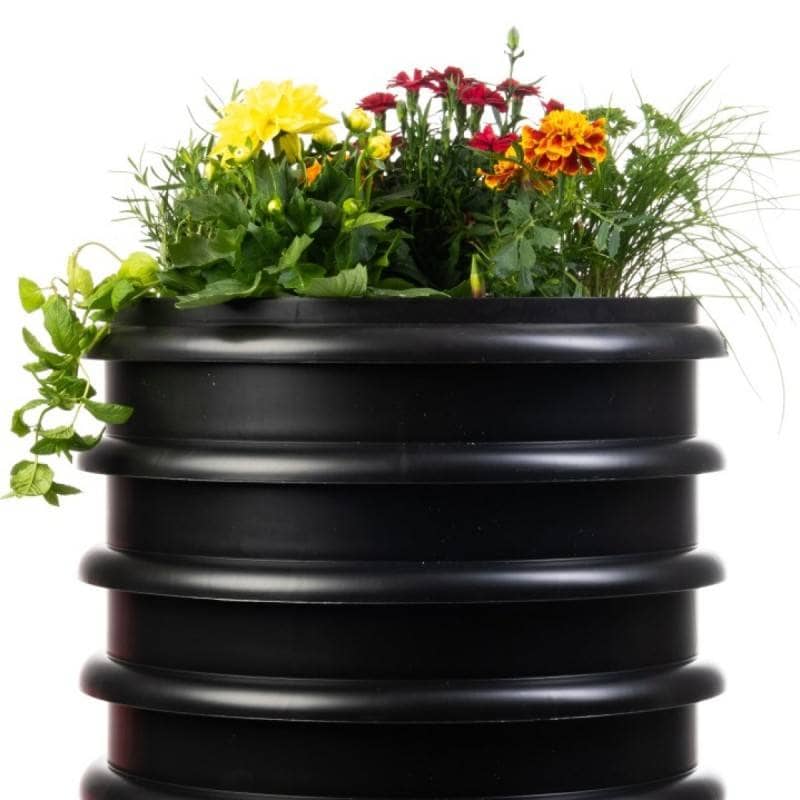 On the WORMbox, simply replace the lid with the WORMbox planter: a shallower tray (about 8 cm) that you fill with potting compost — with no chemical or organic fertiliser — before planting. Micro-perforated, it lets your worms come up and wander through the soil, depositing vermicompost directly at the base of your herbs, cacti or flowers. With the planter in place, the hemp mat is no longer needed, as the roots themselves absorb any excess moisture. Designed for indoor use, it is easy to fit, with no tools required.
Willy's tipOpt for herbs (basil, parsley, chives...) if your wormery is in the kitchen, or cacti and succulents, which cope very well with this rich substrate and need little water. The planter is fairly shallow, so it is best to avoid vegetables with deep, hungry roots, and to water sparingly, since the material underneath is already moist thanks to your worms.
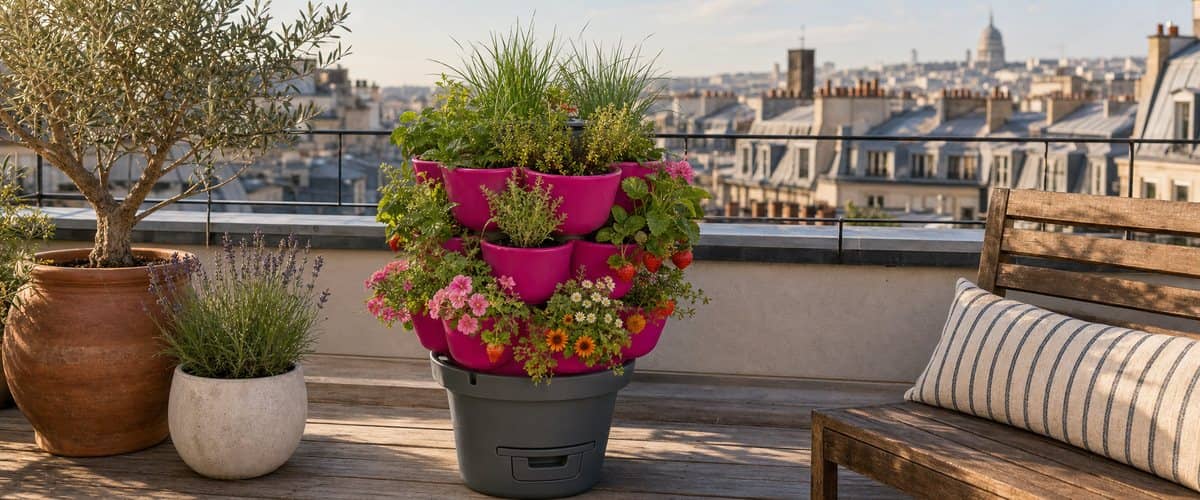
The WORMgarden doesn't just add a planter to a wormery: it's the other way round, a vertical vegetable garden built around a large central composting area, based on the keyhole garden principle. Each tier has 6 growing pots arranged around this area, and you can stack up to 3 additional planters for up to 18 growing zones. Canes can pass through the perforated planters to support your tomatoes or other climbing plants.
Your worms, living in the central area, turn your kitchen scraps into compost that feeds the surrounding plants directly. A bottom drawer lets you harvest the vermicompost, and a tap collects excess irrigation water or rainwater (up to 10 litres) — handy so that nothing goes to waste. Modular, it works just as well outdoors (terrace, garden) as indoors.
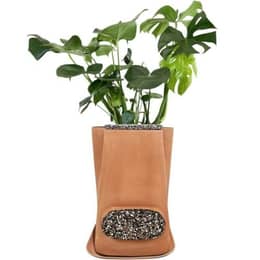
Another, even more direct approach: the Transfarmers is a terracotta flower pot with a built-in wormery, handmade in Castelnaudary. A perforated membrane separates the two compartments: you add your peelings on one side, plant on the other, and your worms move freely between the two to feed your plants directly.
It works on a continuous-flow basis: food goes in at the top, and vermicompost is harvested from the bottom by simply opening a stopper, as with conventional tray models — with the first harvest after around 6 months. With its 17-litre capacity and organic terracotta shape, each piece is unique and fits in just as well indoors as in a sheltered outdoor spot.
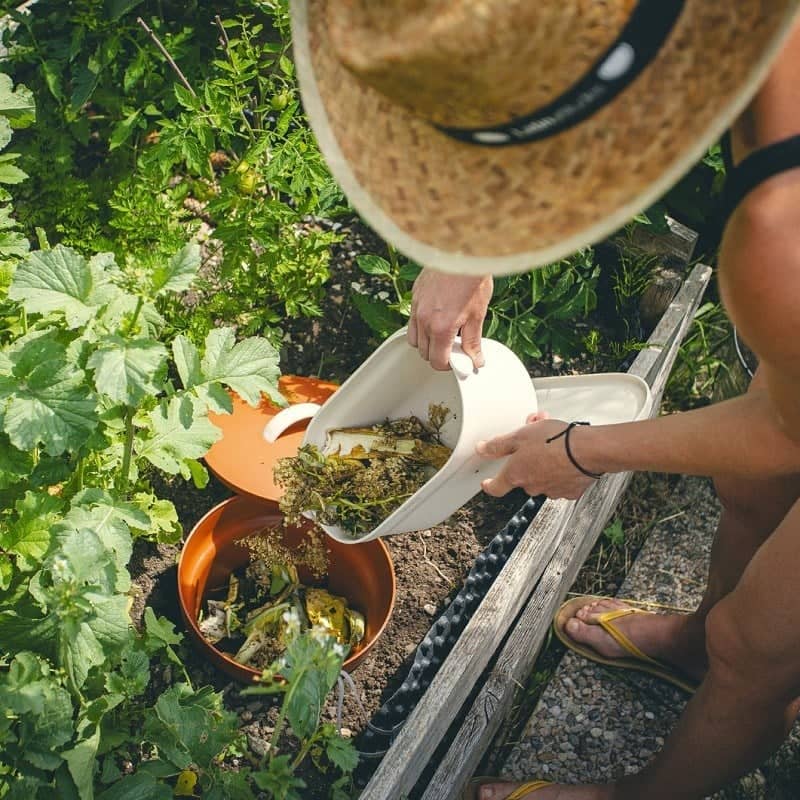 Yet another principle: instead of adding a planter to your wormery, you bury a small vermicomposting tube directly in an existing planter, flower pot or vegetable garden. The WORMacotta and the In-Ground both work this way: push the tube into the soil until the last holes disappear (to stop insects getting in), fill it with finely chopped peelings, then add your worms. They will come to feed on the scraps every day and naturally colonise the surrounding soil, improving its quality day after day.
The main difference lies in the material: the WORMacotta, designed by us, is made entirely of natural terracotta — no plastic in contact with your plants — and comes in two sizes depending on the volume of your planter (1.1 L for 15 to 30 L of potting compost, 6.5 L for over 100 L); remember to protect its lid from frost in winter. The In-Ground, made from recycled plastic, offers a larger capacity (12 litres) in a single size.
An accessory that replaces the lid, a vertical vegetable garden designed around composting, a 2-in-1 flower pot, or a simple tube buried in an existing planter: combining a wormery and a planter is one of the most direct ways to make the most of your home-made fertiliser, whichever model you choose.