On sale
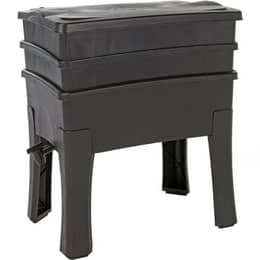
Wormery Magic Worm | 2 plates
2 or 3 trays, 14 litres usable per tray
73,72 €
-20%
Fast and odourless, compost worms eat your waste and turn it into worm casting for your plants.

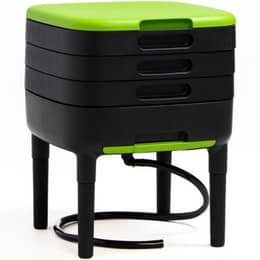
From 2 to 4 trays with optional planter.

Up to 18 growing zones with central wormery.

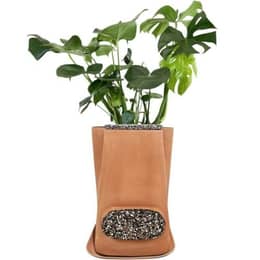
Terracotta with flower pot.

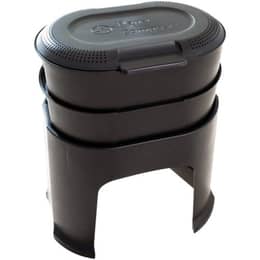
From 2 to 4 shelves with a low shelf.

Urbalive, Worm Cafe, WORMcube, Tiny Worm, WORMwood, ...

Turn your planters into a Wormery: WORMacotta, In-Ground.
From the kitchen to the garden, your compost becomes simple, quick, and effective for everyone.
Live animals (worms and bait) and products to feed and look after pets and farm animals.

Compost worms Eisenia for your wormery or worm compost bin.

Ultra-fresh worms: Compost, Dendros and Canadian from 100 g up to 1 kg.

Natural solutions dedicated to the well-being of horses, ponies, and donkeys.

Optimise the health and performance of your farm.

Mealworms, natural and nutritious supplements.
Enhance your home with our decorative items and care for your house in a natural and sustainable way.
Tend your garden in an eco-friendly and nature-conscious way, for healthy and lasting plantings.
EM-based products created to enrich soils, protect plants, support animal health, and make everyday well-being and maintenance easier.

Contains a blend of 80 families of beneficial microorganisms.

Revitalise, purify and improve water quality in all your applications.

Stimulate soil microbial activity and plant growth.

Cleanse and maintain your environment naturally.

For the well-being and health of pets, livestock, and horses.

Enrich your body or dietary routines with essential enzymes.
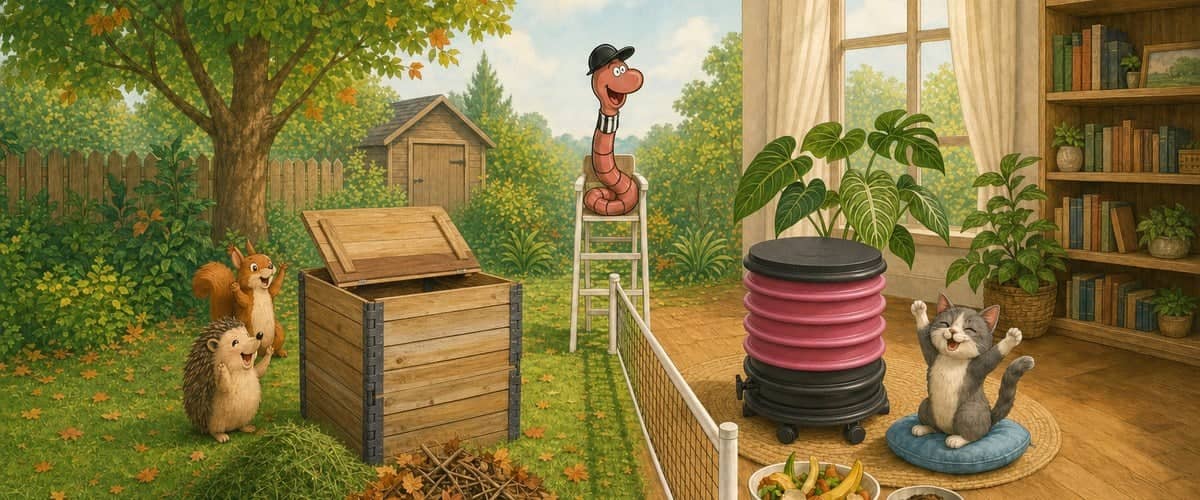
Cutting down on kitchen waste is a great idea, but it quickly runs into a very practical first question: which system should you choose? Garden compost bin or wormery, both methods recycle organic matter, but they don't work in the same way and don't suit the same situations. Here's what you need to make the right choice for your home, your waste and your goals.
Traditional composting involves piling up organic waste outdoors (in a plastic or wooden bin, or in a heap) and letting the micro-organisms, insects and fungi in the soil gradually break it down over several months. It's known as a « hot » process: the fermentation of large volumes of material gives off heat, which speeds up decomposition but requires space and time.
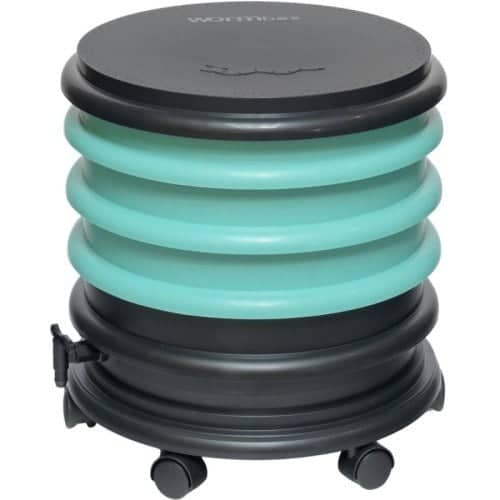 Vermicomposting, on the other hand, relies on compost worms (Eisenia) to digest the waste directly. The process is « cold », with no rise in temperature, which makes it suitable for indoor use — we explain this principle in detail in our guide What is a wormery?
This is often the deciding factor. A garden compost bin needs a dedicated, sheltered outdoor spot in contact with the soil. A wormery, by contrast, fits neatly into a kitchen, utility room, cellar, garage or even onto a balcony: its compact, odour-free design makes it the only realistic option for anyone living in a flat or without a garden.
Garden composting is a slow process: allow several months, sometimes more than a year, before you have mature compost. Vermicomposting is considerably faster, as compost worms digest a large proportion of their body weight in waste every day. The first vermicompost harvests usually come after three to six months — the time it takes for the worms to colonise all the trays. Once your wormery is up to cruising speed, harvesting becomes much more regular: you can then expect to harvest one tray roughly once a month.
Garden compost is the most generous in terms of volume: it takes grass clippings, shredded branches and large quantities of dead leaves — materials that worms digest poorly or not at all. Conversely, the wormery excels with small, regular amounts of kitchen waste (peelings, coffee grounds, filters, eggshells), with a few restrictions that we cover in our guide What do earthworms eat?
Garden compost needs turning regularly so it stays well aerated, and keeping an eye on it is fairly undemanding once the heap is established. A wormery needs more frequent but lighter attention: small, regular feeds, a check on moisture levels, and that's all there is to it.
Key pointsGarden compost processes large volumes slowly; a wormery processes small volumes quickly, without needing a single square metre of ground.
Garden compost produces an organic soil improver, to be spread in fairly large quantities. Vermicomposting produces two fertilisers in one: vermicompost, which is highly concentrated, and compost tea (or leachate), a liquid fertiliser that can be used straight away, diluted, on your plants. Both are particularly rich in micro-organisms that benefit the soil, and vermicompost has a fertilising power around 10 times greater than that of traditional compost: a few handfuls are enough where you would need wheelbarrows of garden compost.

For an urban household with no garden or only limited outdoor space, a wormery is often the only way to stop throwing kitchen waste in the bin. It doesn't smell when it's well balanced, it's easy to tuck away, and it gives you a usable result in just a few months. It's also a wonderful family project: watching the worms, following how they breed and harvesting the fruits of their labour is as educational as it is eco-friendly, especially with children.
Garden composting of course remains well worthwhile for anyone with outdoor space who produces large volumes of green waste (grass clippings, prunings, leaves) as well as kitchen waste — and the two methods are far from incompatible: many households with a garden choose to combine an outdoor compost heap for green waste with a wormery for the kitchen, which is more practical day to day.
Key pointsChoosing between vermicomposting and traditional composting isn't just a question of efficiency: above all, it's about matching the method to your lifestyle.
If vermicomposting suits your situation, head over to our guide How to start your wormery for all the practical details. There you'll also find our range of wormeries, both stacking-tray and continuous-flow models, suited to every set-up, from a studio flat to a house with a garden.