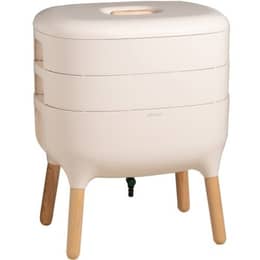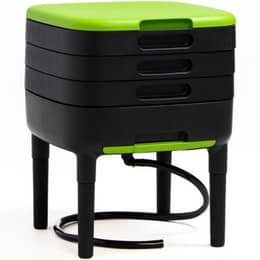
Wormery TinyWorm | 4 plastic feet
With or without wooden or plastic feet, 6 usable litres per tray
71,65 €
Fast and odourless, compost worms eat your waste and turn it into worm casting for your plants.

From 2 to 4 trays with optional planter.

Up to 18 growing zones with central wormery.

Terracotta with flower pot.

From 2 to 4 shelves with a low shelf.

Urbalive, Worm Cafe, WORMcube, Tiny Worm, WORMwood, ...

Turn your planters into a Wormery: WORMacotta, In-Ground.
From the kitchen to the garden, your compost becomes simple, quick, and effective for everyone.
Live animals (worms and bait) and products to feed and look after pets and farm animals.

Compost worms Eisenia for your wormery or worm compost bin.

Ultra-fresh worms: Compost, Dendros and Canadian from 100 g up to 1 kg.

Natural solutions dedicated to the well-being of horses, ponies, and donkeys.

Optimise the health and performance of your farm.

Mealworms, natural and nutritious supplements.
Enhance your home with our decorative items and care for your house in a natural and sustainable way.
Tend your garden in an eco-friendly and nature-conscious way, for healthy and lasting plantings.
EM-based products created to enrich soils, protect plants, support animal health, and make everyday well-being and maintenance easier.

Contains a blend of 80 families of beneficial microorganisms.

Revitalise, purify and improve water quality in all your applications.

Stimulate soil microbial activity and plant growth.

Cleanse and maintain your environment naturally.

For the well-being and health of pets, livestock, and horses.

Enrich your body or dietary routines with essential enzymes.

Traditional composting needs at least a small garden for your heap or bin. A flat wormery, on the other hand, has been designed precisely to do without one: it lets people living in apartment blocks and flats make good use of their organic waste, without having the slightest patch of ground available. Here is where to set it up in your home, whether you live in a flat or a house, and the precautions specific to each location.
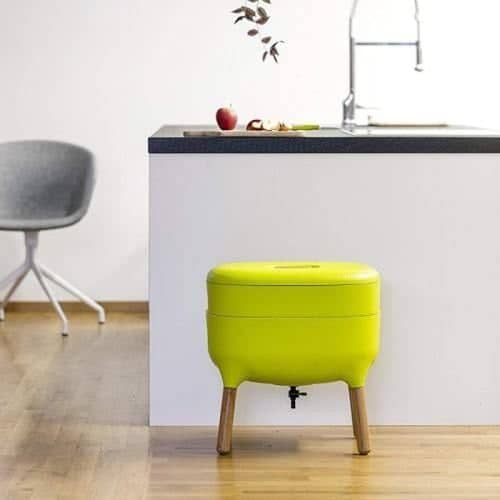 In a flat, the wormery naturally finds its place indoors: kitchen, utility room, cellar, garage, stairwell, hallway or even the living room. The kitchen is often the most practical spot, since that is where most of your organic waste is produced — no need to cross the whole flat with every bit of peel.
There is only one real precaution indoors: avoid placing it in a completely closed cupboard with no ventilation, especially in hot weather. Without air circulation, unpleasant smells can quickly develop. We go through all the location criteria — temperature, ventilation — in our guide How to start your wormery
If you are looking for a compact model suited to a small kitchen or a studio flat, head to our range of tray wormeries
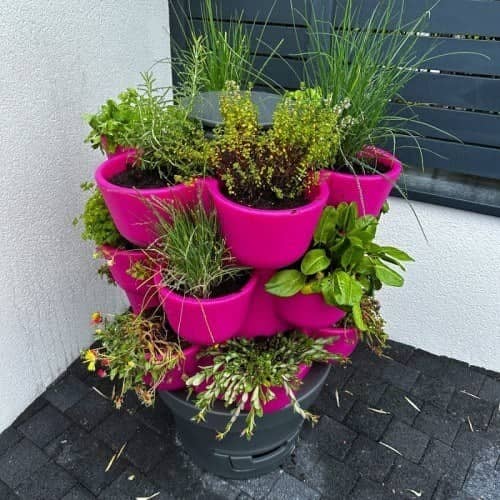 Are you lucky enough to have a balcony, a terrace or a garden? You can certainly set up your wormery there, provided you follow two simple rules: keep it sheltered from the rain, so your worms don't drown, and avoid full sun in summer. If the bedding dries out, moisten it occasionally by spraying a little water, particularly above 35 °C.
This is in fact a set-up many city dwellers enjoy: pairing the wormery with a few planters on the balcony means you can use the vermicompost right where it is made, without having to carry it anywhere. We explain how to protect it against temperature swings, useful both indoors and outdoors, in our guide on protecting against cold and heat.
Set up outside, your wormery attracts a few more little creatures than when it stays indoors — woodlice, springtails and other decomposers that are simply doing their job in the bin's ecosystem. Nothing to worry about: we help you identify what you might find there in our guide on pests. This is one of the reasons most users prefer to keep it indoors, where it is easier to keep an eye on day to day.
 It is the question almost every future user asks before getting started, especially for an indoor set-up. A well-balanced wormery does not smell bad: at most you will notice a faint woodland scent, pleasant and subtle. That is exactly what makes it suitable for indoor use, including in a kitchen or living room. If a stronger smell appears, it is usually the sign of an imbalance that is easy to correct — too much waste at once, not enough carbon-rich material — which we explain in our guide on smell problems and their solutions.
Did you know?A well-maintained wormery does not smell like rubbish: at worst, a faint woodland scent, barely noticeable.
Whether you live in a flat without the smallest patch of ground or in a house with a garden, the wormery has its place: indoors as a priority, for easy monitoring with no nasty surprises, or outdoors on a balcony or terrace, provided you protect it from rain and full sun. Either way, not having a garden will never be an obstacle.