Willy the worm soft toy
The mascot for kids and adults in a 73 cm long format!
15,28 €
Fast and odourless, compost worms eat your waste and turn it into worm casting for your plants.

From 2 to 4 trays with optional planter.

Up to 18 growing zones with central wormery.

Terracotta with flower pot.

From 2 to 4 shelves with a low shelf.

Urbalive, Worm Cafe, WORMcube, Tiny Worm, WORMwood, ...

Turn your planters into a Wormery: WORMacotta, In-Ground.
From the kitchen to the garden, your compost becomes simple, quick, and effective for everyone.
Live animals (worms and bait) and products to feed and look after pets and farm animals.

Compost worms Eisenia for your wormery or worm compost bin.

Ultra-fresh worms: Compost, Dendros and Canadian from 100 g up to 1 kg.

Natural solutions dedicated to the well-being of horses, ponies, and donkeys.

Optimise the health and performance of your farm.

Mealworms, natural and nutritious supplements.
Enhance your home with our decorative items and care for your house in a natural and sustainable way.
Tend your garden in an eco-friendly and nature-conscious way, for healthy and lasting plantings.
EM-based products created to enrich soils, protect plants, support animal health, and make everyday well-being and maintenance easier.

Contains a blend of 80 families of beneficial microorganisms.

Revitalise, purify and improve water quality in all your applications.

Stimulate soil microbial activity and plant growth.

Cleanse and maintain your environment naturally.

For the well-being and health of pets, livestock, and horses.

Enrich your body or dietary routines with essential enzymes.
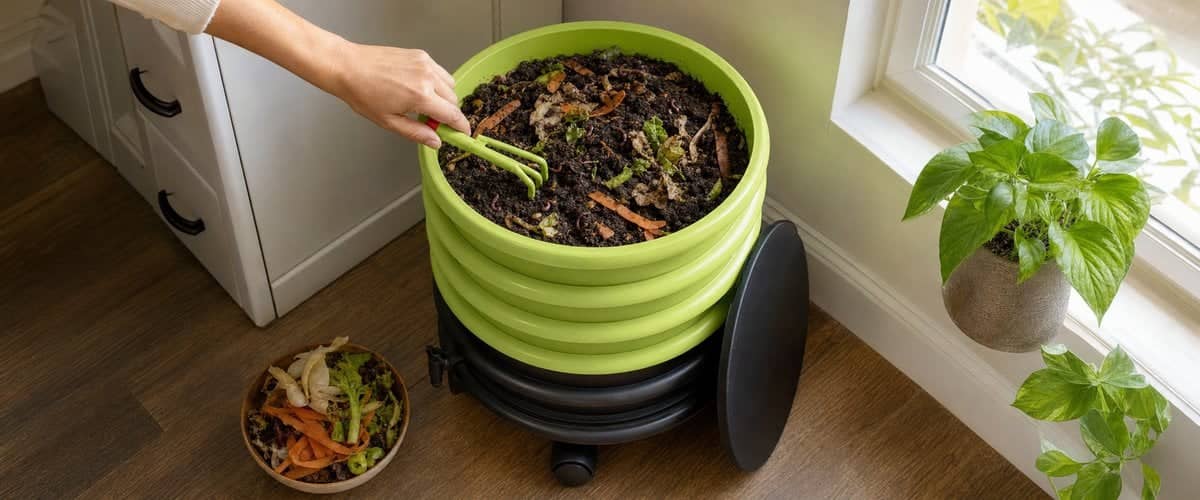
Good news for beginners: unlike a garden compost heap, which needs turning regularly with a fork, a wormery doesn't need to be stirred as a matter of routine. That doesn't mean aeration is unimportant — quite the opposite. Here's what you need to know to do the right things, without overdoing it.
The breakdown of your waste begins even before the worms come into play: it is first bacteria and fungi, naturally present on organic matter, that start the decomposition process. These micro-organisms need oxygen to work efficiently — this is known as aerobic decomposition. Good air circulation in your wormery is therefore a basic requirement for quality compost, even before we talk about the worms themselves.
This is where a wormery really differs from a traditional compost heap. Your worms don't stay still: they move constantly through the material in search of fresh food, climb from one tray to the next through the holes that connect them, and dig small tunnels near the surface. This constant movement mixes and aerates the material by itself, rather like burrowing worms do in natural soil.
On top of this comes the design of your wormery itself: each tray leaves a slight gap where it fits onto the one below, and it is through this gap that air flows naturally from one level to the next — all designed so that you don't have to step in. In the vast majority of cases, these mechanisms are more than enough to maintain good aeration, without any need for manual stirring.
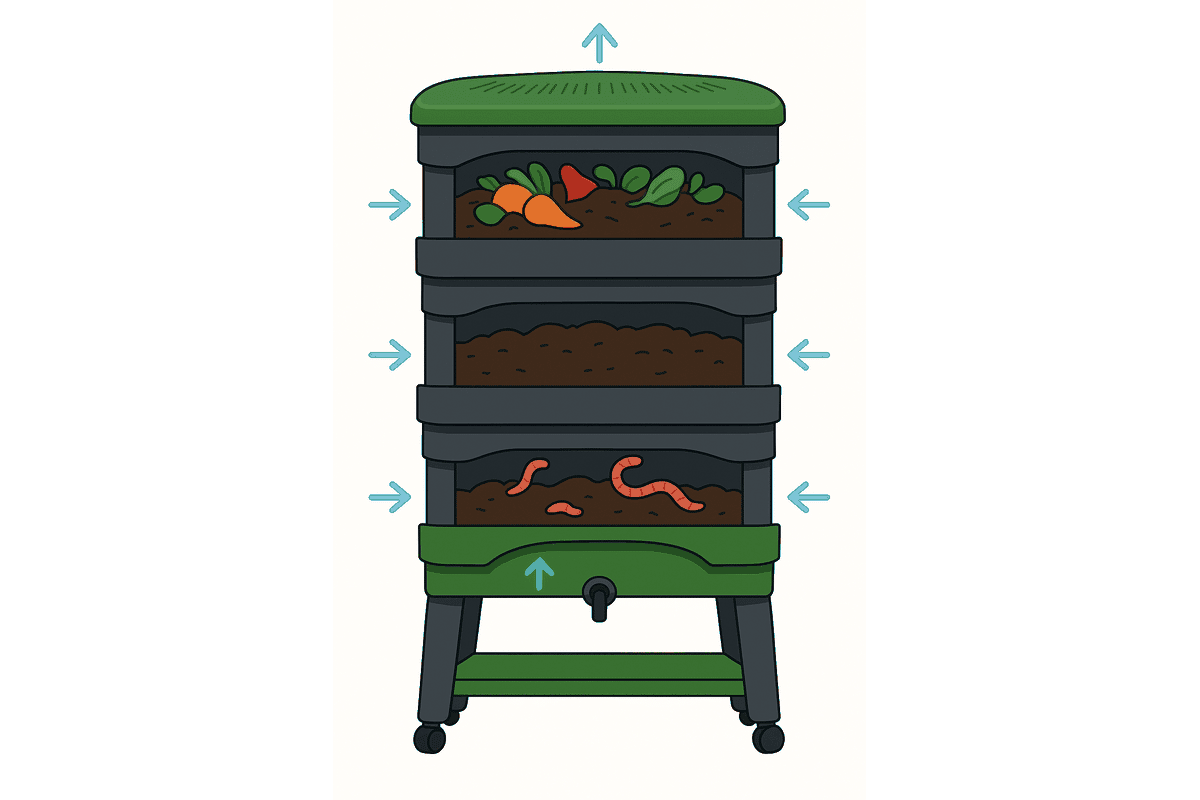
Key pointsBy moving naturally from one tray to another in search of fresh food, your worms mix and aerate the material themselves — that's the whole principle of the tray wormery.
 There are nevertheless situations where light stirring helps. The most useful everyday habit is simply to work your new scraps gently into the top layer rather than leaving them as they are on top: this speeds up how quickly the worms get to them and makes the wormery less attractive to fruit flies, which are drawn to fresh scraps left on the surface.
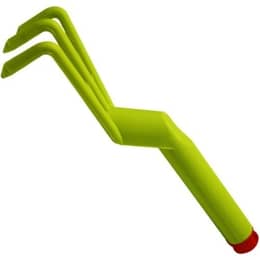
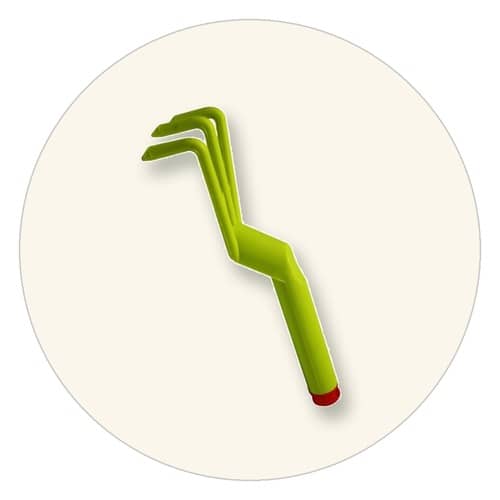
If you are still worried about a lack of air — after a period of heavy feeding, for example — you can safely give the contents of the active tray a gentle stir. Use a tool that won't harm your worms: a wooden spoon, a small hand trowel, or our Mini Mixing Rake, designed for exactly this job. You can also do it with your bare hands, or with rubber gloves if you'd rather not touch the compost directly. Light, occasional stirring of this kind won't disturb your worms in the slightest.
Too much moisture or too many fresh scraps can cause the material to compact and block the flow of air. Decomposition then becomes anaerobic — that is, it takes place without oxygen — which encourages unpleasant smells. A few signs should alert you: a smell that lingers even though the wormery is otherwise well looked after, material that stays compact and soggy to the touch, or scraps that no longer seem to be breaking down normally.
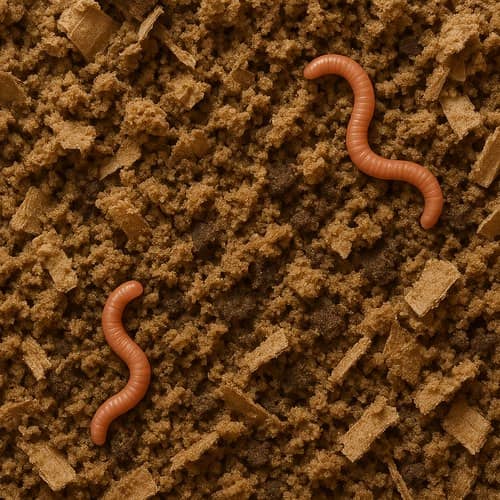 Well aerated: light and crumbly
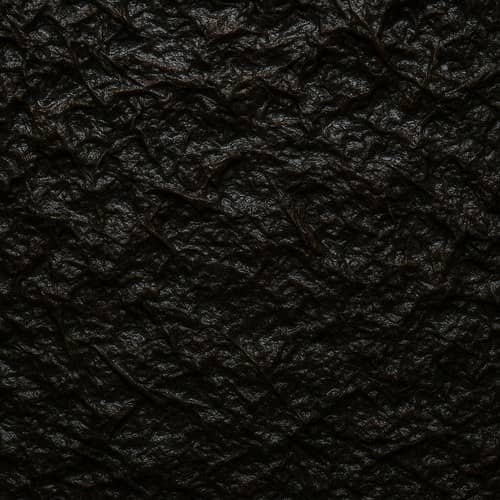 Compacted and soggy: a warning sign
In this case, a more thorough stir of the active tray helps to let air back in. Also remember to cut back on feeding for a while until things rebalance — we cover this in detail in our guide What do worms eat? — and to increase the proportion of carbon-rich materials (cardboard, paper, straw…), which give the material structure and prevent exactly this kind of compaction.
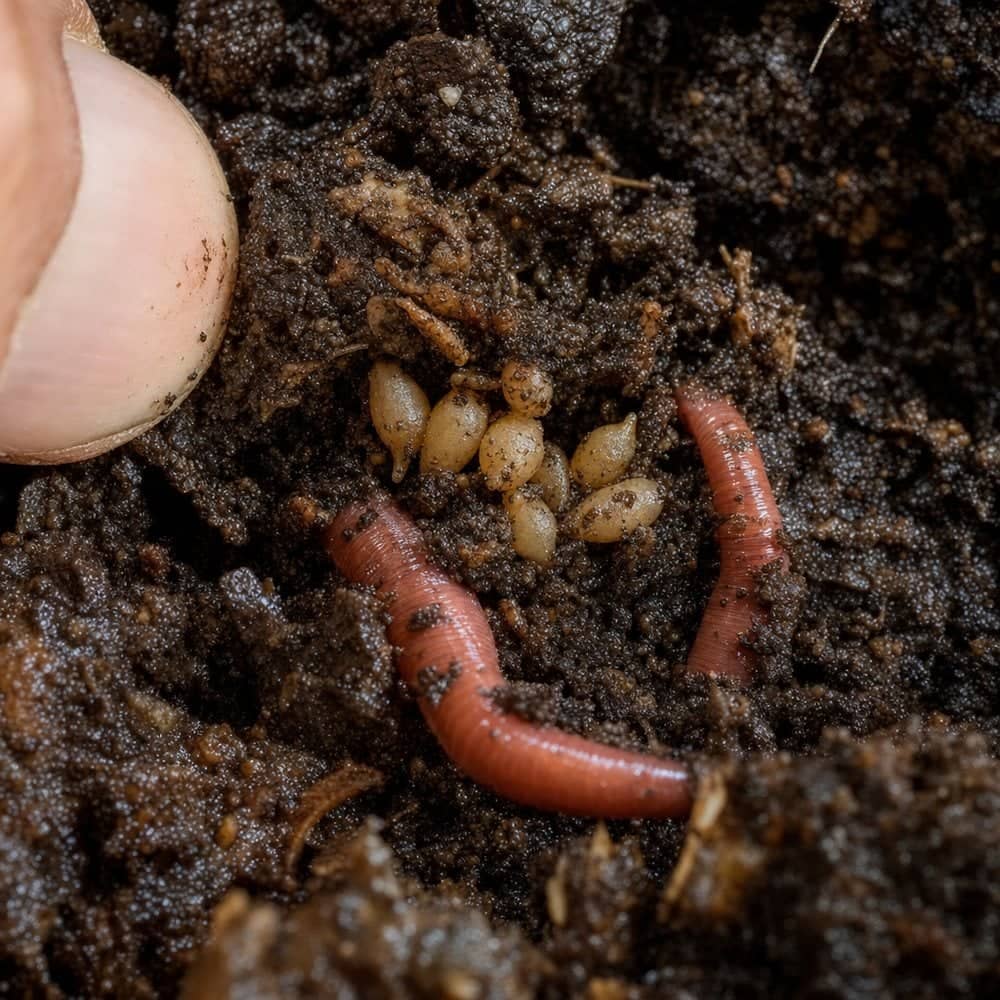 On the other hand, there's no need to turn your wormery deeply on a regular or routine basis: this is useful as an occasional fix, but it disturbs your worms more than simple surface stirring and risks damaging the cocoons laid in the material. Moderation is key: a light, occasional stir rather than deep turning at fixed intervals.
In fact, if you already follow the weekly routine described in our guide What do worms eat? — gently stirring the active tray when you add your acidity regulator — you are already, without realising it, providing the aeration your wormery needs in the vast majority of cases.
No, a wormery isn't stirred like a garden compost heap. Its ventilation holes and the natural movement of your worms do most of the work. A light, occasional stir — when adding scraps, or if you notice an unusual smell or compaction — is enough to take care of the rest. If bad smells persist despite these steps, head to our guide on wormery problems and smells to identify the exact cause.