









Best Seller
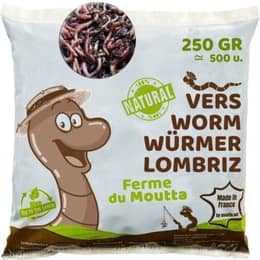
Compost worms Eisenia | 250 g of worms (approx. 500 pcs)
Packaging from 250 g to 10 kg of worms
15,40 €
-25%
Fast and odourless, compost worms eat your waste and turn it into worm casting for your plants.

From 2 to 4 trays with optional planter.

Up to 18 growing zones with central wormery.

Terracotta with flower pot.

From 2 to 4 shelves with a low shelf.

Urbalive, Worm Cafe, WORMcube, Tiny Worm, WORMwood, ...

Turn your planters into a Wormery: WORMacotta, In-Ground.
From the kitchen to the garden, your compost becomes simple, quick, and effective for everyone.
Live animals (worms and bait) and products to feed and look after pets and farm animals.

Compost worms Eisenia for your wormery or worm compost bin.

Ultra-fresh worms: Compost, Dendros and Canadian from 100 g up to 1 kg.

Natural solutions dedicated to the well-being of horses, ponies, and donkeys.

Optimise the health and performance of your farm.

Mealworms, natural and nutritious supplements.
Enhance your home with our decorative items and care for your house in a natural and sustainable way.
Tend your garden in an eco-friendly and nature-conscious way, for healthy and lasting plantings.
EM-based products created to enrich soils, protect plants, support animal health, and make everyday well-being and maintenance easier.

Contains a blend of 80 families of beneficial microorganisms.

Revitalise, purify and improve water quality in all your applications.

Stimulate soil microbial activity and plant growth.

Cleanse and maintain your environment naturally.

For the well-being and health of pets, livestock, and horses.

Enrich your body or dietary routines with essential enzymes.
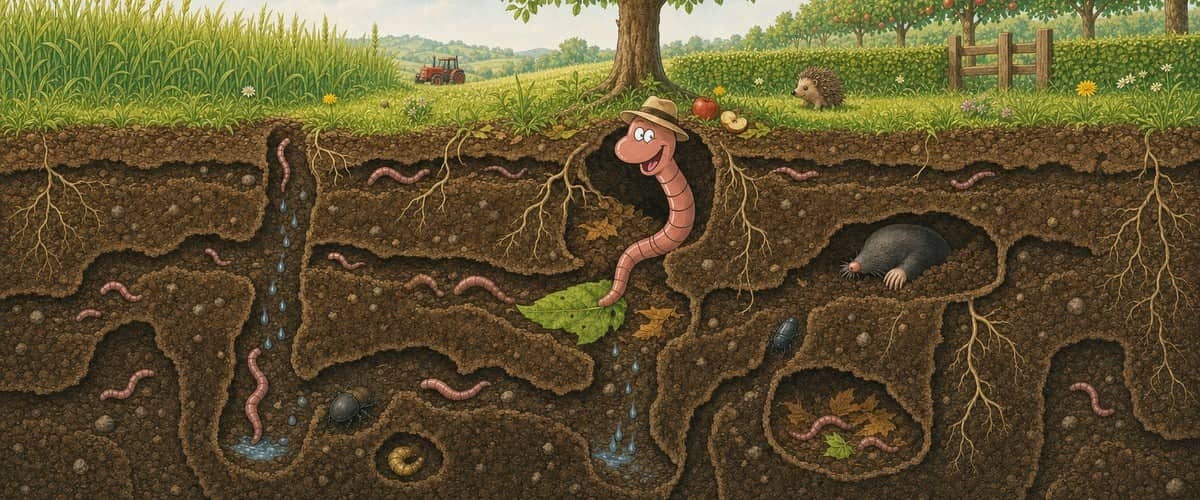
Beneath our feet, in the top few centimetres of soil, a workforce as discreet as it is indispensable is busy at work: earthworms. Far from being mere inhabitants of the garden or the compost heap, they are among the living creatures that most lastingly shape soil fertility. Their work, invisible to most of us, nonetheless determines the health of our gardens, our crops and, more broadly, our ecosystems.
Contrary to popular belief, not all earthworms are alike, and they do not all provide the same services to the soil. Specialists traditionally distinguish three main ecological categories:
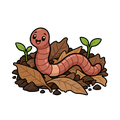 Epigeic worms live on the surface, in the litter of dead leaves and decomposing organic matter. These are the worms, such as Eisenia, that you find in a wormery: fast and voracious, they transform fresh waste in just a few weeks.
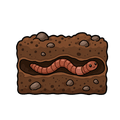 Endogeic worms move through the top few centimetres of soil, feeding on earth that is already rich in organic matter. They dig horizontal tunnels that gradually mix the different layers of the soil.
 Anecic worms, such as the common earthworm you come across while gardening, dig deep vertical burrows, sometimes several metres long. They come up at night to feed on dead leaves on the surface, which they then drag down deep into the soil.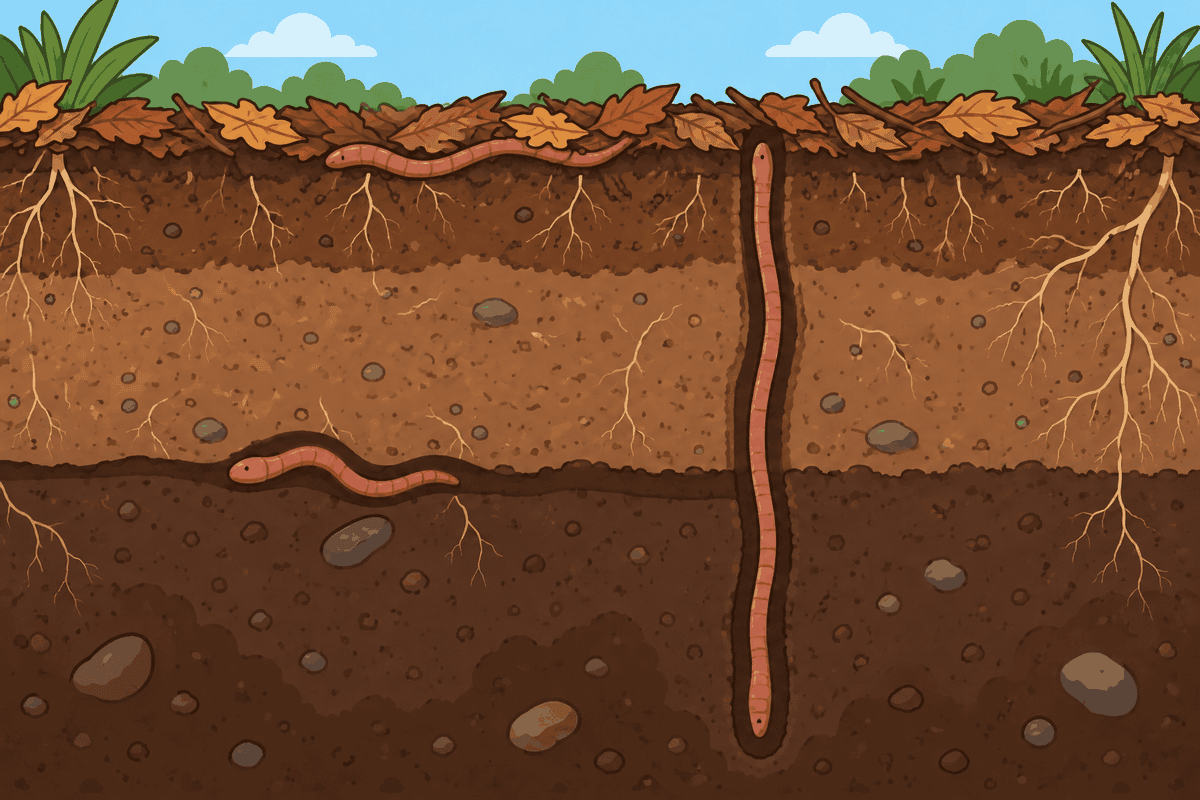
This distinction explains why it is not advisable to take worms from your garden to start a wormery: burrowing species do not survive in a confined environment, unlike compost worms, which are perfectly adapted to life on the surface and to a diet concentrated in fresh waste. We explain these differences in detail in our guide Which type of worms for your wormery.
Whether epigeic, endogeic or anecic, all earthworms share the same talent: they transform organic matter into humus while aerating and structuring the soil. By digging their tunnels, they help water seep in and air circulate down to the roots. By digesting organic matter, they make it available to plants in a form concentrated in nitrogen, phosphorus and potassium.
Did you know?Earthworms alone account for more than half of the animal biomass living on dry land.
Surprising as it may seem, this figure shows the scale of their role: no other group of animals works as hard, or as discreetly, to maintain the planet's soils.
The work of earthworms benefits the whole chain of life. Their tunnels become shelters for other small soil organisms, starting with the many little creatures also found in a wormery (springtails, woodlice, bacteria...), which we introduce in our guide Life in a wormery. Their castings also enrich the soil with beneficial micro-organisms, and their presence even serves as an indicator of good health: a soil without earthworms is, more often than not, depleted, compacted or polluted.
This observation is nothing new. As far back as Antiquity, and then more seriously in the 19th century, naturalists studied these little creatures and their influence on agricultural soils — a story we tell in more detail in our guide The history of vermicomposting.
Understanding the ecological role of earthworms helps you better appreciate the value of vermicomposting. By recreating at home, on a small scale, the conditions in which epigeic worms transform organic matter, you produce a fertiliser as rich as the one nature has been making for millions of years. It is also a tangible reminder of the link between your kitchen waste and soil fertility: every handful of vermicompost you harvest is the result of this same natural process, simply speeded up and concentrated in your wormery. To find out how, head to our guide What is a wormery?
Key pointsBy looking after your compost worms, you are looking after, in your own way, one of nature's oldest and most effective mechanisms.
If the subject fascinates you, our bookshop offers two books entirely devoted to these unsung workers: Éloge du ver de terre n°2 and Sauver le ver de terre, two reads that will change for good the way you see these little soil dwellers.


