New Arrival
Wormery City Worms | 2 plates
2 or 3 trays, 11 usable litres per tray
71,65 €
Fast and odourless, compost worms eat your waste and turn it into worm casting for your plants.

From 2 to 4 trays with optional planter.

Up to 18 growing zones with central wormery.

Terracotta with flower pot.

From 2 to 4 shelves with a low shelf.

Urbalive, Worm Cafe, WORMcube, Tiny Worm, WORMwood, ...

Turn your planters into a Wormery: WORMacotta, In-Ground.
From the kitchen to the garden, your compost becomes simple, quick, and effective for everyone.
Live animals (worms and bait) and products to feed and look after pets and farm animals.

Compost worms Eisenia for your wormery or worm compost bin.

Ultra-fresh worms: Compost, Dendros and Canadian from 100 g up to 1 kg.

Natural solutions dedicated to the well-being of horses, ponies, and donkeys.

Optimise the health and performance of your farm.

Mealworms, natural and nutritious supplements.
Enhance your home with our decorative items and care for your house in a natural and sustainable way.
Tend your garden in an eco-friendly and nature-conscious way, for healthy and lasting plantings.
EM-based products created to enrich soils, protect plants, support animal health, and make everyday well-being and maintenance easier.

Contains a blend of 80 families of beneficial microorganisms.

Revitalise, purify and improve water quality in all your applications.

Stimulate soil microbial activity and plant growth.

Cleanse and maintain your environment naturally.

For the well-being and health of pets, livestock, and horses.

Enrich your body or dietary routines with essential enzymes.
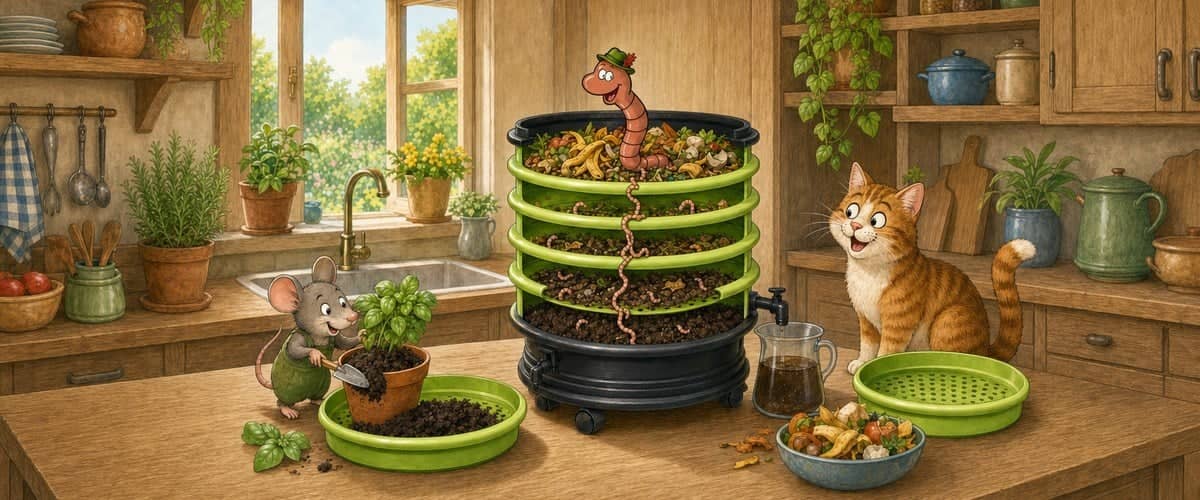
The tray wormery is by far the most popular model among beginners at home. Easy to understand, compact and simple to keep an eye on, it relies on a clever principle: several stacked trays, through which the worms move of their own accord over time. Here is how it works in practice.
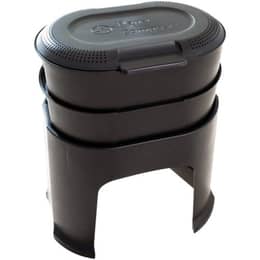
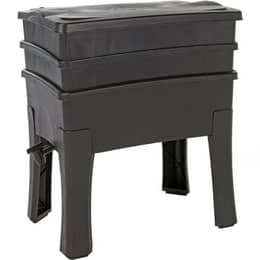
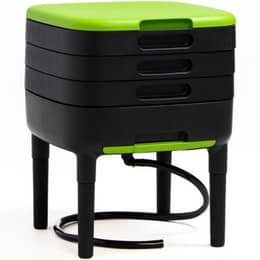
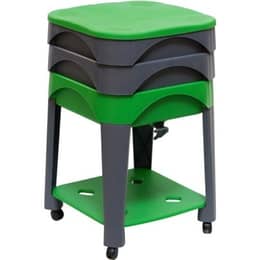
A tray wormery usually consists of 2 to 5 identical trays, perforated at the bottom and stackable on top of one another, sitting on a base that collects the compost tea and topped with a lid. You start with just one tray: add damp bedding and your first worms, then gradually add your kitchen scraps, in small quantities at first.
Once this first tray is almost full — with the scraps reaching 2 or 3 cm from the rim, or three-quarters full depending on the wormery model — place the second tray on top. As the trays are perforated, the worms naturally move up into the new tray to follow the fresh food, while continuing to digest the older scraps left below. The same process is repeated for the third tray and any further trays.
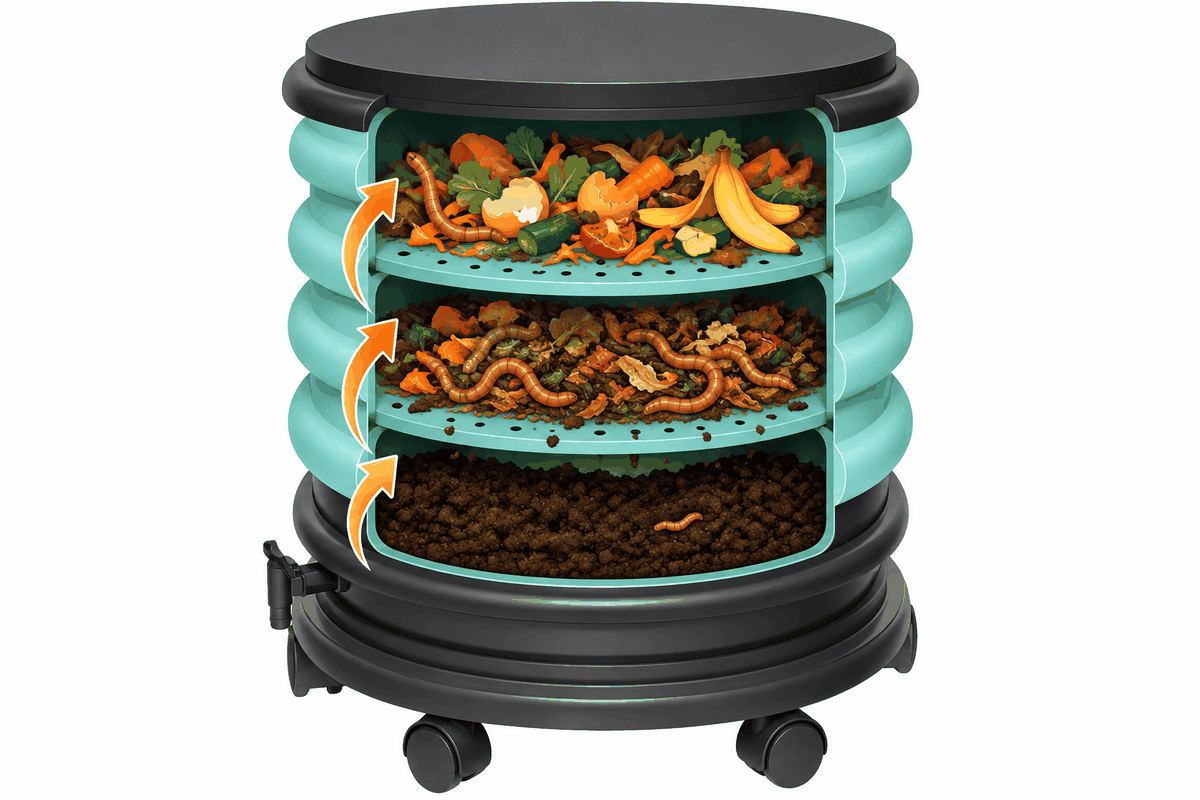
Key pointsEach time an upper tray fills up, the bottom one can be harvested and then put back, empty, on top of the stack. That is the principle of a tray wormery: a continuous cycle that keeps running indefinitely once it is under way.
All our models can be expanded from 2 to 5 trays, and the right number depends above all on the size of your household and the amount of waste to process. For a household of 2 or 3 people with a moderate amount of kitchen scraps, 2 to 3 trays are generally enough. Beyond that, for a larger family or a greater volume of waste, it is best to start with 4 to 5 trays from the outset, or to add more as you go.
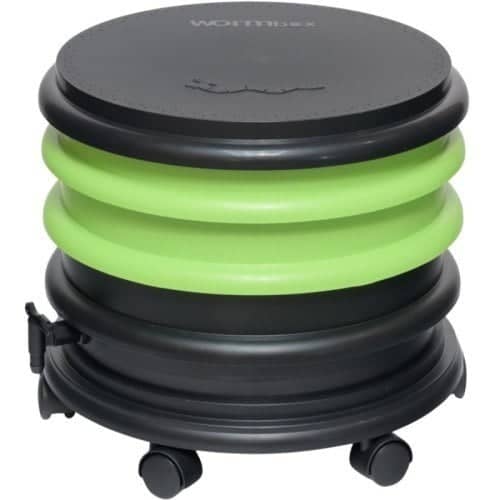 Household of 2-3 people: 2 to 3 trays
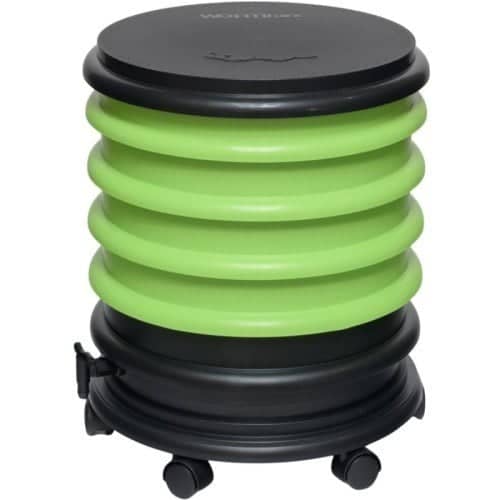 Large family: 4 to 5 trays
The tell-tale sign: when all your trays are full and the one at the very bottom has not yet fully turned into mature compost, you need another tray. This is the best way to know whether to expand your wormery: simply give it time to show you, rather than adding trays in advance. Conversely, it is best not to add unnecessary trays from the start: a young worm colony takes time to colonise a large volume, and too much empty space does not speed anything up.
Generally allow 5 to 7 months to fill all your trays the first time, depending on how much waste you produce and how many worms you start with. Once this first cycle is complete, harvesting becomes much more regular: roughly one tray a month, once you have reached your cruising pace. We explain the full harvesting procedure, step by step, in our guide Harvesting vermicompost and compost tea
Beginners particularly like this model for several reasons. It is very visual: each tray corresponds to a different stage of maturity, making it easy to follow how the process is progressing. It is also modular — you can add extra trays if your waste production increases — and its compact size fits just as well in a kitchen as in a utility room or on a balcony. Finally, the compost tea is collected separately, via the base, without ever coming into contact with the waste being processed.
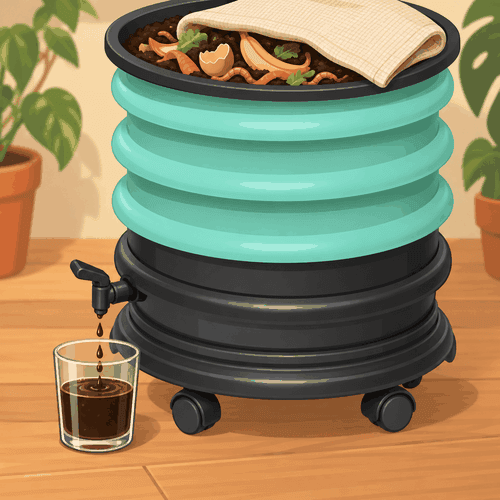 A few simple habits help you avoid minor problems. The moisture mat, placed on the surface of the active tray, also plays an important role: it retains moisture and helps keep fruit flies at bay. You can also replace it with an old floorcloth or a 100% cotton T-shirt. Finally, if your wormery has a tap, leave it open with a container underneath so the compost tea drains continuously — as well as preventing any overflow, this also stops worms that have fallen in by accident from drowning.
Did you know?It is not unusual to find a few worms in the compost tea collection base: nothing to worry about, they will make their own way back up by crawling along the sides.
There is another major family of wormeries, known as « continuous flow » wormeries, which work on quite a different principle: a single large bin in which the worms migrate vertically upwards, with the mature compost harvested from the bottom. Both systems have their own strengths; we compare them in detail in our guide The continuous flow wormery
Browse our full range of tray wormeries, available in several sizes to suit the volume of waste your household produces. If you are just starting out, head to our guide How to start your wormery for every step of the set-up.