









Best Seller
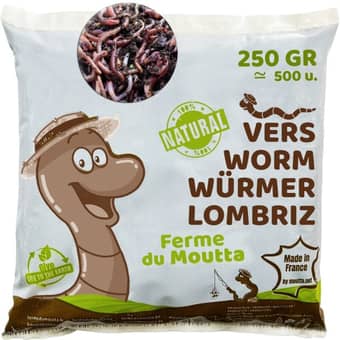
Eisenia compost worms | 250 g of worms (approx. 500 pcs)
4,8(285)
Packs from 250 g to 10 kg of worms
€15.40
-25%
Fast and odourless, compost worms eat your waste and turn it into worm casting for your plants.

From 2 to 4 trays, with an optional planter.

Up to 18 growing areas around a central wormery.

Terracotta with flower pot.

2 to 4 trays with a lower shelf.

Trays you add over time, for easy harvesting of vermicompost.

Turn your planters and flower beds into a wormery: WORMacotta, In-Ground.
From the kitchen to the garden, your compost becomes simple, quick, and effective for everyone.
Live animals (worms and bait) and products to feed and look after pets and farm animals.

Eisenia compost worms for your wormery or composter.

Ultra-fresh worms: Compost, Dendros and Canadian from 100 g up to 1 kg.

Natural solutions dedicated to the wellbeing of horses, ponies and donkeys.

Optimise the health and performance of your farm.

Mealworms, natural and nutritious supplements.
Enhance your home with our decorative items and care for your house in a natural and sustainable way.
Tend your garden in an eco-friendly and nature-conscious way, for healthy and lasting plantings.
EM-based products created to enrich soils, protect plants, support animal health, and make everyday well-being and maintenance easier.

Contains a blend of 80 families of beneficial microorganisms.

Revitalise, purify and improve water quality in all your applications.

Stimulate soil microbial activity and plant growth.

Cleanse and maintain your environment naturally.

For the wellbeing and health of pets, livestock and horses.

Enrich your body care or dietary routines with essential enzymes.
Eisenia worms to enrich your garden, vegetable patch and compost bin.
Compost worms Eisenia are valuable allies for the garden, vegetable patch and outdoor composting. Introduced directly into a compost bin or at the base of crops with an in-ground wormery, they speed up the breakdown of organic material and transform your green and food waste into a rich, balanced natural soil amendment.
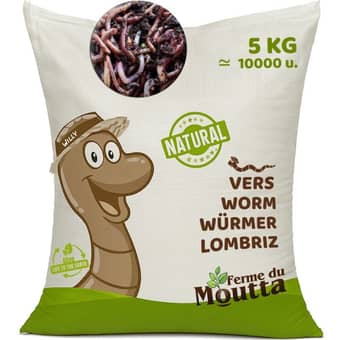
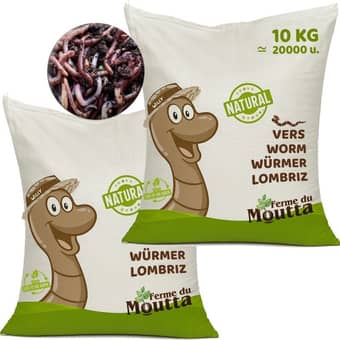
Perfectly suited to outdoor life, our compost worms withstand climate variations and settle permanently in the soil as soon as they make contact with the earth. Once established, they can naturally colonise your garden over several metres, improving the soil’s structure, drainage and water retention capability.
Their activity promotes microbial life, makes soils more fertile and stimulates root development in plants. The compost produced is finer, more homogeneous and significantly more effective for feeding vegetable crops, fruit trees, beds and lawns.
Our strains are composed of a mix of three Eisenia species, selected for their complementarity and adaptability. Depending on your environment (climate, waste type, soil), the best-adapted species will take the upper hand over time.
Ideal for boosting an outdoor compost bin, enriching a vegetable patch or revitalising tired soil, compost worms are true workers in the shadows for your garden – 100% natural and with no negative impact on the environment.
 Going further
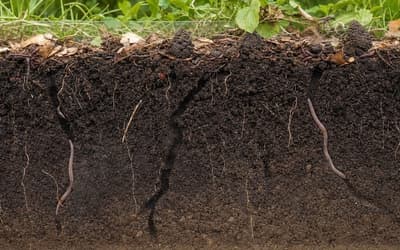
Earthworms are becoming scarce in gardens polluted by chemicals, yet they play an essential role in soil fertility. This guide sets out three simple methods for reintroducing them for the long term: an existing outdoor composter, a home-made composting point, or a wormery buried in the ground.
 Going further
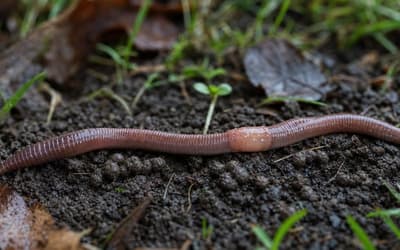
Anatomy, main groups, diet, reproduction, lifespan and role in the soil: the essentials about the earthworm, explained simply. Including the difference between the garden earthworm and the compost worm.
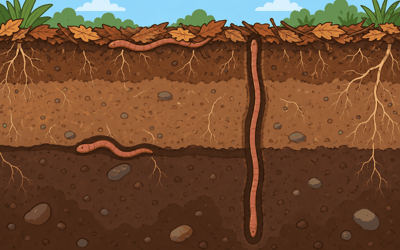 Going further
Earthworms play a discreet but essential role in soil health: they aerate it, enrich it with humus and support underground biodiversity. This guide presents the three ecological groups of worms (epigeic, endogeic, anecic) and explains why only compost worms, such as Eisenia, are suited to life in a wormery.


 France
 Belgium
 Switzerland
 Germany
 United Kingdom
 Italy
 Spain
 Netherlands
 Portugal
 Sweden
 Finland
 Denmark
 Greece
 Poland
 Romania
 Czech Republic
 United States
