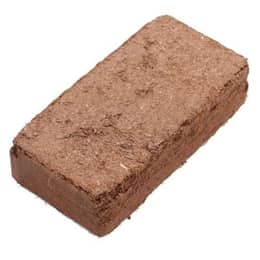
Coco fibre block 9L
Additive-free substrate for gardening or animals, available singly or in a 9-pack
3,00 €
Fast and odourless, compost worms eat your waste and turn it into worm casting for your plants.

From 2 to 4 trays with optional planter.

Up to 18 growing zones with central wormery.

Terracotta with flower pot.

From 2 to 4 shelves with a low shelf.

Urbalive, Worm Cafe, WORMcube, Tiny Worm, WORMwood, ...

Turn your planters into a Wormery: WORMacotta, In-Ground.
From the kitchen to the garden, your compost becomes simple, quick, and effective for everyone.
Live animals (worms and bait) and products to feed and look after pets and farm animals.

Compost worms Eisenia for your wormery or worm compost bin.

Ultra-fresh worms: Compost, Dendros and Canadian from 100 g up to 1 kg.

Natural solutions dedicated to the well-being of horses, ponies, and donkeys.

Optimise the health and performance of your farm.

Mealworms, natural and nutritious supplements.
Enhance your home with our decorative items and care for your house in a natural and sustainable way.
Tend your garden in an eco-friendly and nature-conscious way, for healthy and lasting plantings.
EM-based products created to enrich soils, protect plants, support animal health, and make everyday well-being and maintenance easier.

Contains a blend of 80 families of beneficial microorganisms.

Revitalise, purify and improve water quality in all your applications.

Stimulate soil microbial activity and plant growth.

Cleanse and maintain your environment naturally.

For the well-being and health of pets, livestock, and horses.

Enrich your body or dietary routines with essential enzymes.
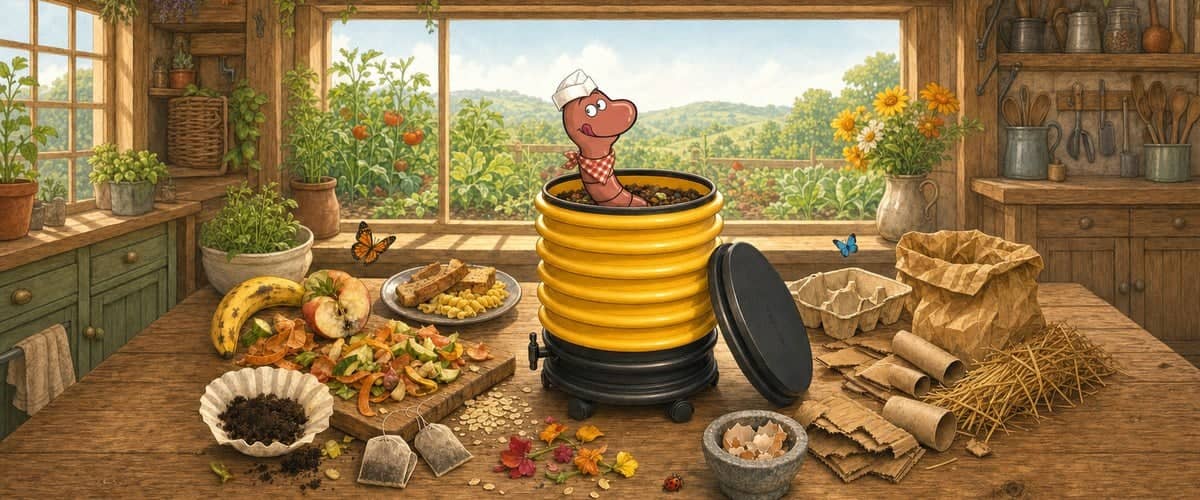
Compost worms are not fussy eaters: they will accept a wide variety of biodegradable waste. But some foods help them do their job, while others can upset the balance of the bin, slow down decomposition or cause bad smells. Here is how to feed them well.
Before putting any waste in your wormery, ask yourself two questions: is it biodegradable — would it break down naturally if left outdoors? — and is it of plant origin? If the answer to both is yes, your worms can most likely recycle it. The notable exceptions: citrus fruit and onions, which should still be limited. As a general rule, the more varied the food, the healthier the ecosystem in your wormery and the better the quality of the vermicompost you get.
One essential point to understand: compost worms only eat matter that has already started to decompose, never fresh, living plants. Unlike a slug, which goes straight for the leaves or fruit still growing in your vegetable patch, a compost worm needs micro-organisms to have already started their work before it can feed. This is also why we recommend letting your waste wilt slightly for a few days before adding it: your worms will digest it all the better.
 The vast majority of fruit and vegetables, peelings included — worms love sugar; in summer, bury them under the other waste so as not to attract too many fruit flies.
 Damaged or overripe fruit and vegetables, even rotten or mouldy ones — these are even better: decomposition has already begun, which is exactly what your worms are looking for (we explain the role of moulds and other helpful organisms in our guide Life inside a wormery).
 Cereals, flour (wheat, maize, rice, oats...) — sprinkle in a thin layer rather than a thick heap, to avoid any risk of fermentation and heating up; avoid nut flours, however (almond, hazelnut...), which are fattier.
 Coffee grounds, with the paper filter or pod — worms eat the grounds and the pod alike; avoid aluminium pods, though, which they cannot digest ;).
 Tea bags — worms digest the bag, the string and the tag; simply remove the metal staple if there is one.
 Flower petals, wilted flowers — avoid rose branches and stems, however, which take too long to break down.
These are not the worms' favourites, but you can give them some in reasonable quantities.
 Bread, crusts, pizza crusts — in small amounts, because of the yeast: as long as it has moisture and warmth, it keeps fermenting, which can cause a small local rise in temperature and attract more fruit flies. Leftover dry bread crusts after a meal are a good format to give them.
 Plain rice, plain pasta (no oil or seasoning, leftovers at the bottom of the pan).
 Pet hair and human hair — take a little longer to break down.
Willy's tipCut your waste into small pieces: the larger the surface in contact with bacteria, the faster it decomposes and turns into compost.
An often-forgotten point: worms have no teeth. That is why it is important to cut waste into small pieces of around 4 to 5 cm, especially the tougher items such as melon skin. On the other hand, some waste, like banana skins, breaks down so quickly that there is no need to cut it up first. Worms partly make up for their lack of teeth thanks to crushed eggshells: once swallowed, the small fragments act like teeth in the worm's gizzard, allowing it to shear and grind the food from the inside.
Regulating the acidity of your wormery once a week is one of the most important things you can do for your worms' health. Your bedding naturally tends to become acidic: some waste, such as tomatoes, ferments and acidifies the bin as it decomposes. Yet worms like to live at a neutral pH, between 7 and 8 — without regular regulation, it can drop as low as 4 or 5, a level worms cope with poorly.
 Crushed eggshells — simply crushed by hand, allow the equivalent of three eggs per week in the active tray. Ground to a powder (grinder, blender, coffee mill or pestle), just one tablespoon a week is enough: the more finely they are ground, the faster they act on acidity, because the worms do not eat them — it is the shells that dissolve in contact with the bedding, not the other way round.
 RegulaWorm — our 100% natural lime-based blend, which works in 5 minutes. A good alternative if you are vegan or do not eat eggs: allow one tablespoon per week.
Did you know?Finding undissolved bits of eggshell in your vermicompost is not a flaw: it is actually a good sign, showing that the bin is not acidic.
As well as kitchen waste, it is important to add carbon-rich materials regularly: they provide the carbon bacteria need to thrive, regulate moisture by absorbing some of the water released by organic waste, and supply fibre that is useful to the worms. Allow 50% carbon-rich material in the total of what you add, in small pieces of 3 to 4 cm.
 White paper, paper bags, kraft bags — if printed, choose black ink; avoid leaflets, magazines and other prints with heavy inks or plastic coatings, as well as full-page photos printed at home.
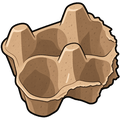 Brown or white cardboard — egg boxes (even coloured ones, which use food-grade ink), toilet roll and kitchen roll tubes, or lightly printed parcels such as those from Cdiscount or Amazon: cardboard glue is plant-based and harmless to worms.
 Kitchen roll and paper tissues — provided they are not soiled with fats or synthetic products; even if used during a cold, they are not a problem, as passing through the worm's gut greatly reduces (by more than 90%) any bacteria they may contain.
 Straw and hay.
 Untreated wood shavings and sawdust — avoid fresh or sap-rich softwoods (fir, pine, cedar): their aromatic oils can irritate worms; choose a well-dried hardwood instead.
 Plant-based litter for small pets or cats — just check that it contains no chemical odour absorbers.
 Dry, dead leaves.
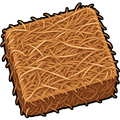 Coir, hemp mats — this works on the same principle as the moisture mat we describe in our guide How to start your wormery: once it has broken down, it can be crumbled and counted as a carbon-rich addition.
 Ready-to-use carbon substrate — our ready-made blend, handy if you are short of time or carbon-rich material.
 Fruit stones — do not break down. Pips and small seeds do not have this problem: in such rich vermicompost they sprout easily, and the young shoots are then eaten by the worms at the next weekly mix.
 Potato peelings — their toxicity comes from solanine, a glycoalkaloid concentrated in the skin, whose level varies with the variety, exposure to light and how far the tuber has sprouted. Test with one or two peelings: if they are still intact after ten days or so, your worms do not want them; if they have disappeared, you can carry on giving them some without any problem.
 Thick avocado skin and stone — break down very slowly, unless finely ground.
 Onion, garlic, shallot, rhubarb leaves and stalks, squash and courgette seeds — have vermifuge properties that disturb worms.
 Citrus fruit (lemon, orange, clementine, grapefruit...) — acidify the bin.
 Pineapple — acidifies the bin as it ferments.
 Nuts (walnuts, hazelnuts, almonds, peanuts, cashews, pistachios, pecans...) as well as their shells and skins — break down very slowly, unless you blend them.
 Mushrooms, leeks — best avoided especially in the first few months, while the worm colony settles in and the good bacteria develop; they can then be reintroduced in small amounts.
 Meat, fish and shellfish — toxic to worms; animal proteins also produce ammonia as they decompose, causing bad smells.
 Bones and fish bones — toxic to worms and do not break down.
 Dairy products — toxic to worms: their fat blocks oxygen and slows decomposition, like oils (see below), while lactose fermentation quickly acidifies the bin and can weaken the whole colony.
 Whole eggs, whites and yolks — give off bad smells as they decompose (not to be confused with crushed eggshells, which are recommended — see above).
 Animal droppings — give off bad smells and may contain wormer residues. Some of our customers use them successfully for their composting toilets: manure worms such as Eisenia (the very species of our compost worms) digest them very well. However, we advise against it if your wormery is kept indoors, because of the smell.
 Oil, butter, margarine, mayonnaise, fried food, ready meals with more than 5% fat — toxic to worms; by sticking to their skin, these products also stop air passing through it and may suffocate them.
 Fresh spices and herbs — toxic to worms when fresh (once used in cooking or for an infusion, see below).
 Salty and vinegary leftovers — through osmosis, salt draws water out through the worms' permeable skin and dehydrates them (the same mechanism that kills slugs in the open); vinegar, being very acidic, drops the pH well below the neutral level your worms need (see our acidity regulator above).
 Ash, charcoal — highly alkaline and caustic, ash can literally burn the worms' sensitive skin and push the pH well above the desired neutral level, the opposite of the acidity problem (see our acidity regulator above); barbecue charcoal also often contains binders (starch, paraffin) or firelighter residues.
 Sand — offers nothing to the worms and can upset the balance of the bin.
 Wood (logs, raw chunks) — breaks down very slowly; not to be confused with shavings and sawdust, which are very useful as carbon-rich material (see above).
 Fresh grass clippings, freshly cut grass or green leaves, in large amounts — give off bad smells as they ferment: as mentioned above, your worms only eat matter that has already begun to decompose, never fresh, living plants.
 Tobacco, cigarettes.
 Biodegradable materials or so-called compostable plastics — most of these plastics, often made from maize starch (such as PLA), need a sustained temperature of around 58°C for several weeks to genuinely break down. A domestic wormery never reaches such temperatures, but in the vast majority of cases neither does an ordinary garden composter (it generally tops out at around 20 to 30°C): only industrial composting facilities achieve this reliably. The safest option is to put them in your food waste collection bin if it is sent to this type of facility, rather than in your wormery or even your garden compost.
 Plastic and non-biodegradable or synthetic products.
 Household dust — may contain residues of cleaning or synthetic products, but also grit, dust mites or other small creatures that have no place in your wormery.
 Diseased plants — spores, bacteria and viruses can survive vermicomposting, which does not get hot enough to neutralise them (unlike hot compost at over 55°C); when you then spread your vermicompost, you could reinfect your garden.
 Used pet litter — mineral-based litters (clay, silica) do not break down; plant-based ones become a problem once soiled, because of the ammonia in urine and, for cat litter in particular, the parasite that causes toxoplasmosis, which the temperatures in a domestic wormery are not enough to neutralise. Not to be confused with clean, unused plant-based litter, which on the contrary is a good carbon-rich material (see above).
 Plant waste from outdoors — clippings, leaves or weeds gathered in the garden: they can carry unwanted guests (slugs, insects, pest eggs), weed seeds that will sprout, or even treatment residues if the area is not yours; keep them for an ordinary garden compost heap, which is better suited to this type of material.
Not necessarily: the most recent waste starts being broken down by bacteria while the worms feed on the older waste, and so on. It is a continuous process rather than a series of separate batches — we do, however, explain how to adjust the feeding rhythm in our guide How to start your wormery
The most important habit: each time you add food, mix your waste in a ratio of 50% nitrogen-rich waste (peelings, kitchen scraps...) to 50% carbon-rich material (cardboard, paper...). This balance is what prevents bad smells, regulates moisture and ensures fast decomposition.
Coffee grounds are an excellent structuring material for vermicompost: their particles literally act as a millstone in the worms' gizzard and aid digestion, while also having a positive effect on reproduction. If you grind your eggshells for your weekly acidity regulator (see above), let them dry for two or three days first: they will crumble much more easily, and they provide calcium along the way, which helps with cocoon production.
To limit the acidifying effect of some waste, let your citrus fruit dry for a few days before adding it. Herbs such as thyme, rosemary or lavender should not go into the wormery neat, but can be added after use — in an infusion or in cooking — once most of the molecules potentially harmful to worms have gone.
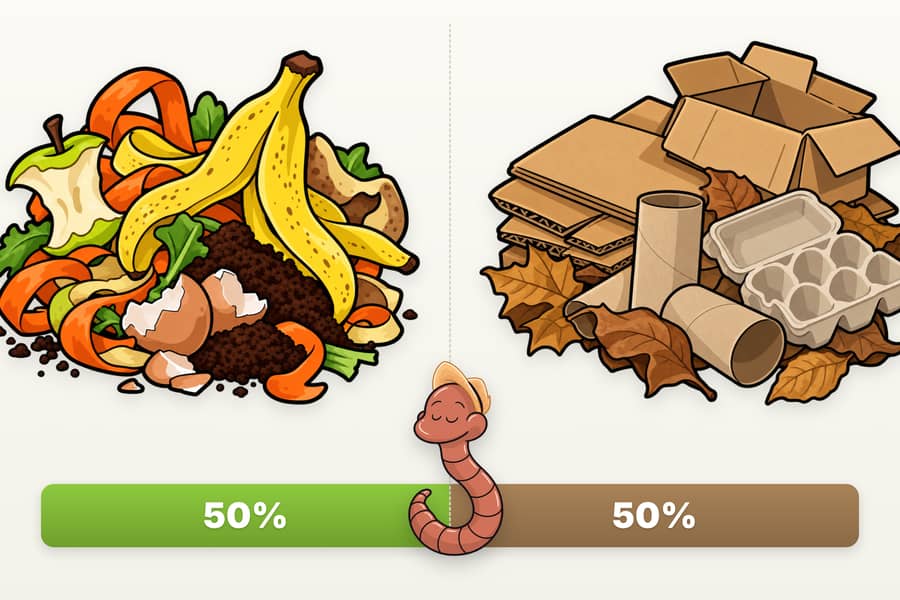
Our kitchen waste is often too rich in nitrogen compared with carbon: this is precisely why carbon-rich additions are so important, to make up for the imbalance. If you have a way of measuring acidity (a pH tester, for example), note that the mix should stay at a neutral pH, between 7 and 8 — which is the whole point of the weekly acidity regulator described above.
Once a week, get into the habit of gently mixing the active tray — the top tray, just under the lid, where you add your fresh waste: this simple step spreads the carbon-rich materials (cardboard) evenly among the nitrogen-rich materials (peelings), while adding oxygen to the mix — a key factor for better decomposition. Take the opportunity to add your acidity regulator on the same day — crushed eggshells or RegulaWorm, with the doses detailed above — which also limits the spread of parasites and gives the worms minerals that support their activity and reproduction.
Willy's tipMix the active tray and add an acidity regulator: a two-minute weekly routine that prevents most acidity problems.