On sale
Wormery In-Ground
12 litre vermicomposting zone
32,38 €
-12%
Fast and odourless, compost worms eat your waste and turn it into worm casting for your plants.

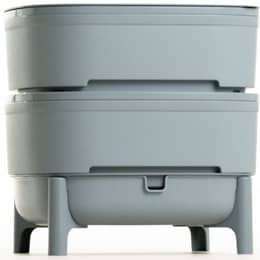
From 2 to 4 trays with optional planter.

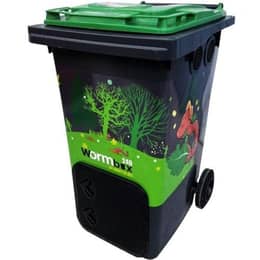
Up to 18 growing zones with central wormery.

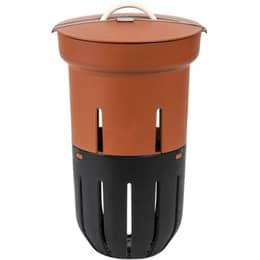
Terracotta with flower pot.

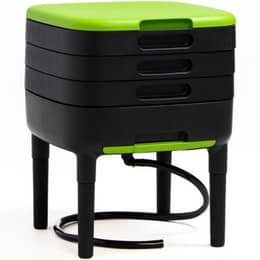
From 2 to 4 shelves with a low shelf.

Urbalive, Worm Cafe, WORMcube, Tiny Worm, WORMwood, ...

Turn your planters into a Wormery: WORMacotta, In-Ground.
From the kitchen to the garden, your compost becomes simple, quick, and effective for everyone.
Live animals (worms and bait) and products to feed and look after pets and farm animals.

Compost worms Eisenia for your wormery or worm compost bin.

Ultra-fresh worms: Compost, Dendros and Canadian from 100 g up to 1 kg.

Natural solutions dedicated to the well-being of horses, ponies, and donkeys.

Optimise the health and performance of your farm.

Mealworms, natural and nutritious supplements.
Enhance your home with our decorative items and care for your house in a natural and sustainable way.
Tend your garden in an eco-friendly and nature-conscious way, for healthy and lasting plantings.
EM-based products created to enrich soils, protect plants, support animal health, and make everyday well-being and maintenance easier.

Contains a blend of 80 families of beneficial microorganisms.

Revitalise, purify and improve water quality in all your applications.

Stimulate soil microbial activity and plant growth.

Cleanse and maintain your environment naturally.

For the well-being and health of pets, livestock, and horses.

Enrich your body or dietary routines with essential enzymes.
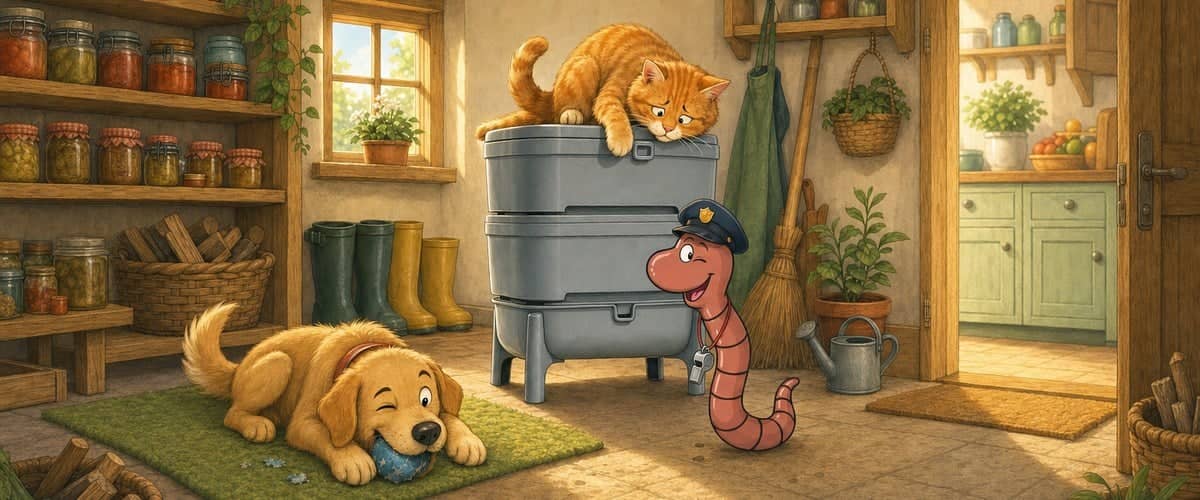
Having a cat or a dog and a wormery at home is in no way incompatible: they get along very well, with one precaution. This guide covers living alongside your pets day to day — to find out what you can and cannot put in your wormery (used cat litter, animal droppings...), head over to our guide What do earthworms eat?
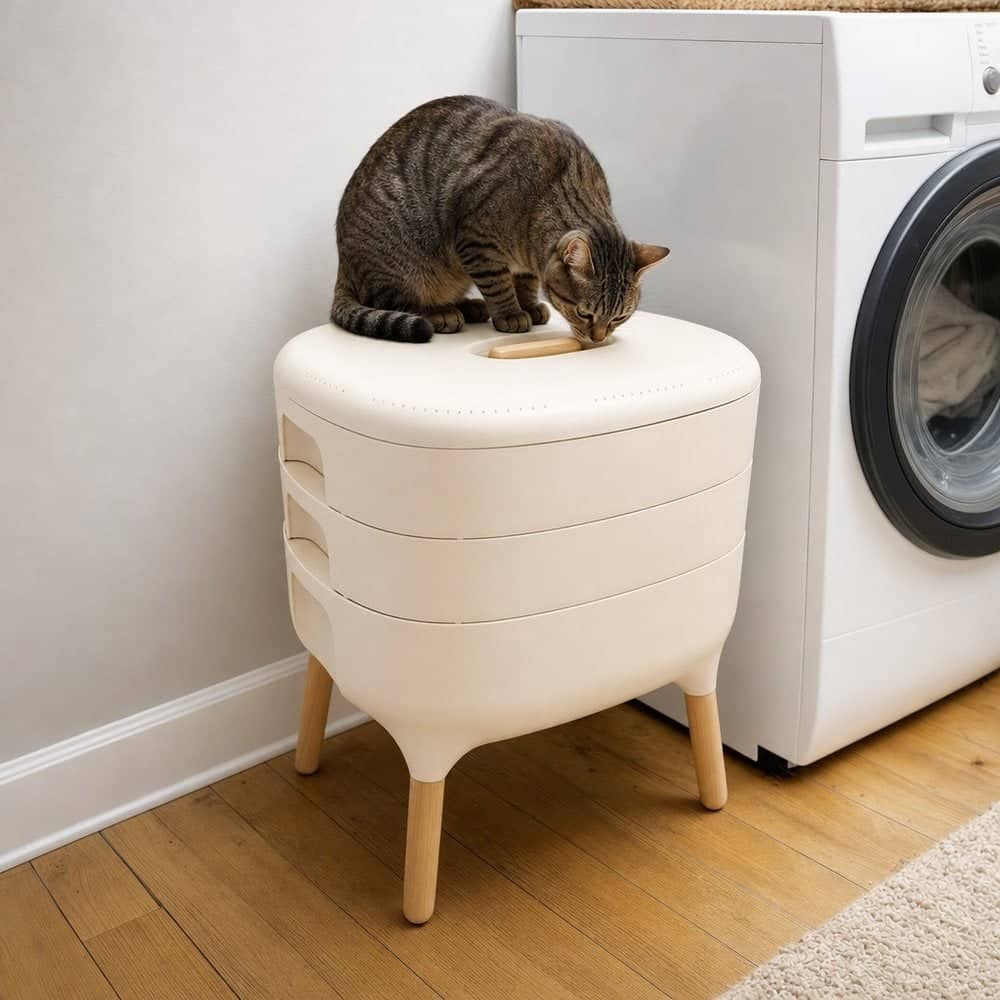 If you have a cat, one rule takes priority over all others: never let it use your wormery as a litter tray. Beyond the smell of urine, which would soon become hard to live with, its droppings pose a genuine health risk — we explain why in our guide on what worms eat, as the temperature inside a household wormery is not enough to neutralise this risk.
The solution is simple: choose a spot your cat simply cannot get to, or a model whose lid always stays firmly clipped shut. We go through the different possible locations in our guide Where to put your wormery
Willy's tipA curious cat quickly loses interest in a lid that doesn't open easily. A well-closed wormery, placed in a room your cat has limited access to (utility room, cellar, garage...), is enough in the vast majority of cases to rule out any risk.
Also think about your kitchen waste caddy, especially if you follow our compost bin tip for a wormery set up far from the kitchen: it's best kept closed or out of reach, so that a greedy cat doesn't help itself to your peelings before they even reach your worms.
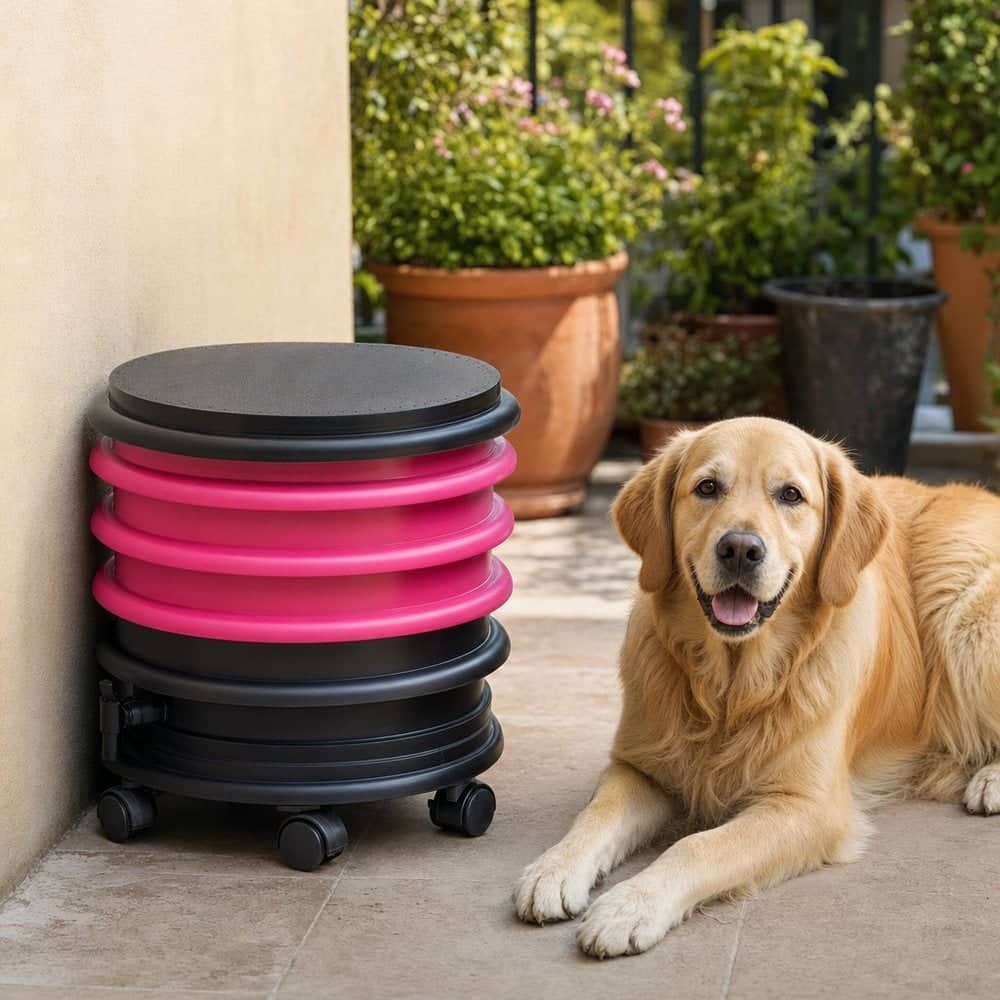 The risk is much lower: dogs don't share cats' instinct to use a container as a litter tray. If yours is the curious or nosy type, the same precaution still applies, just to be safe: keep the wormery out of reach, or in a closed room, so that it doesn't rummage through the trays or nibble straight from them. Besides, a well-balanced wormery has nothing appealing about it compared with an ordinary rubbish bin: at most a faint smell of woodland floor, far less tempting for an inquisitive dog.
And rest assured: compost worms themselves pose no danger if your pet happens to eat one out of curiosity. They are even used, on a professional scale, as a protein supplement in some pet foods.
Once harvested, vermicompost is an entirely natural fertiliser, free from any chemicals — nothing like certain garden fertilisers or treatments that need to be kept away from your pets. You can spread it in your garden or window boxes without any particular worry for a cat or dog that wanders by. The same goes for compost tea, once diluted for watering: it's a natural product, with no chemical additives, that poses no particular danger to your pets. We explain how to harvest and use these two fertilisers in our guide Harvesting vermicompost and compost tea
Wormeries and pets get on very well together, with just one real precaution: never let your cat use it as a litter tray, both for your own comfort and for everyone's safety. A well-chosen location and a lid that closes properly are enough, in the vast majority of cases, to rule out any risk — for your pets and your worms alike.