Wormery Urbalive | 2 plates
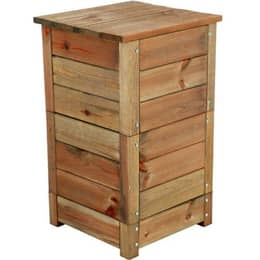
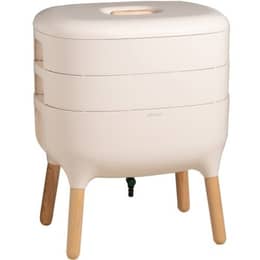
2 or 3 trays with wooden leg, 14 litres usable per tray
152,73 €
Fast and odourless, compost worms eat your waste and turn it into worm casting for your plants.

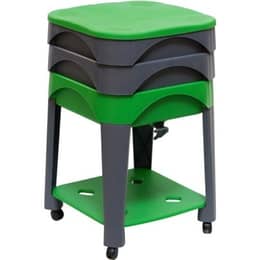
From 2 to 4 trays with optional planter.

Up to 18 growing zones with central wormery.

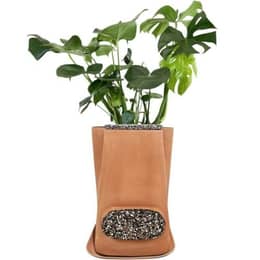
Terracotta with flower pot.

From 2 to 4 shelves with a low shelf.

Urbalive, Worm Cafe, WORMcube, Tiny Worm, WORMwood, ...

Turn your planters into a Wormery: WORMacotta, In-Ground.
From the kitchen to the garden, your compost becomes simple, quick, and effective for everyone.
Live animals (worms and bait) and products to feed and look after pets and farm animals.

Compost worms Eisenia for your wormery or worm compost bin.

Ultra-fresh worms: Compost, Dendros and Canadian from 100 g up to 1 kg.

Natural solutions dedicated to the well-being of horses, ponies, and donkeys.

Optimise the health and performance of your farm.

Mealworms, natural and nutritious supplements.
Enhance your home with our decorative items and care for your house in a natural and sustainable way.
Tend your garden in an eco-friendly and nature-conscious way, for healthy and lasting plantings.
EM-based products created to enrich soils, protect plants, support animal health, and make everyday well-being and maintenance easier.

Contains a blend of 80 families of beneficial microorganisms.

Revitalise, purify and improve water quality in all your applications.

Stimulate soil microbial activity and plant growth.

Cleanse and maintain your environment naturally.

For the well-being and health of pets, livestock, and horses.

Enrich your body or dietary routines with essential enzymes.
We are often asked all sorts of little questions about earthworms, some very serious, some rather more unusual — do they have eyes, how long do they live, can they swim? We have gathered here the most frequent and most curious answers, collected over the course of our conversations with our customers.
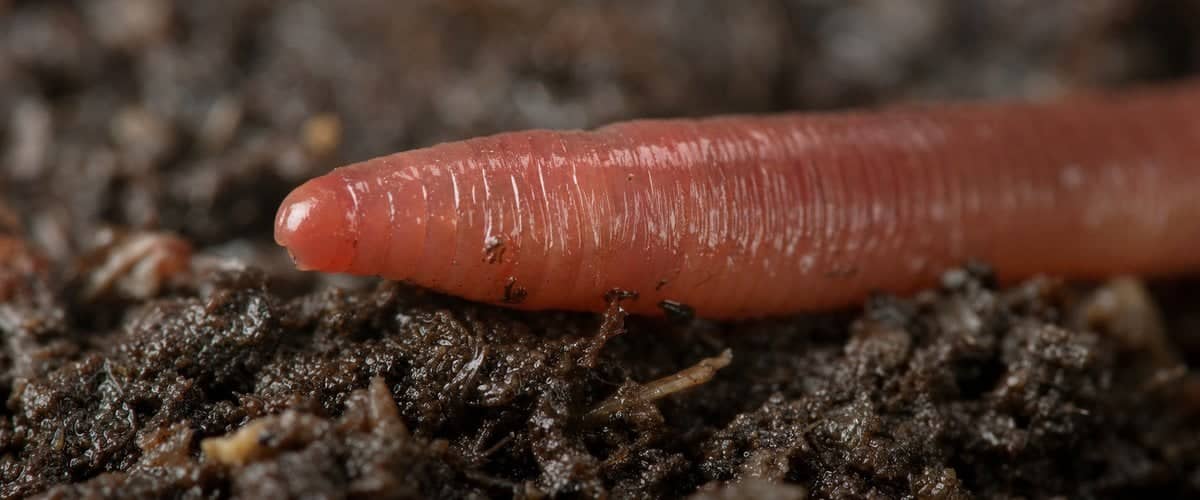
No, worms have no eyes, but their skin is covered in light-sensitive cells, concentrated mainly at the front of their body. These allow them to detect changes in light intensity and to sense vibrations in the soil — more than enough to flee from light and disturbance without ever really « seeing ».
Worms have no lungs: they breathe directly through their skin, which must stay coated in mucus and moisture so that oxygen can dissolve through to their bloodstream. This is why bedding that is too dry puts them in danger much more quickly than occasional excess moisture.
No, neither teeth nor jaws: their mouth and pharynx are muscular but completely toothless. They can only swallow particles that are already fairly small, softened by moisture and bacteria. It is a muscular gizzard, further along their digestive system, that finishes the job by grinding the food with the tiny grains of soil it contains — rather like in birds.
Even better: it has several! A compost worm has several blood vessels that act as little hearts to pump its blood around. Another curiosity: it never sleeps and stays active all the time, as long as conditions suit it.
No, this is a popular myth that doesn't work and only needlessly injures the animal. Worms' ability to regenerate is real but limited: the front part can sometimes regrow a new tail, but the back part can never form a new head. Rest assured: in good conditions, a single worm can give rise to several hundred offspring without any need to touch it!
In short: worms are hermaphrodites, but they still need to mate in order to reproduce, belly to belly and head to tail. We explain the whole process, cocoons included, in our guide Earthworm reproduction.
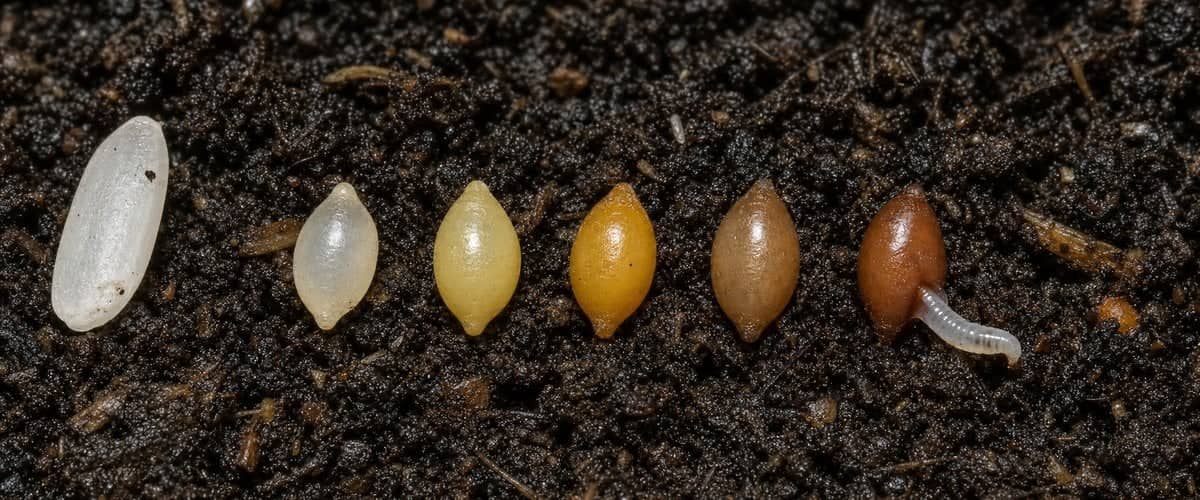
A cocoon measures about 3 mm, roughly the size of a grain of rice. Pearly white at first, it gradually changes colour as the young worms develop inside, turning brown and then reddish just before hatching, about three weeks later.
You may have noticed different figures across our guides: here is the chance to clear them up. In the wild, most worms live and die within a single year, faced with cold, drought or predators. In a well-kept wormery, sheltered from these dangers, their life expectancy rises considerably: individual Eisenia fetida have been monitored in breeding conditions for up to 4 and a half years. It is this potential, achievable in good conditions, that we use as our reference (4 to 5 years) throughout the rest of this guide.
Around 4,400 species of earthworm have now been recorded worldwide! But only a few, such as the Eisenia we breed, are genuinely suited to vermicomposting — most other species would not survive the conditions in a wormery.
Not really, no — but that isn't necessarily a problem: as long as the water stays sufficiently oxygenated, a worm can survive underwater for quite a long time without drowning. It is mainly an excess of stagnant, oxygen-poor water that is fatal to them, rather than water itself.
A little, yes: worms aren't exactly party animals, and noise and vibrations disturb them somewhat. The good news is that they adapt rather well over time, even to a noisy environment.
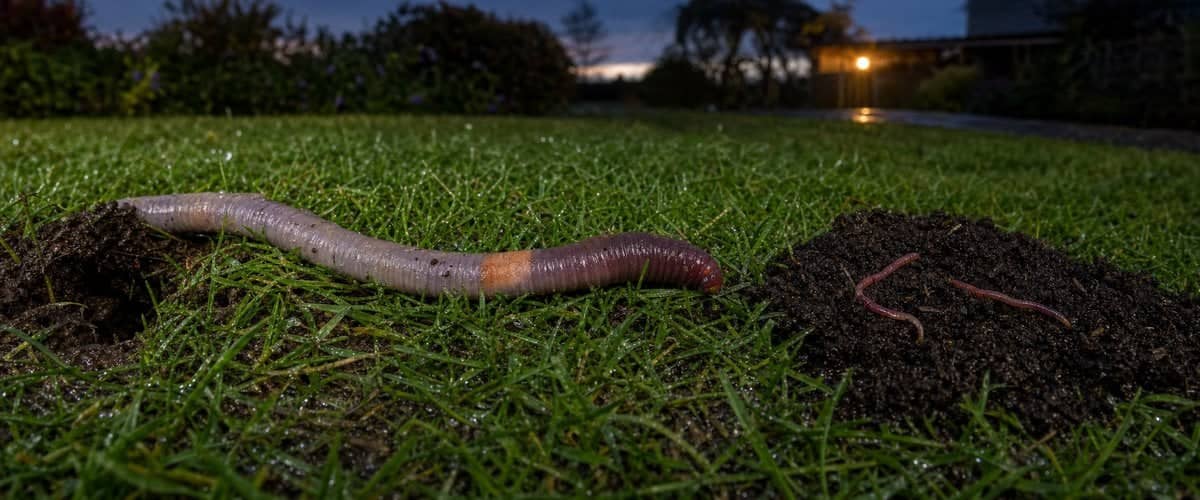
This is the case of Lumbricus terrestris, the large burrowing worm we come across in our gardens (different from the Eisenia compost worms used in a wormery): it comes up to the surface as soon as the soil becomes damp, in spring or on rainy autumn nights — hence its nickname.
Allow for the equivalent of half its own body weight per day on average, sometimes up to its entire body weight in good conditions. For 500 g of worms, for example, that comes to around 250 g of waste digested every day — our guide The earthworm diet details everything you can (or can't) feed them.
With no eyes or teeth, several hearts and no ability to swim, earthworms have plenty of surprising features — as does their life expectancy, which varies greatly between the wild and a well-kept wormery. Is your question not listed here? Don't hesitate to ask us directly.