











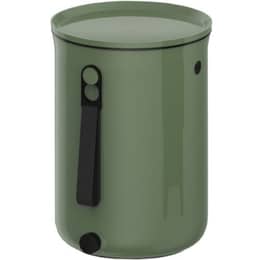
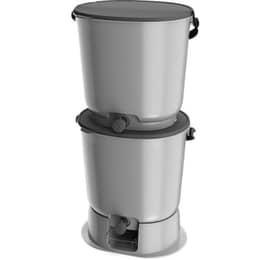
Bokashi Composter Skaza Organko 2
Capacity 9.6 litres, sold individually or in a set of 2
€83.01
Fast and odourless, compost worms eat your waste and turn it into worm casting for your plants.

From 2 to 4 trays, with an optional planter.

Up to 18 growing areas around a central wormery.

Terracotta with flower pot.

2 to 4 trays with a lower shelf.

Trays you add over time, for easy harvesting of vermicompost.

Turn your planters and flower beds into a wormery: WORMacotta, In-Ground.
 Practical guide

From the kitchen to the garden, your compost becomes simple, quick, and effective for everyone.
 Practical guide
 Practical guide
Live animals (worms and bait) and products to feed and look after pets and farm animals.

Eisenia compost worms for your wormery or composter.

Ultra-fresh worms: Compost, Dendros and Canadian from 100 g up to 1 kg.

Natural solutions dedicated to the wellbeing of horses, ponies and donkeys.

Optimise the health and performance of your farm.

Mealworms, natural and nutritious supplements.
Enhance your home with our decorative items and care for your house in a natural and sustainable way.
Tend your garden in an eco-friendly and nature-conscious way, for healthy and lasting plantings.
EM-based products created to enrich soils, protect plants, support animal health, and make everyday well-being and maintenance easier.

Contains a blend of 80 families of beneficial microorganisms.

Revitalise, purify and improve water quality in all your applications.

Stimulate soil microbial activity and plant growth.

Cleanse and maintain your environment naturally.

For the wellbeing and health of pets, livestock and horses.

Enrich your body care or dietary routines with essential enzymes.
 Practical guidePractical guide

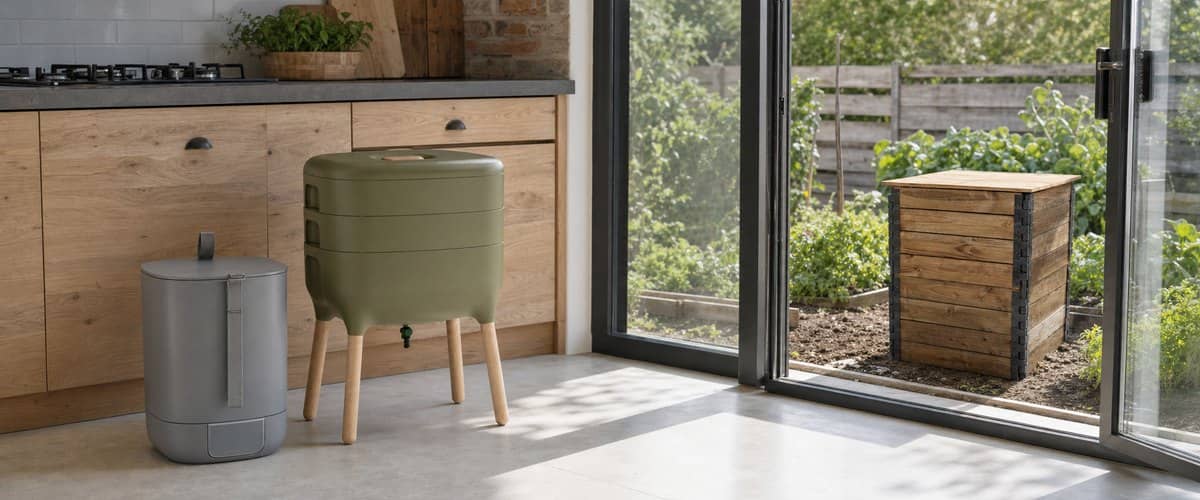
Bokashi, garden compost bin or wormery: all three methods recycle kitchen waste, and they are often presented as interchangeable. They are not. They do not work in the same way, do not accept the same leftovers and do not produce the same thing.
This guide compares them from the bokashi point of view: what it does better than the others, what it cannot do on its own, and how to combine it wisely. For an overview of all the options, including effective micro-organisms, see also our guide Compost, vermicompost, bokashi or EM: which method to choose.
That is the key difference: compost and worms transform waste, whereas bokashi prepares it. It covers the first half of the journey, quickly and in very little space, but it always leaves the rest of the work to the soil.
Did you know?In a large-scale trial on roadside grass cuttings, carried out with an EM product manufacturer, fermentation under a tarpaulin lost only 2 to 5% of its organic matter in six to eight weeks, compared with almost half for windrow composting. Nitrogen, meanwhile, was almost entirely retained, with losses of 0 to 2%, whereas the compost lost 10 to 16%.
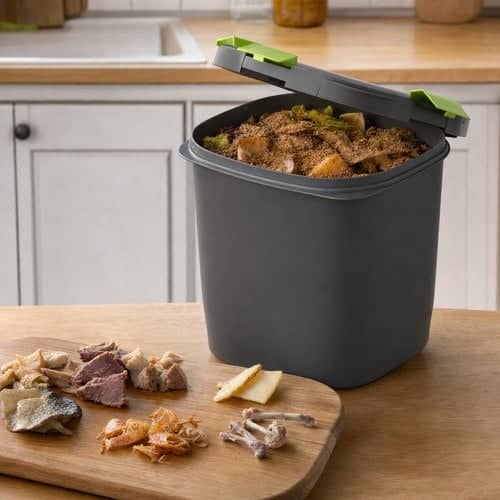 This is the reason people choose bokashi. Leftover meat, fish and cheese, saucy plate scrapings or small bones attract rodents and flies in an open compost bin, and worms will not touch them. In the airtight bucket, they ferment like everything else, out of reach of animals.
A few precautions are still needed: cut pieces small, sprinkle a little more bran over protein-rich leftovers, and avoid liquids and large bones. And do not assume that fermentation makes these leftovers harmless to animals: once in the garden, they must be buried well.
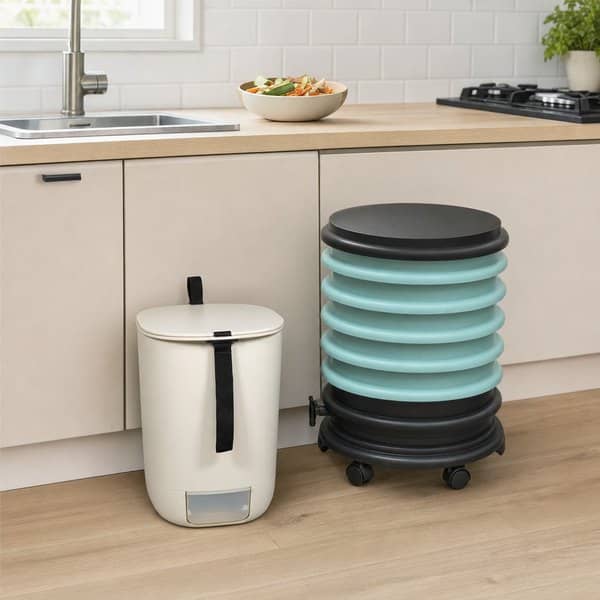
The pre-compost that comes out of the bucket looks like slightly softened waste and it is acidic. Left on the surface or used as a mulch, it attracts animals and can damage roots. So it always needs a finishing stage:
 garden soil: bury it 20 to 30 cm deep, mixed with the soil, away from roots, and wait at least two weeks before planting;
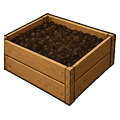 a soil container, on a balcony for example, if you have no garden: see our guide No garden? What to do with your bokashi;
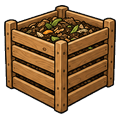 a compost bin, where it mixes with brown materials;
 worms, in small amounts.
As for the end result for plants, do not expect miracles. In a pot trial comparing bokashi and compost made from the same waste, only one comparison out of sixteen clearly favoured bokashi. Both methods feed the soil in a comparable way: the difference lies mainly in the type of waste accepted and the space required.
Key pointsBokashi replaces neither the compost bin nor the worms: it complements them. Its real strength is accepting all kitchen leftovers in very little space; its limitation is that it must always end up in the soil.
This is the simplest combination in the garden. The bucket takes meal leftovers, meat, fish and citrus fruit; the compost bin takes raw peelings, grass cuttings and leaves. Once fermented, the contents of the bucket go into the compost bin, spread in a layer and covered with brown materials. All the details are in our guide Bokashi and garden compost.
In a flat, the wormery takes raw peelings and the bokashi takes the leftovers the worms refuse. The pre-compost can then be given to the worms, but in small amounts and in one corner of the bin, because it is acidic. Results vary from one household to another: we explain how to go about it in our guide Bokashi and wormery.
A wormery, such as our WORMbox Wormery, remains the most self-sufficient option, as it produces something ready to use. Bokashi only makes sense if you have a regular outlet for it: a community garden, a friend's or relative's plot, or a neighbourhood compost bin that accepts it.
Both work. Bokashi can be finished in a large soil container or deep planters, provided you are patient before planting. If you are unsure, our guide Wormery or traditional compost bin will help you pin down your needs.
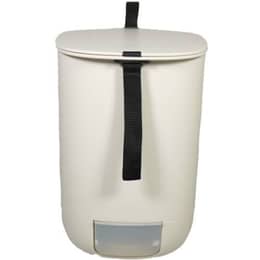
The compost bin remains the foundation, because it also takes garden waste. A bokashi bucket such as the Comfort Bokashi Composter complements it very well for all the awkward kitchen leftovers, which you can bury directly in your vegetable beds.
Emy's tipBefore choosing, spend a week noting what you actually throw away. If your bins contain mostly raw peelings, worms or a compost bin will be enough; if they contain lots of meal leftovers, meat or cheese, bokashi will earn its place.
Compost and vermicompost transform waste in the presence of air and deliver a finished product within a few months; bokashi ferments it in a sealed container in around two weeks, but delivers a pre-compost that still has to go into the soil. Its main advantage is that it accepts almost all food leftovers, including meat, fish and dairy, in a simple kitchen bucket. In the garden, it is the ideal companion to a compost bin; in a flat, it really comes into its own alongside a wormery or a soil container. Choose according to your waste and to where your bokashi can finish its journey.
Scan the code or visit mouttafarm.ie/guide: all our practical guides, with links to the products mentioned.


 France
 Belgium
 Switzerland
 Germany
 Austria
 United Kingdom
 Italy
 Spain
 Netherlands
 Portugal
 Sweden
 Finland
 Denmark
 Greece
 Poland
 Romania
 Czech Republic
 United States


