











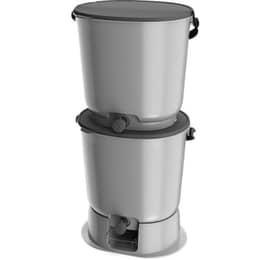
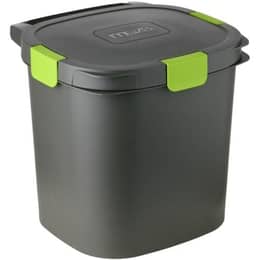
Skaza Essential Bokashi Composter
Capacity 15.3 litres, set of 2 buckets
€78.93
Fast and odourless, compost worms eat your waste and turn it into worm casting for your plants.

From 2 to 4 trays, with an optional planter.

Up to 18 growing areas around a central wormery.

Terracotta with flower pot.

2 to 4 trays with a lower shelf.

Trays you add over time, for easy harvesting of vermicompost.

Turn your planters and flower beds into a wormery: WORMacotta, In-Ground.
 Practical guide

From the kitchen to the garden, your compost becomes simple, quick, and effective for everyone.
 Practical guide
 Practical guide
Live animals (worms and bait) and products to feed and look after pets and farm animals.

Eisenia compost worms for your wormery or composter.

Ultra-fresh worms: Compost, Dendros and Canadian from 100 g up to 1 kg.

Natural solutions dedicated to the wellbeing of horses, ponies and donkeys.

Optimise the health and performance of your farm.

Mealworms, natural and nutritious supplements.
Enhance your home with our decorative items and care for your house in a natural and sustainable way.
Tend your garden in an eco-friendly and nature-conscious way, for healthy and lasting plantings.
EM-based products created to enrich soils, protect plants, support animal health, and make everyday well-being and maintenance easier.

Contains a blend of 80 families of beneficial microorganisms.

Revitalise, purify and improve water quality in all your applications.

Stimulate soil microbial activity and plant growth.

Cleanse and maintain your environment naturally.

For the wellbeing and health of pets, livestock and horses.

Enrich your body care or dietary routines with essential enzymes.
 Practical guidePractical guide

Bokashi works all year round, but not in quite the same way in January as in July. Cold slows the micro-organisms down, while heat speeds everything up, including liquid production and the appetite of fruit flies. And when it is time to go on holiday, many people wonder whether they can leave their bucket on its own.
The good news: with a few simple adjustments, bokashi copes with the seasons and with your absences without any difficulty. Here is how.
The lactic acid bacteria and yeasts that ferment your leftovers work best at room temperature, around 18 to 25 °C. The cooler it gets, the more they slow down: below about ten degrees, fermentation is noticeably slower, and at around 5 °C it has almost stopped. The cold does not undo the work already done: it simply puts it on hold, and fermentation resumes when the temperature rises again.
Conversely, a bucket kept somewhere warm ferments faster, produces more liquid and gives off a stronger smell when opened. What you should avoid above all is direct sunlight, which pushes the temperature of a plastic bucket well above that of the room. To choose the right spot, see our guide on where to put your bokashi.
Did you know?Cold does not harm bokashi that has already fermented. Once the two-week resting period is over, the bucket can even freeze without any damage: it will wait patiently for the thaw.
 Bring the bucket indoors if it usually lives on a balcony or in a garage. A bucket that is still being filled needs a room at a moderate temperature to get off to a good start. Outdoors, repeated freezing and thawing can also crack the lid or the tap.
 Be a little more generous with the activator, especially with meat, fish and moist leftovers: a good start matters more when it is cool.
 Cut things smaller. Small pieces ferment faster and pack down better.
 Press down, but never stir. Some winter advice suggests mixing the contents of the bucket: that is a mistake. Stirring lets air in, whereas bokashi needs to be kept without it.
Expect less liquid too: this is normal in cold weather. Keep draining it regularly all the same.
In a cool room, extend the resting time of the full bucket by one to two weeks. Three or four weeks instead of two is no problem at all: a well-sealed bucket is happy to wait. Guideline times are explained in detail in our guide on fermentation time and the signs that bokashi is ready.
Emy's tipStand the bucket on a board or a piece of thick cardboard rather than on cold tiles: it will hold on to the warmth of the room better.
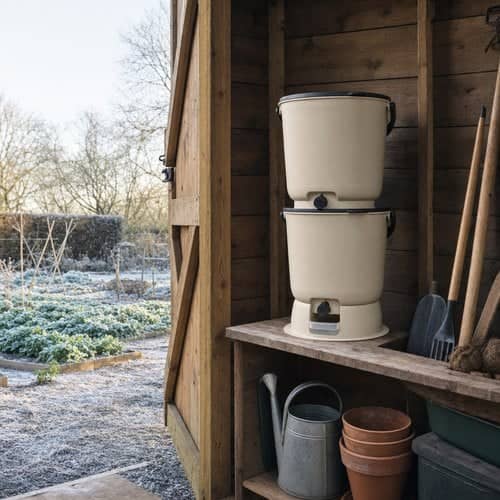 In most regions of France, bokashi can be buried for almost the whole winter, on a frost-free day. Cold soil simply breaks it down more slowly: allow more time before planting. But in the mountains, or during a harsh winter, the ground can stay hard for several weeks. You then have several options:
In spring, bury your stock as soon as the soil can be worked, following our guide to burying bokashi in the garden. If you have a large stock, a third bucket or a storage container makes winter much simpler: we explain this in our guide on the two-bucket rotation.
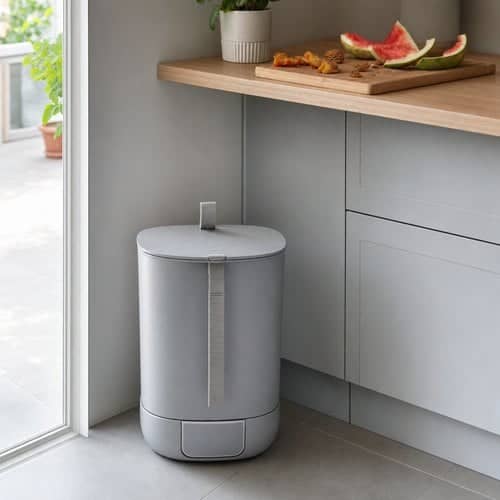 Heat speeds up fermentation, which is rather good news. But it does call for a little more care.
 Drain more often. Summer fruit and vegetables are full of water and the bucket produces more liquid. Every other day, or even every day in very hot weather.
 Keep the bucket in the shade. Bring it indoors if the balcony gets the sun, and keep it away from patio doors and large windows.
 Keep fruit flies away. They do not come from a properly closed bokashi: they are attracted by leftovers left in the open and by drips of liquid. Empty your kitchen caddy every day, sprinkle the activator straight after each addition, and wipe the rim of the lid and the tap.
 Stick to the two-week rest. Even though fermentation is faster in hot weather, this waiting time makes the result reliable.
If the lid bulges slightly under the pressure of fermentation gases, or if an unusual smell appears, our guide bad smells, too much liquid, fruit flies will help you work out what is going on.
This is one of bokashi's great advantages: it gets along very well without you. Unlike a wormery, there is no one to feed. Before you leave:
 Empty your kitchen caddy into the bokashi: nothing should be left in the open.Sprinkle a good layer of activator on top, press down and close the lid firmly.Drain the liquid down to the last drop and check that the tap or plug is properly closed.Put the bucket somewhere cool and shady. A shut-up house in midsummer can get very hot: a utility room or cellar is better than the kitchen.
The bucket will simply carry on fermenting while you are away. When you get back, drain it: you may find a little more liquid than usual. If it was full when you left, it will even be ready to empty. For an absence of more than a month, with a bucket full of juicy fruit and vegetables, ask a neighbour to pop in and drain it once.
Also keep your supply of activator tightly closed, dry and away from heat. For when you get back, having a spare bag of our Bokashi EM Compost Activator avoids any unpleasant surprises. And if you also have worms, they need different arrangements: see our guide looking after your wormery during the holidays.
Key pointsBefore you leave: kitchen caddy emptied, layer of activator, lid firmly closed, liquid drained, bucket somewhere cool. A closed bokashi can be left alone for several weeks without any trouble.
The seasons fit naturally into the two-bucket rotation:
 In spring and summer, the garden is ready to receive bokashi: this is the time to bury it regularly, and to use up the stock built up over the winter.
 In autumn, make the most of the beds freeing up in the vegetable patch to bury it before the frosts.
 In winter, leave fermented buckets a little longer, and store the contents if the ground is frozen.
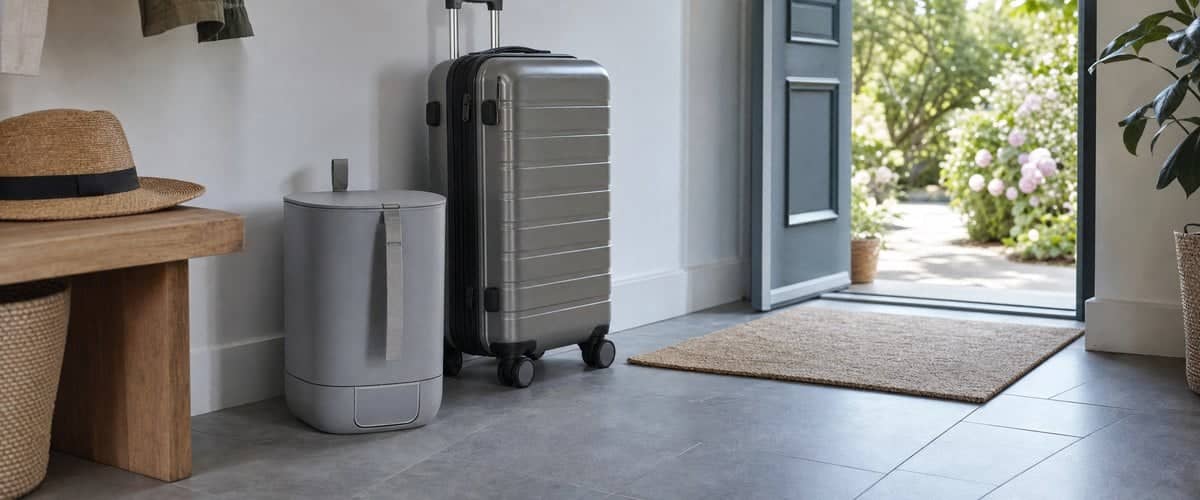
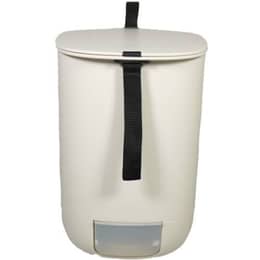
A portable bucket also makes these trips back and forth easier: the Skaza Organko 2 Bokashi Composter, with its strap, is easy to carry to the garden or the shed.
In winter, bring the bucket indoors, cut things smaller, be a little more generous with the activator and extend the resting time by one to two weeks, without ever stirring. If the ground is frozen, store the fermented bokashi, well sealed and drained, until the thaw. In summer, drain more often, keep the bucket in the shade and never leave leftovers in the open, to avoid fruit flies. For the holidays, empty the kitchen caddy, add a layer of activator, drain, close and put the bucket somewhere cool: it will wait for you without any problem.
Scan the code or visit mouttafarm.ie/guide: all our practical guides, with links to the products mentioned.



 France
 Belgium
 Switzerland
 Germany
 Austria
 United Kingdom
 Italy
 Spain
 Netherlands
 Portugal
 Sweden
 Finland
 Denmark
 Greece
 Poland
 Romania
 Czech Republic
 United States


