











Best Seller
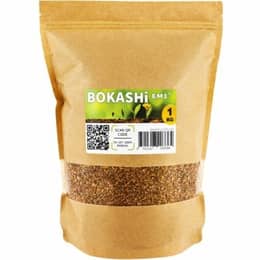
Bokashi EM compost activator | 1 kg bag
Individually or in sets of 2 or 3 bags
€8.15
Fast and odourless, compost worms eat your waste and turn it into worm casting for your plants.

From 2 to 4 trays, with an optional planter.

Up to 18 growing areas around a central wormery.

Terracotta with flower pot.

2 to 4 trays with a lower shelf.

Trays you add over time, for easy harvesting of vermicompost.

Turn your planters and flower beds into a wormery: WORMacotta, In-Ground.
 Practical guide

From the kitchen to the garden, your compost becomes simple, quick, and effective for everyone.
 Practical guide
 Practical guide
Live animals (worms and bait) and products to feed and look after pets and farm animals.

Eisenia compost worms for your wormery or composter.

Ultra-fresh worms: Compost, Dendros and Canadian from 100 g up to 1 kg.

Natural solutions dedicated to the wellbeing of horses, ponies and donkeys.

Optimise the health and performance of your farm.

Mealworms, natural and nutritious supplements.
Enhance your home with our decorative items and care for your house in a natural and sustainable way.
Tend your garden in an eco-friendly and nature-conscious way, for healthy and lasting plantings.
EM-based products created to enrich soils, protect plants, support animal health, and make everyday well-being and maintenance easier.

Contains a blend of 80 families of beneficial microorganisms.

Revitalise, purify and improve water quality in all your applications.

Stimulate soil microbial activity and plant growth.

Cleanse and maintain your environment naturally.

For the wellbeing and health of pets, livestock and horses.

Enrich your body care or dietary routines with essential enzymes.
 Practical guidePractical guide

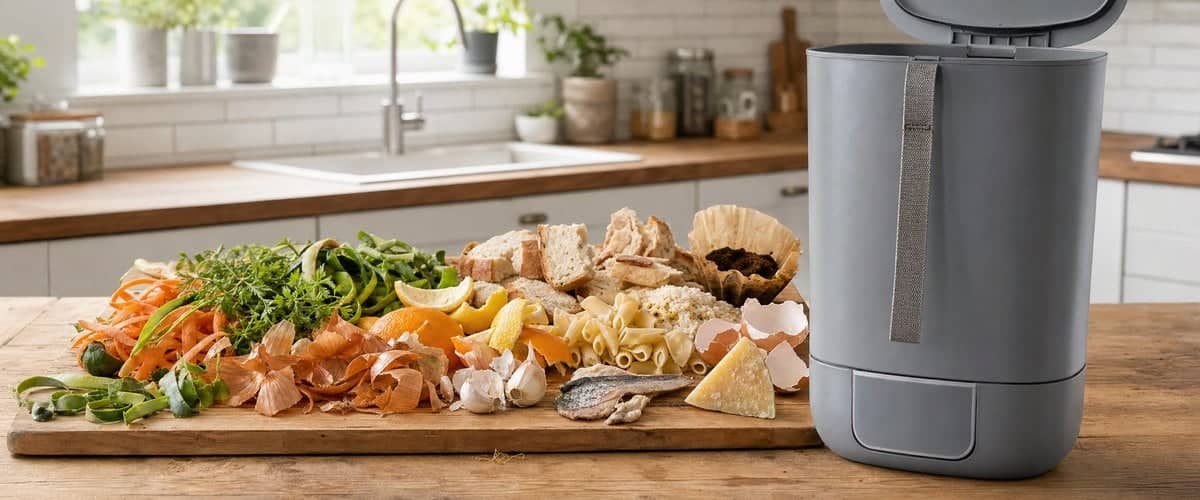
“Can I put this in my bokashi?” It's the question everyone asks standing in front of their bucket, a leftover bit of chicken or an orange peel in hand. And it's often the very reason people chose bokashi in the first place: it accepts far more than a composter or a wormery.
It does still have its limits. Here is the complete list, with the reason each time: once you understand what disrupts fermentation, you no longer need to learn the list by heart.
Bokashi is a lactic fermentation, without air, carried out by bacteria that need sugars, a little moisture and a well-compacted environment. Almost anything edible suits them, raw or cooked, fresh or slightly past its best.
Three things cause problems: excess liquid, which drowns the fermentation and turns it into putrefaction; anything that doesn't break down, or only very slowly; and anything that isn't food. Remember these three groups and you'll be able to decide in almost every case.
 Fruit and vegetables, raw or cooked: peelings, cores, tops, seeds, bruised fruit, wilted lettuce.
 Leftover meals: pasta, rice, mashed potato, gratins, pizza, cooked vegetables, well drained.
 Bread, cakes, biscuits, cereals. Stale bread even has the advantage of soaking up a little moisture.
 Coffee grounds, with their paper filter, and loose tea leaves.
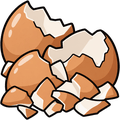 Eggs and eggshells, preferably crushed: the shells don't ferment, but they will eventually break down in the soil.
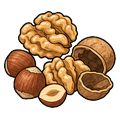 Walnuts, hazelnuts, seeds and their thin shells.
 Wilted cut flowers and small houseplant trimmings, cut into pieces.
Simply cut everything into pieces no bigger than 3 to 4 cm, as we explain in our guide Starting your first bokashi bucket.
Did you know?Many tea bags contain a small amount of plastic, used to seal the paper or make it stronger, which breaks down neither in the bucket nor in the soil. Tear the bag open, tip the leaves into the bokashi and throw the bag away, unless the packaging clearly states that it contains no plastic.
This is bokashi's great strength. In an airtight bucket, these scraps ferment just like vegetables, safe from flies and rodents. Leftover raw or cooked meat, fish skin and bones, cheese rinds and pieces, slightly thick yoghurt, chicken or rabbit bones: all of these can go in.
A few precautions make all the difference:
 Sprinkle more bran over these protein-rich scraps, which are more delicate. Our guide Bokashi bran explains how to adjust the amount.
 Cut them small and spread them between layers of plant scraps rather than adding everything at once.
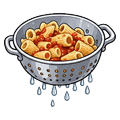 Drain dishes in sauce and leave out milk and very runny cheeses.
 Prawn shells: let them dry a little and sprinkle them generously.
 When burying, dig deep and cover completely: fermentation doesn't make these scraps any less interesting to garden animals.
If you're just starting out, there's nothing to stop you beginning with one or two buckets of plant scraps to get the hang of it, then gradually adding meat and fish leftovers.
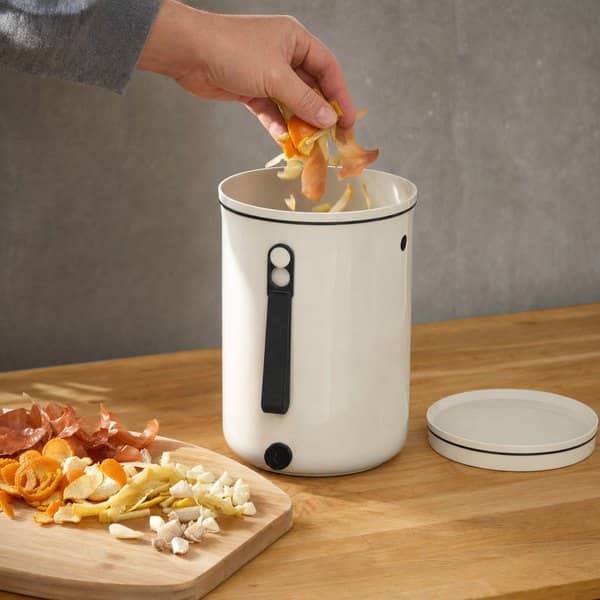
In a wormery, citrus, onion, garlic and shallots are kept to a minimum because worms don't tolerate them well, as we explain in our guide What to feed your worms. Bokashi doesn't work with worms but with lactic acid bacteria, which actually thrive in an acidic environment. The acidity of citrus doesn't bother them, and experience shows that onion and garlic ferment without any difficulty.
Orange, lemon and grapefruit peel, onions, garlic, leeks: all of these go in the bucket. The only precaution, if you have a lot at once after a session of jam-making or juicing: alternate them with other waste rather than making one thick layer.
If you plan to give your bokashi to worms afterwards, bear in mind that it will contain them: go gradually, as explained in our guide Bokashi and wormeries.
 Liquids: soup, milk, juice, vinegar, stock, leftover sauce, cooking water. They drown the fermentation. Drain leftovers before putting them in the bucket.
 Oil and fats in large quantities: a little oil on a salad is no problem at all; a deep fat fryer or a pot of fat is.
 Large bones (beef, pork, leg of lamb): they take years to disappear in the soil. Put them in the bin, or break them up if you're keen to keep them.
 Mussel, oyster and other seashells: they practically never break down.
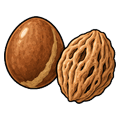 Large stones (avocado, peach, mango): they can go in, but will remain visible in the soil for a very long time.
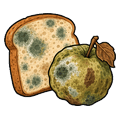 Food that is already rotten or very mouldy: it brings in masses of putrefying microbes that can turn the whole bucket. A small spot of mould on a slice of bread is no big deal; a punnet of mushy strawberries is.
 Paper and cardboard in large quantities: they belong in the recycling or the composter. A little kitchen roll, a paper napkin, torn newspaper or a piece of egg box to soak up excess moisture are, however, fine. Avoid glossy paper and colour print.
Emy's tipKeep a few stale bread crusts or a piece of egg box near the bucket. On days when you add very juicy scraps, slip a little underneath: they soak up excess moisture without disrupting the fermentation.
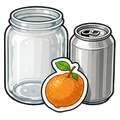 Plastic, glass, metal, fruit stickers, rubber bands, string.
 So-called “compostable” packaging and bags: they need industrial composting at high temperatures to break down. They would come out of the bucket and the soil intact.
 Animal droppings and litter: from cats and dogs in particular, for health reasons.
 Ash from wood or charcoal.
 Diseased plants: fermentation offers no guarantee of eliminating diseases, and you could end up putting them back into the garden.
 Weeds that have gone to seed: there's no proof that two weeks of fermentation kills all the seeds, so you could resow them when you bury your bokashi.
 Medicines and chemicals, including the dregs of household cleaning products.
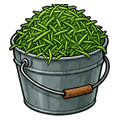 Garden waste in bulk, grass cuttings, dead leaves and branches: these go in the composter. Our guide What to put in your composter will help you manage them there.
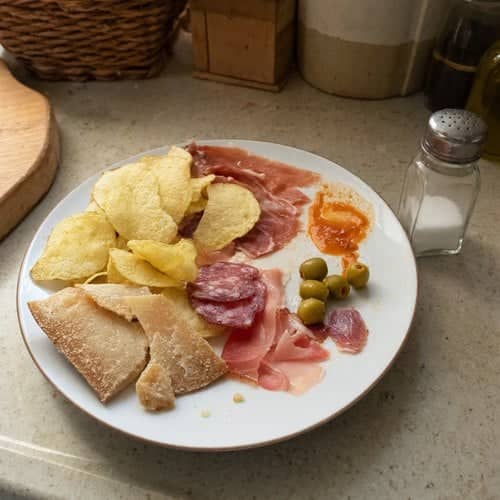 Ready meals, cured meats, aged cheeses, crisps or leftover brine are saltier than peelings. They ferment without any problem, but some of the salt ends up in the liquid. Analyses of bokashi liquid have shown that liquid from leftover meals contained significantly more sodium and chlorine than liquid from peelings.
If you use the liquid on your plants, especially in pots and window boxes where salt builds up, it's therefore best to limit very salty leftovers. Likewise, in the garden, avoid always burying the contents of buckets rich in cooked dishes in the same spot: change location each time. Remember that the liquid must always be diluted, at least 1 in 100, and watered in at the base of the plant, never on the leaves. If your bucket gives off an unusual smell after additions like these, our guide Bad smells, too much liquid, fruit flies will help you put things right.
Key pointsWith bokashi, everything edible goes in the bucket, raw or cooked, meat and citrus included. Leave out anything liquid, anything that doesn't break down and anything that isn't food.
Bokashi accepts almost all solid food scraps: fruit and vegetables, leftover meals, bread, coffee grounds, meat, fish, cheese, small bones, citrus, onion and garlic. For success, cut small, drain, and sprinkle a little more activator, such as our Bokashi EM compost activator, over protein-rich scraps. Leave out liquids, large amounts of oil, large bones, seashells and food that is already rotten. And never add plastic, “compostable” packaging, droppings, ash or diseased plants. If you use the liquid in the garden, simply limit very salty leftovers.
Scan the code or visit mouttafarm.ie/guide: all our practical guides, with links to the products mentioned.


 France
 Belgium
 Switzerland
 Germany
 Austria
 United Kingdom
 Italy
 Spain
 Netherlands
 Portugal
 Sweden
 Finland
 Denmark
 Greece
 Poland
 Romania
 Czech Republic
 United States


