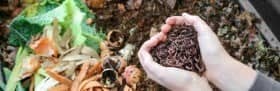
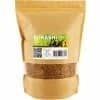
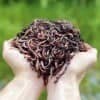
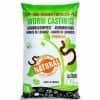
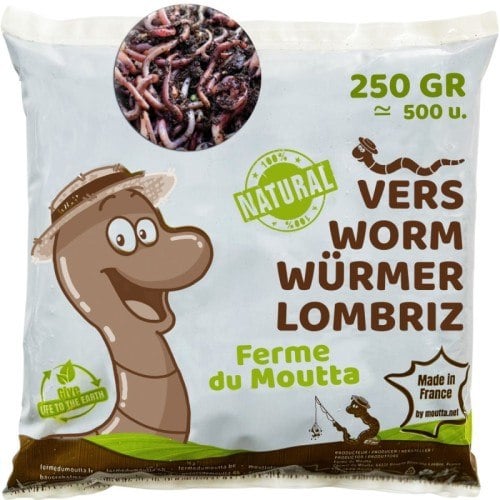
Our compost worms (Eisenia) are sorted and weighed (without substrate) individually to guarantee an exact quantity with every order. They come with a specially developed transport bedding by the Moutta Farm, weighing twice as much as the worms for maximum comfort, vitality, and a perfect transition into their new environment.
We work exclusively with Eisenia species, renowned as the best worms for vermicomposting. Highly active, hardy and voracious, these worms quickly turn organic waste into premium vermicompost and worm tea.

For a wormery:
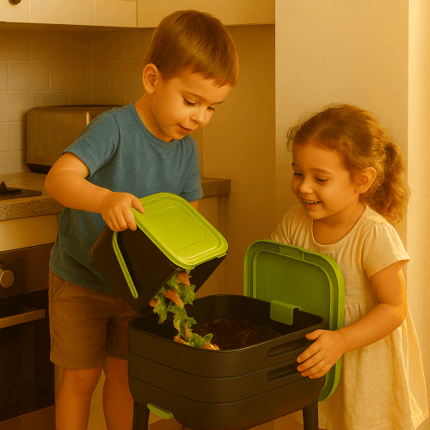
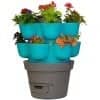
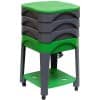
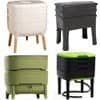
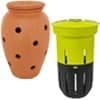
Our compost worms are perfectly suited to indoor vermicomposting, whether you use a tray-based, continuous flow or planter-equipped worm compost bin model. Active and hungry, they process your organic waste fast, working mainly on the surface where material is richest.
We recommend 250g of worms for a household of 1 to 2 people, 500g for 3–4, and 1kg or more for households bigger than 4. The more worms at the start, the quicker and more efficient your system gets going.
For a compost bin:
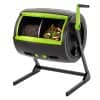
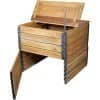
Give your compost bin a natural boost by adding compost worms. Their presence greatly accelerates decomposition and provides a richer, more biologically active organic amendment. If your compost bin sits on soil, the worms will naturally spread into your garden—up to 15 metres around—permanently improving soil quality.
For the garden or vegetable patch:
100% adapted to the outdoors, our worms thrive in your garden or vegetable beds. True workers underground, they make soil more fertile, airy and better draining, encouraging microbiological life. An essential partner for a living, productive garden.
? See our guide to learn more about their role and settling them in.
Which worm species for my wormery or compost bin?
Each batch contains a well-balanced mix of three Eisenia worms. This diversity ensures excellent adaptability both indoors and outdoors, no matter the compost bin type or food source.
Every species plays a part, ensuring efficient breakdown of waste, optimal reproduction, and lasting population stability.
Eisenia Andreï: This is the "California worm"—not actually American, but very red (hence the nickname), and prefers fresher materials. It's less tolerant of extreme temperatures (5–30°C).
Eisenia Hortensis: (Dandrobaena venata), bigger and popular among anglers, more effective on tougher materials. Endures cold and heat much better. Might wander at first—1 or 2 may explore for a few days (no need to worry!).
Eisenia Foetida: The "manure worm". Red with grey or yellow stripes, likes decomposing matter best.
The bonus of all three:
All three Eisenia species thrive side by side in your wormery or compost bin. Over time, one or two may become dominant—these are simply the best suited to your setup, climate and kitchen scraps.
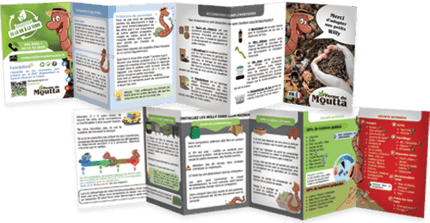
Included: a 12-page mini-guide in English to help you introduce your worms to their new environment. Covers what worms can eat and common troubleshooting tips as well.
Live worm delivery guaranteed—even in summer!
Since 2007 we ship compost worms across Europe with care. Even if something happens in transit, our customer service will ensure you get healthy worms quickly.
In summer, worms are shipped with cold packs for safe, stress-free transport. In severe heat (+35 °C), shipments may be delayed to safeguard worm health and welfare.
Contrary to popular belief, it's absolutely possible to mix different worm species together—we've been doing it for nearly 20 years! Every day, we send out 200–300 worm colonies across Europe and customer feedback is unanimously positive!















 Ireland. Calculate your delivery fees in your basket, we deliver to 41 countries.