











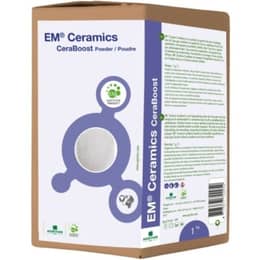
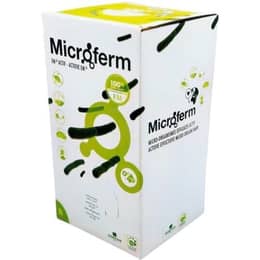
EM ceramic Cera Boost powder | 1 kg Box
For soil, plants, stables and materials, from 1 to 10 kg
€35.77
Fast and odourless, compost worms eat your waste and turn it into worm casting for your plants.

From 2 to 4 trays, with an optional planter.

Up to 18 growing areas around a central wormery.

Terracotta with flower pot.

2 to 4 trays with a lower shelf.

Trays you add over time, for easy harvesting of vermicompost.

Turn your planters and flower beds into a wormery: WORMacotta, In-Ground.
 Practical guide

From the kitchen to the garden, your compost becomes simple, quick, and effective for everyone.
 Practical guide
 Practical guide
Live animals (worms and bait) and products to feed and look after pets and farm animals.

Eisenia compost worms for your wormery or composter.

Ultra-fresh worms: Compost, Dendros and Canadian from 100 g up to 1 kg.

Natural solutions dedicated to the wellbeing of horses, ponies and donkeys.

Optimise the health and performance of your farm.

Mealworms, natural and nutritious supplements.
Enhance your home with our decorative items and care for your house in a natural and sustainable way.
Tend your garden in an eco-friendly and nature-conscious way, for healthy and lasting plantings.
EM-based products created to enrich soils, protect plants, support animal health, and make everyday well-being and maintenance easier.

Contains a blend of 80 families of beneficial microorganisms.

Revitalise, purify and improve water quality in all your applications.

Stimulate soil microbial activity and plant growth.

Cleanse and maintain your environment naturally.

For the wellbeing and health of pets, livestock and horses.

Enrich your body care or dietary routines with essential enzymes.
 Practical guidePractical guide

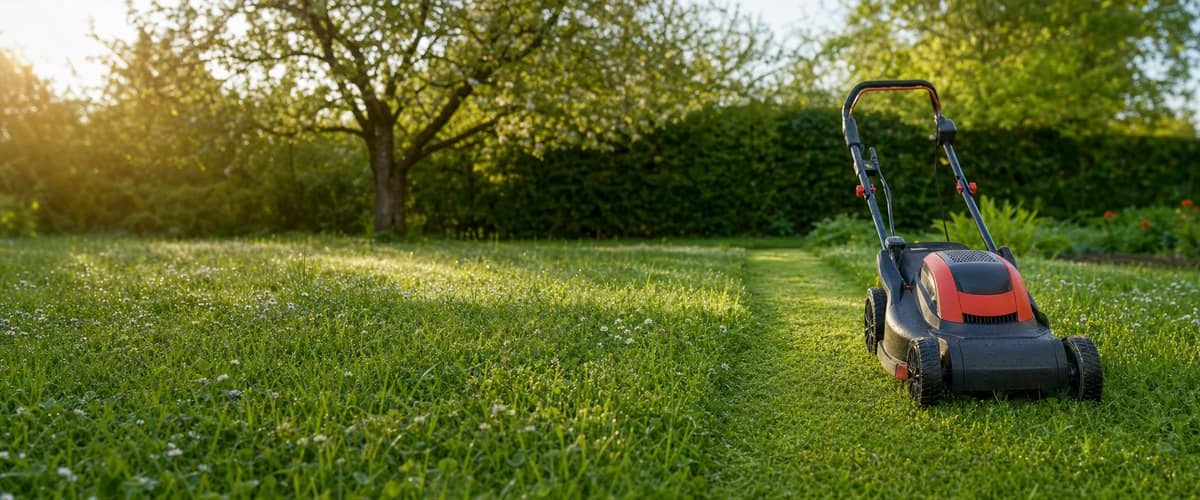
A beautiful lawn without chemical fertiliser or moss killer is entirely possible. The secret is not a miracle product, but living soil, well-adjusted mowing and a little patience. Effective micro-organisms can play a part in this approach, provided you know what they can do, and above all what they don't do.
Here is how to look after your lawn naturally, season after season, with the EM doses recommended by the manufacturers and the steps that really matter.
A lawn is a very demanding crop: it is cut dozens of times a year. When the clippings are collected every time, that means nutrients and organic matter leaving the garden with each pass. Little by little, the soil becomes poorer, soil life slows down, earthworms become scarce and the ground compacts.
Other factors often come into play:
 Mowing too short, which weakens the grass and leaves room for moss and rosette-forming plants.
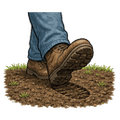 Foot traffic, especially on wet clay soil, which compacts the ground.
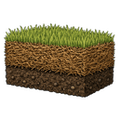 Thatch: a layer of undecomposed debris on the surface that holds water and smothers the grass.
 Shade from trees or buildings, where grass grows poorly.
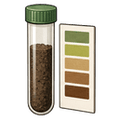 Genuinely acidic soil, which needs to be checked with a soil test rather than guessed.
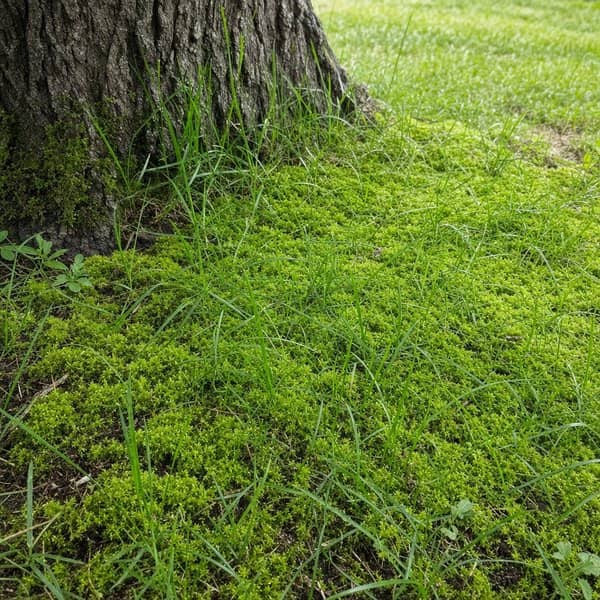
Moss is not a disease: it is a symptom. It takes hold where the grass is weak, and getting rid of it for good means correcting the cause. No product, EM included, will make it go away if the soil remains compacted, waterlogged or too shady.
 Iron sulphate burns off the moss, but it acidifies the soil: the moss often comes back stronger the following year.
 Lime “just in case”: moss likes acidic soils, but many mossy lawns are not acidic. Liming without a soil test can make the soil too chalky for the grass.
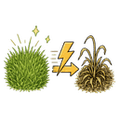 Fast-acting nitrogen fertilisers: they green things up for a few weeks without changing anything about the poor soil.
 Scarify to remove moss and thatch, then compost the debris.
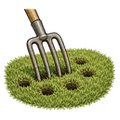 Aerate compacted areas with a garden fork or a hollow-tine aerator.
 Apply fine compost in a thin layer that the grass can grow back through.
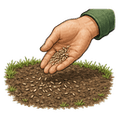 Overseed bare patches, with a shade-tolerant mix if needed.
 Mow higher, and only lime after a pH test.
Key pointsMoss signals a weakened lawn: compacted soil, mowing too short, shade, lack of organic matter. You push it back by caring for the soil and the mowing, not by burning it off.
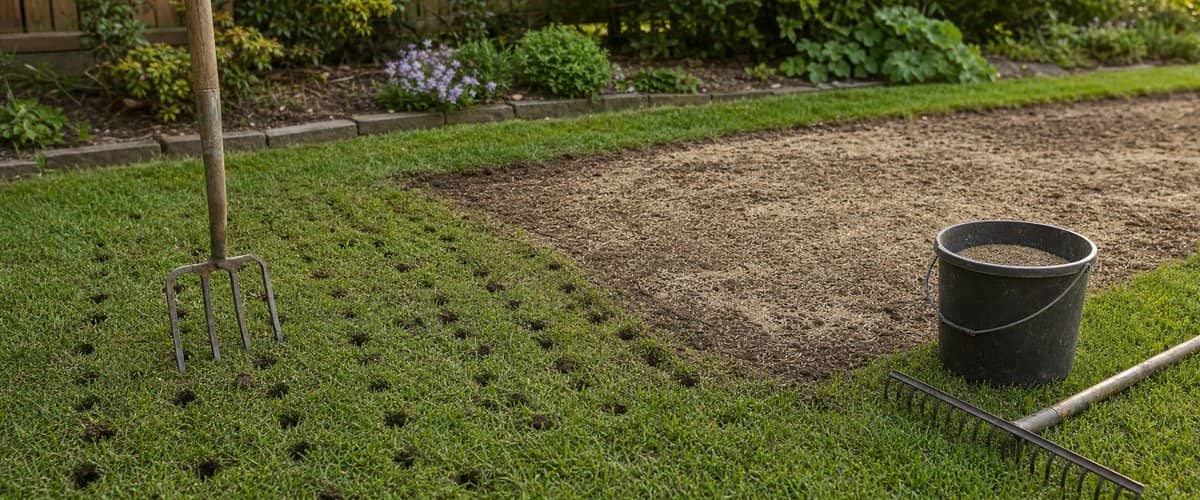
The best time to sow or renovate a lawn is late summer or early autumn, when the ground is still warm and the rain returns. Spring works too, but young seedlings suffer more from summer drought.
 Work the soil to a depth of a few centimetres and remove the roots of perennial weeds.
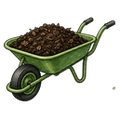 Add organic matter: well-matured compost and, if you wish, our EM Bokashi Mulch for the soil, at the low dose indicated by the manufacturer (around 0.5 kg per m²), raked into the top few centimetres.
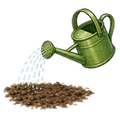 Water the soil with EM, diluted 1 in 100 (100 ml of EM-A Microferm active solution per 10-litre watering can), preferably in damp weather.
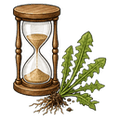 Wait about two weeks before sowing, as the manufacturer advises: the fermented material has time to work into the soil, and the first weeds come up and can be pulled out easily.
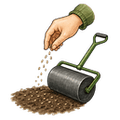 Sow, roll or firm lightly, and keep the surface moist until the seedlings emerge.
Mowing without collecting, or mulching, is the most effective thing you can do for a natural lawn. The mower chops the grass finely and leaves it in place, where it breaks down within a few days and returns to the soil.
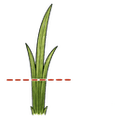 Never cut more than a third of the grass height in one pass. In practice, mow before the grass grows taller than 8 to 9 cm.
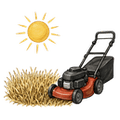 Mow when the grass is dry: wet grass sticks together and forms clumps that smother the lawn.
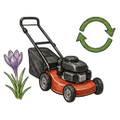 Mow more often in spring, when the grass grows quickly, even if that means mowing every 5 days.
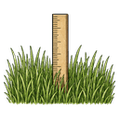 Keep a cutting height of 6 to 8 cm, a little higher in summer and in shade.
Contrary to popular belief, clippings left on the lawn do not cause thatch: they break down quickly. Thatch comes mainly from stems and roots, and from too much fertiliser and watering.
The manufacturer of our EM recommends lightly spraying diluted Microferm on the lawn before mowing, to speed up the breakdown of the cut grass. It is a simple, risk-free step, but we have not found any independent trial measuring its effect on a lawn.
Emy's tipRaise your mower by one notch as soon as the first warm days arrive. Taller grass shades the soil, holds moisture better and leaves less room for moss and dandelions.
Did you know?Grass clippings contain around 4% nitrogen in their dry matter. Trials have shown that leaving clippings on the lawn can cover about a quarter of a lawn's fertiliser needs.
If you prefer to collect the clippings, or the grass is too long for mulching, don't leave it to rot in a heap. There are three options: as a thin 5 cm layer around your vegetables, mixed with dry material in the composter, or fermented under a tarpaulin with EM. This last method, which lets you deal with large volumes in one go, is explained step by step in our guide Speeding up your compost with EM (and making use of grass clippings). Never use clippings from a lawn treated with weedkiller.
EM do not feed the grass: they support the breakdown of organic matter. A natural lawn therefore relies first on mulching and, if needed, on a thin layer of fine compost in late winter. Our reference doses for lawns are in the guide Using your compost in the garden. Spreading clover often signals soil low in nitrogen: clover fixes its own, and a lawn with a few flowers is also a lawn richer in life.
For watering with EM, the doses are the same as for the garden: diluted 1 in 100, roughly 1 to 2 litres of product per 100 m² per year according to the manufacturer, spread over several applications from spring to autumn, preferably before rain. On a large lawn, a dosing spray gun attached to the hose, such as our Aquamix set to 1%, does the dosing for you. Full details are in our guide Using EM in the vegetable garden.
The manufacturer cites the example of a Swedish golf course said to have maintained its greens for three years with a mix of EM, molasses and an organic nitrogen fertiliser, resulting in a more even turf. This is an unpublished account from the manufacturer, in which the effect of EM cannot be separated from that of the fertiliser. Take it as a lead, not as proof.
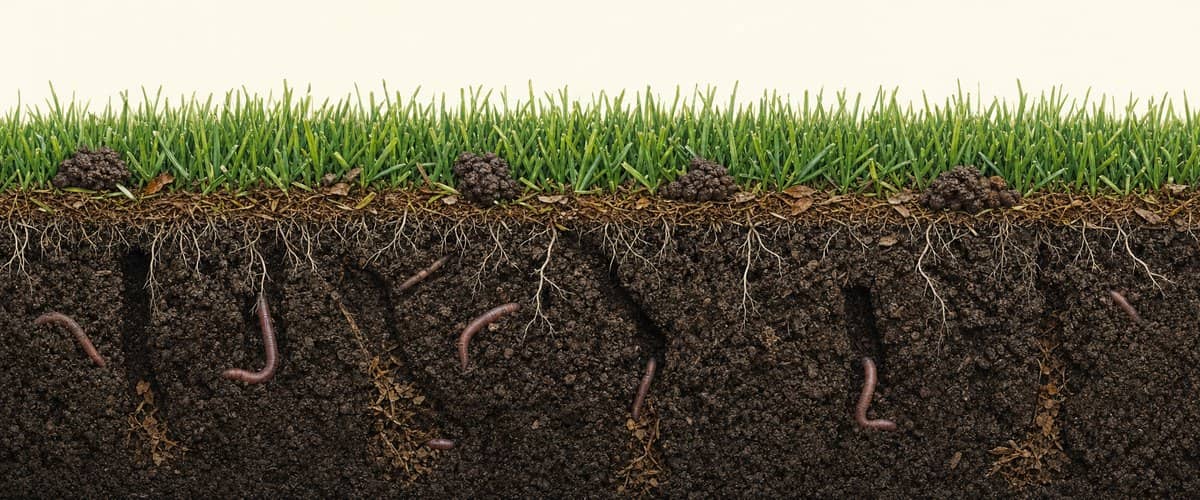
Living soil also attracts earthworms, which aerate the ground and draw organic matter down into it: discover their work in our guide the ecological role of earthworms.
A natural lawn rests on three pillars: living, uncompacted soil; high mowing without collecting, never cutting more than a third of the grass; and regular additions of organic matter. Moss is a symptom that retreats when you care for the soil, not when you burn it off with iron sulphate. EM, diluted 1 in 100 on moist soil a few times a year, and bokashi mulch when preparing to sow, can support this approach; their specific effect on lawns has not been independently measured, but they fit safely into soil-friendly lawn care.
Scan the code or visit mouttafarm.ie/guide: all our practical guides, with links to the products mentioned.


 France
 Belgium
 Switzerland
 Germany
 Austria
 United Kingdom
 Italy
 Spain
 Netherlands
 Portugal
 Sweden
 Finland
 Denmark
 Greece
 Poland
 Romania
 Czech Republic
 United States


