











Best Seller
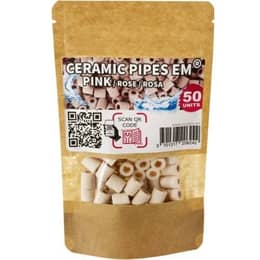
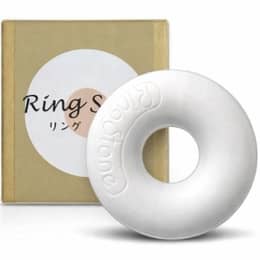
Pink EM ceramic beads | 50 beads
Removes chlorine and unwanted residues from water
€10.15
Fast and odourless, compost worms eat your waste and turn it into worm casting for your plants.

From 2 to 4 trays, with an optional planter.

Up to 18 growing areas around a central wormery.

Terracotta with flower pot.

2 to 4 trays with a lower shelf.

Trays you add over time, for easy harvesting of vermicompost.

Turn your planters and flower beds into a wormery: WORMacotta, In-Ground.
 Practical guide

From the kitchen to the garden, your compost becomes simple, quick, and effective for everyone.
 Practical guide
 Practical guide
Live animals (worms and bait) and products to feed and look after pets and farm animals.

Eisenia compost worms for your wormery or composter.

Ultra-fresh worms: Compost, Dendros and Canadian from 100 g up to 1 kg.

Natural solutions dedicated to the wellbeing of horses, ponies and donkeys.

Optimise the health and performance of your farm.

Mealworms, natural and nutritious supplements.
Enhance your home with our decorative items and care for your house in a natural and sustainable way.
Tend your garden in an eco-friendly and nature-conscious way, for healthy and lasting plantings.
EM-based products created to enrich soils, protect plants, support animal health, and make everyday well-being and maintenance easier.

Contains a blend of 80 families of beneficial microorganisms.

Revitalise, purify and improve water quality in all your applications.

Stimulate soil microbial activity and plant growth.

Cleanse and maintain your environment naturally.

For the wellbeing and health of pets, livestock and horses.

Enrich your body care or dietary routines with essential enzymes.
 Practical guidePractical guide

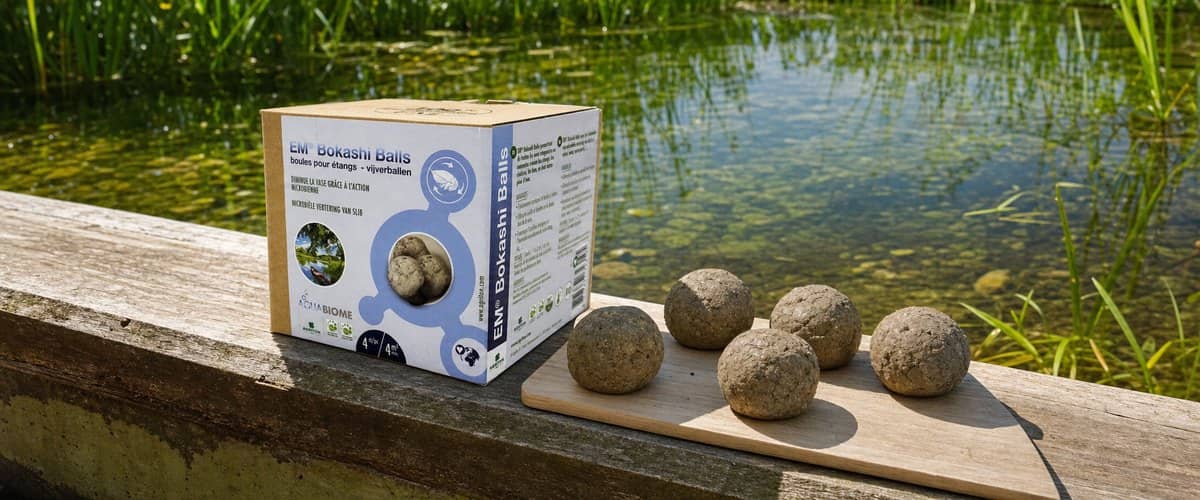
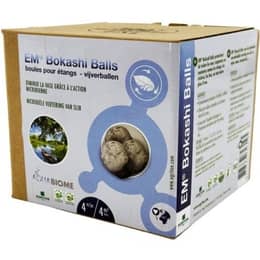
Bokashi pond balls, also known as "mudballs" or "genki balls", look like large balls of dried earth. You drop them to the bottom of a silted-up pond, where they slowly break down. They have a glowing reputation, sometimes to the point of being thrown by the thousand into rivers to "clean" them.
We sell them for private ponds. All the more reason to take an honest look: what they contain, how to use them at home, what the few studies show, and why we ask you never to throw them into a watercourse or a pond that isn't yours.
A pond ball is neither a stone nor a chemical product. It is a compacted, dried mixture that generally combines:
 clay or bentonite, which holds it together and makes the ball sink;
 bokashi, i.e. bran fermented with effective micro-organisms (EM);
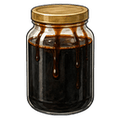 molasses, a sugar that feeds the fermentation;
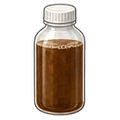 an activated EM solution, such as Microferm;
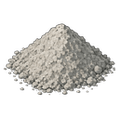 depending on the manufacturer, a little EM ceramic powder.
Once at the bottom of the water, the ball softens and breaks up over a few weeks or months. It releases its fermented organic matter and the micro-organisms it contains into the silt. Bear this in mind: a pond ball also adds nutrients to the pond. This explains both its possible benefit on thick silt and its limits.
According to the manufacturer, the balls help break down the silt built up on the bottom, reduce bad smells and restore a biological balance that favours wildlife. The breakdown of organic matter by micro-organisms is a natural, well-known process. However, the specific effect of EM balls in a garden pond has not been measured by independent trials. We therefore present them as a possible aid, not a guarantee.
Above all, no ball can make up for the usual causes of a pond turning green or silting up: fallen leaves, dirty gutter water, garden fertiliser running off, too many fish or overfed fish, full sun, a lack of plants. These causes, and how to deal with them, are explained in our guide Looking after a pond with EM. Start there: that is what makes the biggest difference.
Key pointsA pond ball works at the bottom, on the silt. It does not replace clearing leaves, plants or a sensible fish population. In an unbalanced pond, it won't work miracles.
For our EM Bokashi pond balls, our product page states:
Instructions vary slightly. The manufacturer's documentation for professionals gives 1 ball per m² of bottom. Other distributors work by volume, with 1 ball per 1,000 litres to start with, which comes to roughly the same for a pond one metre deep, then 1 ball per m² every six months. All point to the same order of magnitude: about one ball per square metre of bottom, no more. Follow the label of the product you have in hand, and do not exceed the dose.
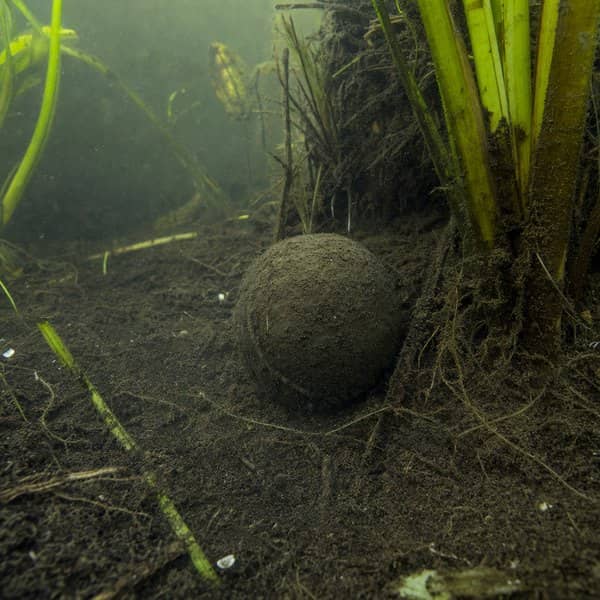
Drop the balls gently into the water, spreading them over the silted areas rather than grouping them in one spot. Micro-organisms work poorly in cold water: distributors recommend water above 10 °C, from March to November. We recommend spring or early autumn, when the water is mild but still well oxygenated.
In the following weeks, you may see bubbles and patches of silt or algae rising to the surface. Remove them with a net and put them on the compost.
Emy's tipMeasure the bottom area before ordering, then split the dose into two additions two or three weeks apart if your pond is small and stocked with fish. Watch your fish after each addition: at the slightest sign of distress at the surface, stop and oxygenate the water.
 Never overdose. Any decomposing organic matter consumes oxygen. The tank trials described below show that a dose ten times too strong can strip the water of oxygen for weeks.
 Avoid adding them in high summer, when warm water naturally holds less oxygen.
 Not in clean water: a ball has no place in a water butt or a drinking trough, since it breaks up there.
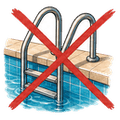 Not in swimming pools: this is covered in our guide EM and swimming pools.
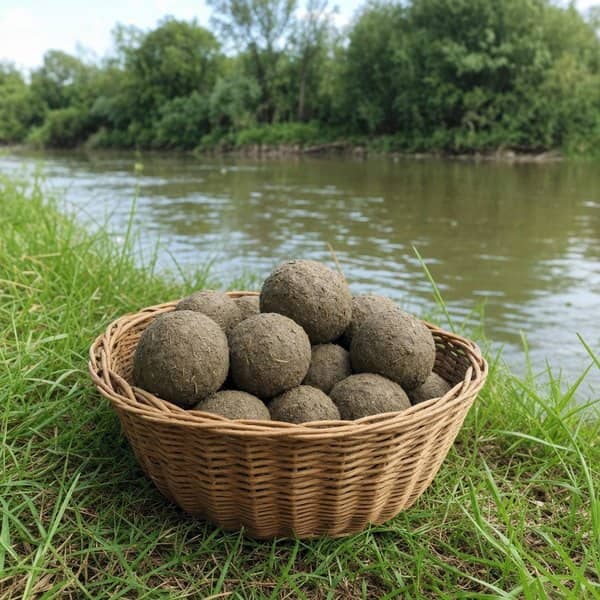
In Japan, South-East Asia and later Hawaii, groups have for years organised mass releases of EM balls into polluted canals or rivers. The manufacturer presents these actions as successes. What do the data say?
Supporters of the releases dispute these conclusions and point to their own observations. The debate is open, but the balance of evidence is clear: nothing shows that these balls improve a watercourse, and overdosing can harm it.
Did you know?In this Hawaiian trial, genetic analysis of the EM product used found only lactic acid bacteria, without the advertised photosynthetic bacteria, but with bacteria of the genus Clostridium. The actual composition of a microbial mixture can therefore differ from what you might imagine.

We ask you clearly: do not throw any balls into a river, ditch, lake or pond that isn't yours, even with the best intentions. There are several reasons for this.
 The ecological risk: added nutrients and organic matter, lower oxygen, introduction of micro-organisms foreign to the environment.
 No proven benefit, as we have just seen.
 The law: in most countries, discharges that harm water quality, wildlife or plant life are prohibited, and any intervention in an aquatic environment is regulated by the authorities responsible for water. Any group action must go through whoever manages the watercourse; check the rules that apply in your country. Details are in our guide EM and regulations.
Want to help a river? Picking up litter along the banks, reporting a suspicious discharge, planting hedges along the water or using less fertiliser in the garden are far more useful.
Recipes are going around: clay soil, bokashi and activated EM solution, shaped into balls and dried in the shade. We don't recommend it: the microbial quality of a homemade ball is impossible to control, and garden soil can bring in seeds or pollutants. A ready-to-use ball with a known dosage remains safer.
If you enjoy making things, put your energy into your own fermented bran for the bokashi bucket instead: our step-by-step recipe is in the guide Making your own homemade bokashi activator. For the pond water itself, EM-A Microferm active solution and EM Photo+ Aquabiome can be used as a complement, following their instructions.
To find out more about the level of evidence for EM in all its uses, read our guide What science says about EM.
A pond ball is a mixture of clay, bokashi, molasses and EM that breaks down at the bottom of a silted-up pond. In a private pond, it can help with silt, at about one ball per 1 to 2 m² of bottom, added preferably in spring or early autumn and never overdosed. Its specific effect has not been independently proven, and it does not replace dealing with the causes: leaves, nutrients, plants and fish. In rivers and public ponds, the most rigorous trial found no benefit and a risk at high doses: never throw them in anywhere other than your own pond.
Scan the code or visit mouttafarm.ie/guide: all our practical guides, with links to the products mentioned.


 France
 Belgium
 Switzerland
 Germany
 Austria
 United Kingdom
 Italy
 Spain
 Netherlands
 Portugal
 Sweden
 Finland
 Denmark
 Greece
 Poland
 Romania
 Czech Republic
 United States


