











Best Seller
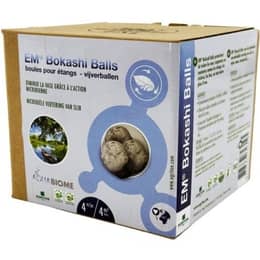
EM Bokashi pond ball | 4 pieces
Reduce and eliminate sludge in ponds, water features and wildlife ponds
€24.50
Fast and odourless, compost worms eat your waste and turn it into worm casting for your plants.

From 2 to 4 trays, with an optional planter.

Up to 18 growing areas around a central wormery.

Terracotta with flower pot.

2 to 4 trays with a lower shelf.

Trays you add over time, for easy harvesting of vermicompost.

Turn your planters and flower beds into a wormery: WORMacotta, In-Ground.
 Practical guide

From the kitchen to the garden, your compost becomes simple, quick, and effective for everyone.
 Practical guide
 Practical guide
Live animals (worms and bait) and products to feed and look after pets and farm animals.

Eisenia compost worms for your wormery or composter.

Ultra-fresh worms: Compost, Dendros and Canadian from 100 g up to 1 kg.

Natural solutions dedicated to the wellbeing of horses, ponies and donkeys.

Optimise the health and performance of your farm.

Mealworms, natural and nutritious supplements.
Enhance your home with our decorative items and care for your house in a natural and sustainable way.
Tend your garden in an eco-friendly and nature-conscious way, for healthy and lasting plantings.
EM-based products created to enrich soils, protect plants, support animal health, and make everyday well-being and maintenance easier.

Contains a blend of 80 families of beneficial microorganisms.

Revitalise, purify and improve water quality in all your applications.

Stimulate soil microbial activity and plant growth.

Cleanse and maintain your environment naturally.

For the wellbeing and health of pets, livestock and horses.

Enrich your body care or dietary routines with essential enzymes.
 Practical guidePractical guide

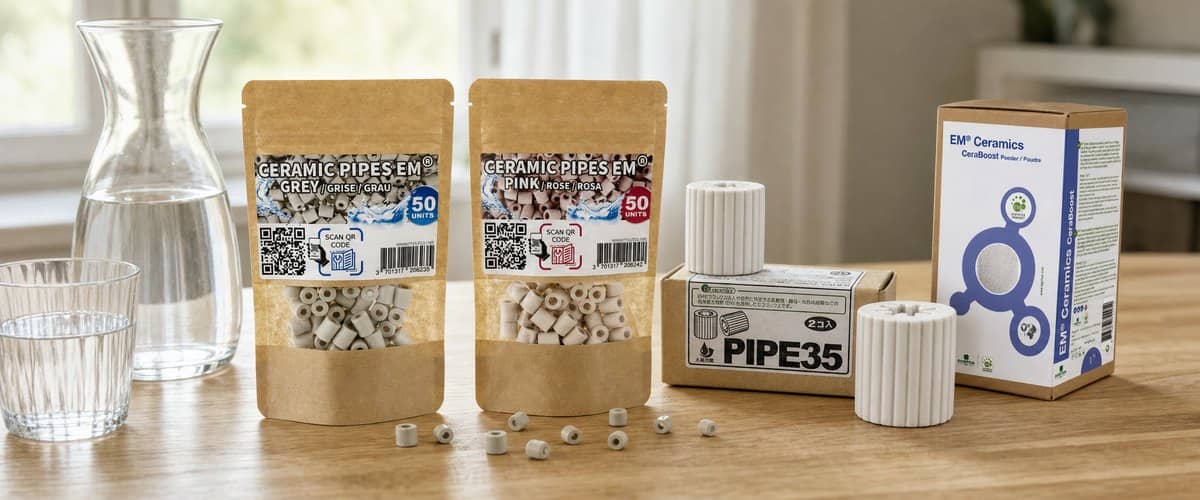
Grey or pink beads in the jug, a ring at the bottom of the drinking trough, a tube in the rainwater butt, powder in paint or in the vegetable garden: EM ceramics form a range of their own in the world of effective microorganisms. They are also the products surrounded by the most surprising promises.
We sell them, and many of our customers like them. This guide explains how they are made, what the manufacturer says about them, what the science says, and how to use them with the right expectations.
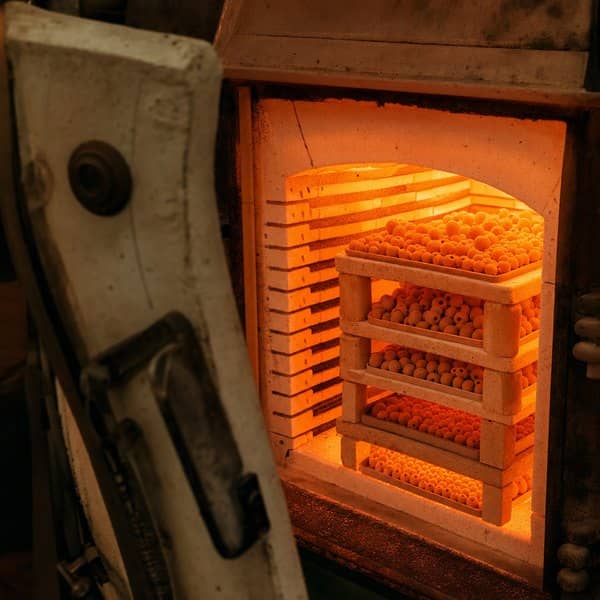
The principle is always the same. A clay, often Japanese Kibushi clay, is fermented with effective microorganisms, then shaped and fired in a kiln. According to the technical data sheets, the firing temperature is what distinguishes the products:
One point deserves to be stated clearly, and the manufacturer acknowledges it himself: no microorganism survives such firing. An EM ceramic is an inert mineral object. It contains no living bacteria and does not inoculate the water.
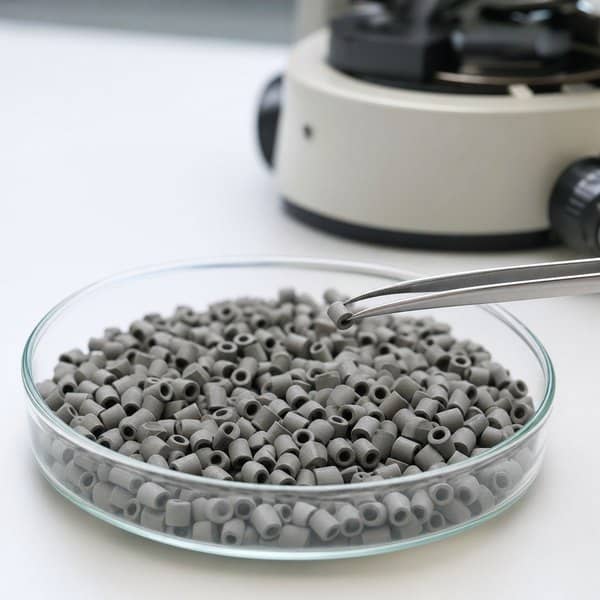
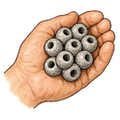 Grey EM ceramic beads and balls: jug, kettle, coffee maker, washing machine, dishwasher, vase. They last more than ten years if they don't break.
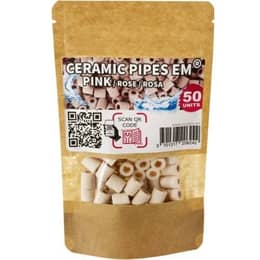
 Pink EM ceramic beads: cold water only (jug, vase, aquarium, pond), to be replaced every six months.
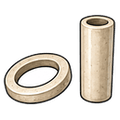 The ring and the Maxi Tube: a single piece for a large container, such as a drinking trough, a bath or a rainwater butt, for which the 35 mm ceramic Maxi Tube is used.
 Figurines: for the jug, cooking water or the bath.
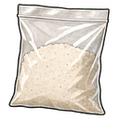 Powders: Cera Boost powder for soil, mulch or bokashi, and a fine powder to mix into paint or plaster.
According to the manufacturer, EM ceramics retain an « information » from the microorganisms after firing and act on water through a « resonance principle ». They are said to improve the structure and taste of water, reduce limescale and oxidation, keep food and cut flowers fresh for longer and, in the case of certain powders, reduce formaldehyde emissions from paints. Some descriptions even go as far as mentioning protection against electromagnetic waves.
We report these claims so that you know what is being said. We do not endorse them.
To date, we have found no independent study demonstrating any effect of EM ceramics on water, food or health. The few assessments available all point the same way:
The manufacturer cites a test: 10 g of ceramic placed in a 60-litre tank reportedly reduced formaldehyde by 90 % in 24 hours. This test has not been published in a scientific journal, no control tank without ceramic is described, and the starting concentration was hundreds of times higher than in a home. A porous ceramic can hold some gases on its surface, as many mineral materials do: this is an ordinary physical phenomenon that has nothing to do with microorganisms. A patent, often put forward, protects an invention but does not prove that it works.
Did you know?In a jug left uncovered, the chlorine taste of tap water fades by itself within a few hours, as the chlorine evaporates. Part of the improvement in taste attributed to the beads simply comes from this standing in the open air.
EM ceramics are durable objects, made from natural material, and pleasant to use. Many of our customers enjoy this small daily ritual and find their water more pleasant. We simply advise you to use them for what they are, without giving them a role they cannot fulfil.
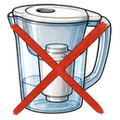 It is not a filter. Non-drinkable water stays non-drinkable with ceramics. Water from a rainwater butt does not become safe to drink.
 It is not a water softener. For very hard water, a water softener remains the recognised solution.
 It is not a treatment: not for swimming pool or hot tub water, nor for plants, nor for animals. Cera Boost is a fine mineral powder, not a protection against disease; for a wound on an animal, call the vet.
 Hygiene and safety: throw away any cracked or broken bead, keep small pieces out of the reach of young children, and do not use the pink beads in hot water.
Emy's tipRinse your beads in clean water before first use. After that, every three months, brush the grey beads, soak them overnight in diluted white vinegar, rinse them and boil them for 20 minutes. Replace the pink beads every six months.
If you are looking for measurable effects on a pond, soil or bedding, turn instead to liquid EM products, to be used with the same caution: see for example our guide Looking after a pond or wildlife pond with EM. And for swimming pools, first read our guide EM and swimming pools.
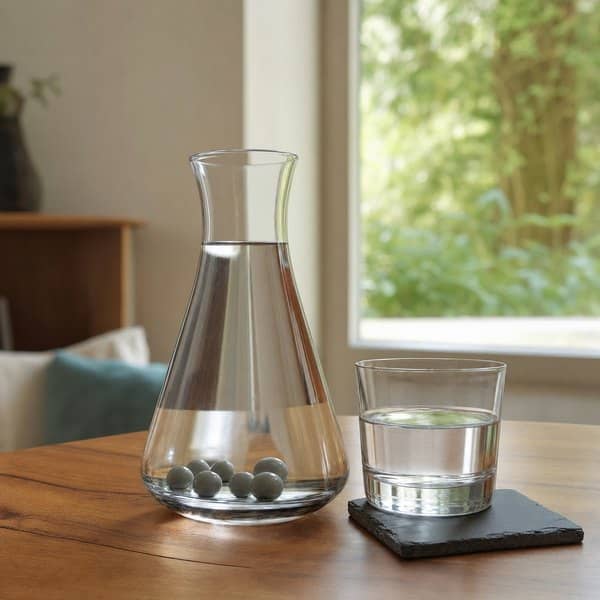
We sell these ceramics because our customers ask for them, because they are carefully made and because they last for years. But we would rather tell you what has been demonstrated and what has not, than let you buy a promise. It is the same approach as throughout the « Going further » section of this guide, summed up in our guide What the science says about EM. The rules governing how these objects may be presented are explained in the guide EM and regulations.
Key pointsAn EM ceramic is an object made of fermented, then fired clay, with no living microorganisms. Its effects on water are manufacturer claims that have not been demonstrated. Use it as a pleasant, durable object, never as a filter, a water softener or a treatment.
EM ceramics are made from clay fermented with EM, then fired at between 800 and 1,300 °C: they no longer contain any living microorganisms. The manufacturer attributes effects to them on water, limescale, food preservation or indoor air, but no independent study confirms them, and the mechanisms put forward do not correspond to anything known. You can use them as durable, pleasant objects, well maintained, without expecting them to act as a filter, a water softener or a treatment.
Scan the code or visit mouttafarm.ie/guide: all our practical guides, with links to the products mentioned.


 France
 Belgium
 Switzerland
 Germany
 Austria
 United Kingdom
 Italy
 Spain
 Netherlands
 Portugal
 Sweden
 Finland
 Denmark
 Greece
 Poland
 Romania
 Czech Republic
 United States


