











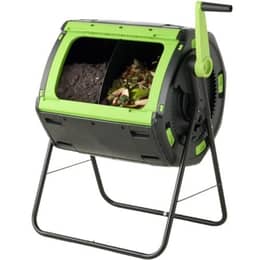
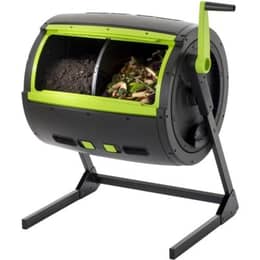
Maze 180L Dual Chamber Rotating Composter
Effortless outdoor composting
€183.48
Fast and odourless, compost worms eat your waste and turn it into worm casting for your plants.

From 2 to 4 trays, with an optional planter.

Up to 18 growing areas around a central wormery.

Terracotta with flower pot.

2 to 4 trays with a lower shelf.

Trays you add over time, for easy harvesting of vermicompost.

Turn your planters and flower beds into a wormery: WORMacotta, In-Ground.
 Practical guide

From the kitchen to the garden, your compost becomes simple, quick, and effective for everyone.
 Practical guide
 Practical guide
Live animals (worms and bait) and products to feed and look after pets and farm animals.

Eisenia compost worms for your wormery or composter.

Ultra-fresh worms: Compost, Dendros and Canadian from 100 g up to 1 kg.

Natural solutions dedicated to the wellbeing of horses, ponies and donkeys.

Optimise the health and performance of your farm.

Mealworms, natural and nutritious supplements.
Enhance your home with our decorative items and care for your house in a natural and sustainable way.
Tend your garden in an eco-friendly and nature-conscious way, for healthy and lasting plantings.
EM-based products created to enrich soils, protect plants, support animal health, and make everyday well-being and maintenance easier.

Contains a blend of 80 families of beneficial microorganisms.

Revitalise, purify and improve water quality in all your applications.

Stimulate soil microbial activity and plant growth.

Cleanse and maintain your environment naturally.

For the wellbeing and health of pets, livestock and horses.

Enrich your body care or dietary routines with essential enzymes.
 Practical guidePractical guide

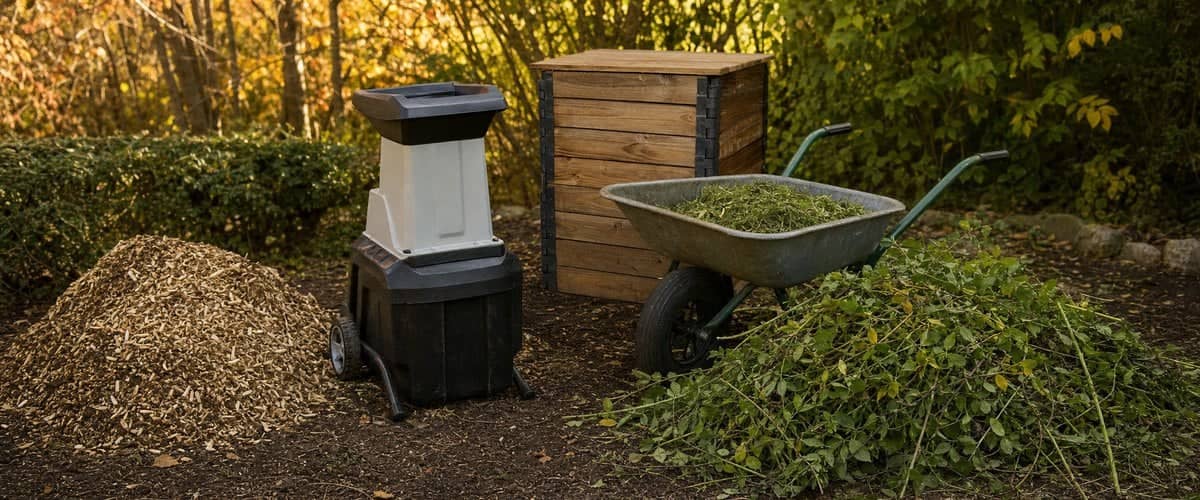
Spring grass cuttings, hedge trimmings, autumn leaves: in a house with a garden, garden waste often amounts to far more volume than kitchen peelings. Well managed, it becomes a precious resource for your compost and your soil. Badly managed, it clogs up the compost bin, makes it rot, or goes up in smoke at the bottom of the garden.
Here is how to compost it properly, how to reduce the volume by mulching, and why you should never burn it.
In France, it is estimated that each person produces on average around 160 kg of garden waste a year. That is more than double the roughly 70 kg of compostable waste, mostly from the kitchen, that each person produces a year. And these volumes arrive in waves: huge amounts of grass cuttings in spring, prunings in late winter and summer, mountains of leaves in autumn.
A single compost bin cannot absorb it all at once. Hence the value of combining three solutions: compost some of it, keep a stock of dry material for later, and leave the rest in the garden as mulch.
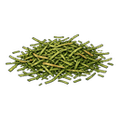
Freshly cut grass is a green material very rich in nitrogen and water. It breaks down very quickly… too quickly. Tipped into the compost bin in a thick layer, it compacts, drives out the air and turns into a slimy, smelly mass: a classic trap.
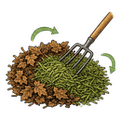 Always mix grass cuttings with dry material: dead leaves, shredded material, torn cardboard.
 Add them in thin layers, mixing them in each time with the material already there.
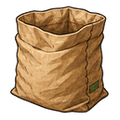 If you are short of browns, leave the surplus to dry for a few days in a heap next to the compost bin before adding it. Dried grass then behaves more like a brown material.
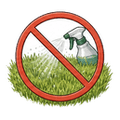 Do not use cuttings from a lawn treated with weedkiller: they have no place in compost.
Key pointsGrass cuttings on their own rot; mixed grass cuttings compost. Every time you empty the mower's grass box into the compost bin, add some dry material too.
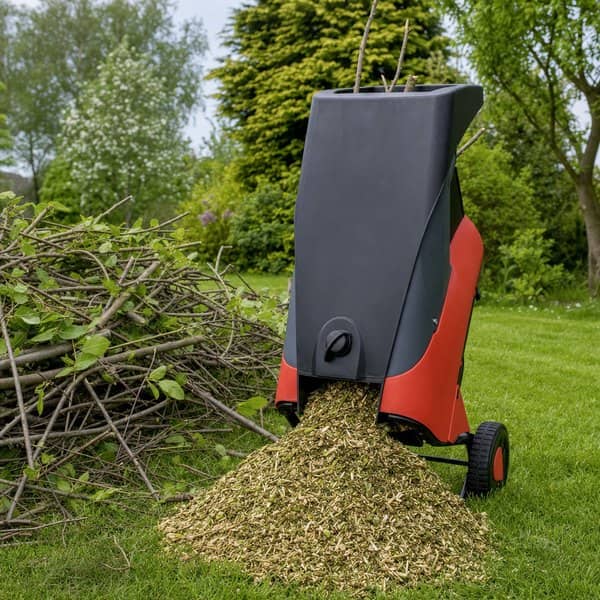
Branches, rose stems and hedge trimmings are brown materials very rich in carbon. Whole, they take years to break down and leave gaps in the compost bin. So it is best to cut or shred them before composting.
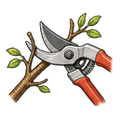 For small quantities: secateurs or shears are enough. Cut into pieces a few centimetres long.
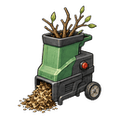 For large volumes: a garden shredder is worthwhile. Some local authorities lend them out or organise shredding days: ask your local council.
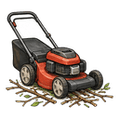 Running the lawnmower over a pile of small, thin prunings or leaves also chops them up.
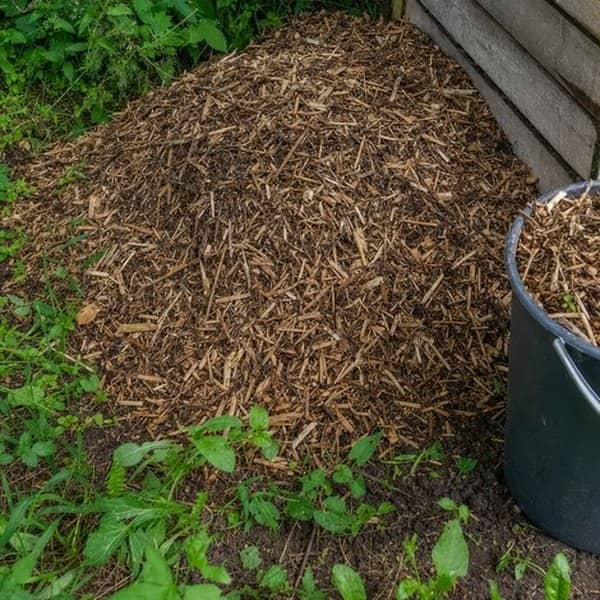
Once shredded, your prunings become shredded material: a mix of small wood chips and leaves. It is the ideal dry material to balance kitchen peelings and grass cuttings, because it gives the compost structure and lets air circulate.
The right habit: store your shredded material next to the compost bin, in a container, a sack or a sheltered corner, and take a handful each time you add something wet. It also makes the ideal bottom layer for starting a compost bin: we explain how in our guide Starting your compost bin step by step. Shredded material is also an excellent mulch for flower beds and around the base of shrubs.
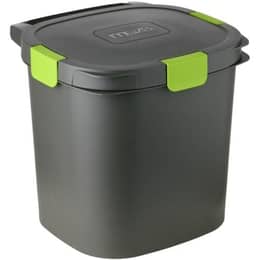
Willy's tipKeep some well-dried shredded hedge trimmings in an old bin with a lid near the compost bin. In summer, when grass cuttings and fruit peelings pour in and dead leaves are just a memory, it will save you from having too many greens.
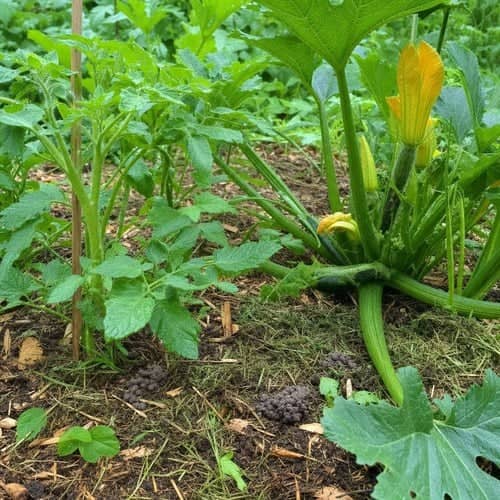 The best garden waste is the waste you never collect. So prevention comes first: before composting, ask yourself what can stay in the garden.
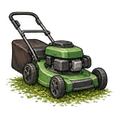 Mowing without collecting (or "mulching"): the mower cuts the grass very finely and leaves it on the lawn, where it breaks down quickly and feeds the grass. Nothing left to collect.
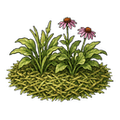 Mulching with grass cuttings: a thin layer of about 5 cm around vegetables or shrubs. Any thicker and the grass ferments.
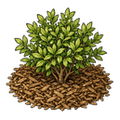 Mulching with shredded material or dead leaves: it keeps moisture in the soil, keeps weeds down and feeds soil life as it breaks down.
Mulched soil rich in organic matter also attracts earthworms, which then bury this material themselves: see our guide Reintroducing earthworms into your garden and the one on the ecological role of earthworms.
Despite everything, some gardeners still burn their garden waste at the bottom of the garden: in France, it is estimated that around 15% of households with a garden do so. Yet it is banned there all year round, and in many other places it is restricted or discouraged.
Rules on bonfires and the open-air burning of garden waste vary from country to country, and sometimes from one area to another. Depending on where you live, burning may be banned outright, allowed only under certain conditions, or subject to rules on smoke and nuisance to neighbours. Garden incinerators may also be covered by these rules.
Breaking these rules can lead to a fine or other penalties. Exceptions may exist, for example to deal with a plant disease or an invasive plant, but they are usually limited. Check with your local council or waste service before doing anything.
Plant material burns poorly, especially when damp, and gives off large amounts of fine particles that are harmful to the lungs. According to air quality measurements carried out in France, burning 50 kg of plant material emits as many particles as a recent diesel car driven around 13,000 km in town. Not to mention the nuisance for neighbours and the risk of fire.
Did you know?Burning your garden waste also wastes a resource: the branches you burn are exactly the brown material so many compost bins are short of, and dead leaves make free mulch and excellent leaf mould.
Whatever you cannot compost, shred or use as mulch can be taken to your local recycling centre or put out for your council's garden waste collection, if there is one. To find out more about separate collection of biowaste, see our guide Compulsory biowaste sorting since 2024.
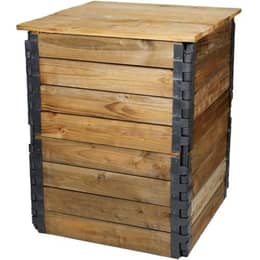
To handle large volumes of garden waste, a bin with a good capacity such as the Compostys wooden compost bin is better suited than a small kitchen composter. And to mix grass cuttings and shredded material without turning the whole heap, the Brass'Compost compost aerator saves a great deal of time.
Garden waste weighs a lot, around 160 kg per person per year in France, but it is a resource. Grass cuttings are composted in thin layers, always mixed with browns; branches are shredded first, and the shredded material becomes your stock of dry material. Mowing without collecting and mulching mean you collect a good part of it less. As for burning, it is often restricted or banned depending on where you live, can lead to a fine, and is highly polluting.
Scan the code or visit mouttafarm.ie/guide: all our practical guides, with links to the products mentioned.


 France
 Belgium
 Switzerland
 Germany
 Austria
 United Kingdom
 Italy
 Spain
 Netherlands
 Portugal
 Sweden
 Finland
 Denmark
 Greece
 Poland
 Romania
 Czech Republic
 United States


