












EASY-TURN Handle for 245L Maze Rotating Composter
Reduced effort thanks to the 3-gear system
€40.90
Fast and odourless, compost worms eat your waste and turn it into worm casting for your plants.

From 2 to 4 trays, with an optional planter.

Up to 18 growing areas around a central wormery.

Terracotta with flower pot.

2 to 4 trays with a lower shelf.

Trays you add over time, for easy harvesting of vermicompost.

Turn your planters and flower beds into a wormery: WORMacotta, In-Ground.
 Practical guide

From the kitchen to the garden, your compost becomes simple, quick, and effective for everyone.
 Practical guide
 Practical guide
Live animals (worms and bait) and products to feed and look after pets and farm animals.

Eisenia compost worms for your wormery or composter.

Ultra-fresh worms: Compost, Dendros and Canadian from 100 g up to 1 kg.

Natural solutions dedicated to the wellbeing of horses, ponies and donkeys.

Optimise the health and performance of your farm.

Mealworms, natural and nutritious supplements.
Enhance your home with our decorative items and care for your house in a natural and sustainable way.
Tend your garden in an eco-friendly and nature-conscious way, for healthy and lasting plantings.
EM-based products created to enrich soils, protect plants, support animal health, and make everyday well-being and maintenance easier.

Contains a blend of 80 families of beneficial microorganisms.

Revitalise, purify and improve water quality in all your applications.

Stimulate soil microbial activity and plant growth.

Cleanse and maintain your environment naturally.

For the wellbeing and health of pets, livestock and horses.

Enrich your body care or dietary routines with essential enzymes.
 Practical guidePractical guide

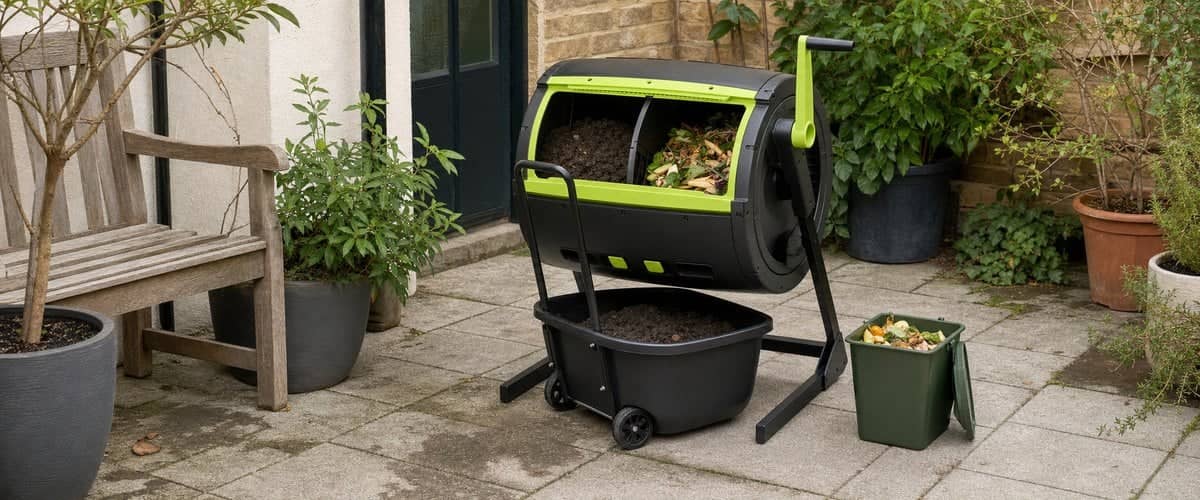
No fork, no heap to turn, no rodents: on paper, the rotating composter has everything going for it. You simply turn the drum to aerate the compost. It is a very good tool, provided you know what it does well… and what it doesn't.
You often read that a rotating composter produces compost in just a few weeks. The reality is more nuanced. Here is how it works, how long it really takes, and who it is genuinely the right choice for.
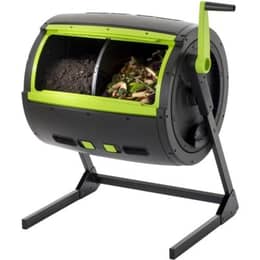
A rotating composter is a closed drum mounted on a frame that holds it above the ground. You add your waste through a hatch, then turn it a few times. This movement mixes and aerates the material in one go, where you would need several minutes with a fork in a standard bin. Ventilation openings let air in and allow excess moisture to escape.
The basic principle is simple: a rotating composter is turned every time you add waste. It is this regular habit that makes the difference.
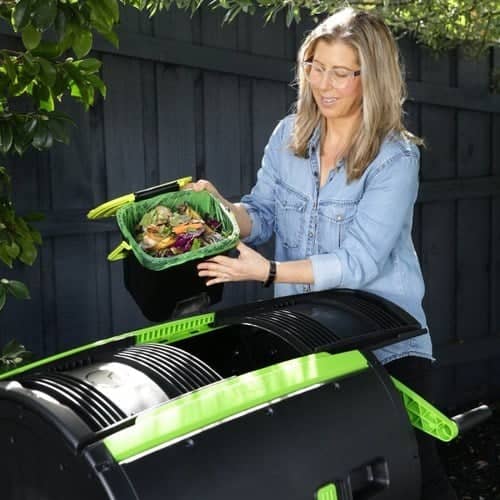 The main drawback of a single drum is that it works in batches. Its speed depends on filling it properly in one go: each new addition partly restarts the cycle, and the compost is never "finished".
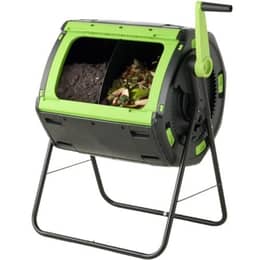
Dual-chamber models, such as our Maze 180L dual-chamber rotating composter or our Maze 245L dual-chamber rotating composter, solve this problem. The manufacturer Maze's advice is simple: fill the first chamber until it is full, then leave it to work while you fill the second. When the second is full, the first is ready to be emptied.
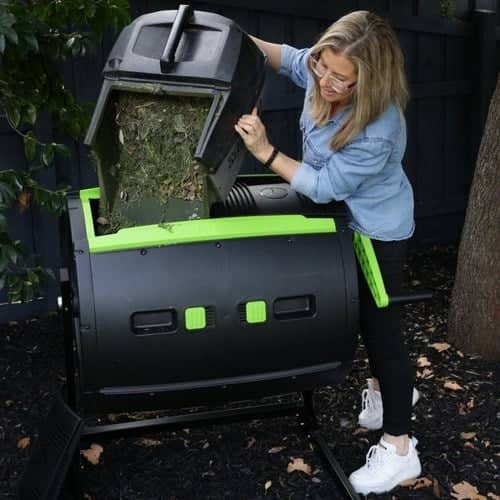 This is the awkward question, and we would rather answer it honestly.
Our view: allow several weeks to a few months in the drum depending on the season and what you add, then a maturing period before using the compost in the vegetable garden. A rotating composter is therefore not an express compost machine. Its real advantage lies elsewhere: it takes far less effort, it is clean and it protects your waste.
Key pointsA rotating composter saves effort, keeps things clean and gives you peace of mind where rodents are concerned, but it does not necessarily save time. What comes out after a few weeks is fresh compost that still needs to mature.
Resist the temptation to spread your waste across both chambers. Put everything into one until it is full, then move on to the second. The first can then finish breaking down without constantly being "refreshed" with new waste.
A few turns after each addition are enough. On the 245-litre model, the EASY-TURN handle makes this easier once the drum starts to fill up.
In a closed drum, moisture builds up quickly. Each time you add kitchen waste, add a good handful of brown material: torn brown cardboard, dead leaves, fine shredded material, wood shavings. This is the best way to avoid sticky compost that forms balls. Our guide Green and brown materials explains this balance.
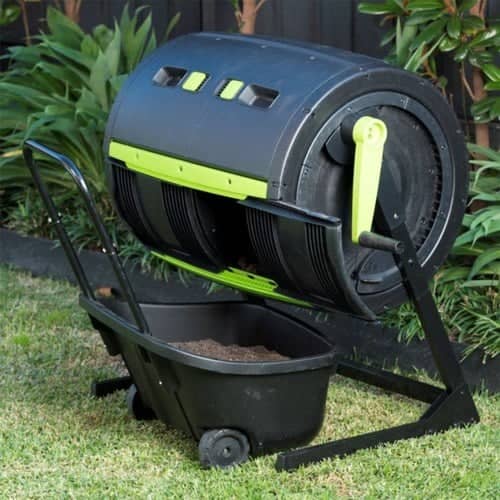
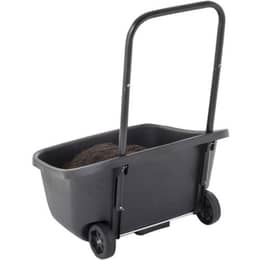
The drum lets a brown liquid, compost tea, drain out through its vents. Above bare soil, it soaks in without any problem. On a patio, a courtyard or concrete, it would stain the surface: always place a container underneath. Our 55-litre compost collection cart, slid under the drum, collects this liquid and also lets you gather and carry the compost when you empty the composter. Diluted, this liquid can then be used to water the plants in your garden.
Maze advises against cooking oil, dog and cat faeces, large pieces of meat, cheese and bones. We would add unshredded branches, which break down far too slowly for a drum.
Willy's tipIf you use a bokashi bucket in the kitchen, empty it into the chamber you are currently filling, with a good handful of dry material: the already fermented scraps break down well in the drum. Our bokashi guide explains how to prepare this pre-compost.
 The weight when full: moist compost is heavy. A well-filled drum becomes noticeably harder to turn, and some users prefer to fill it only partly.
 The cold: raised up and surrounded by air, an uninsulated drum struggles to heat up in cold weather. In winter, activity slows down a great deal, and that is normal.
 No earthworms: as it does not touch the ground, worms and other small creatures cannot get into it. The resulting compost is often coarser than that from a bin standing on soil.
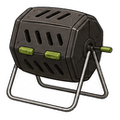 Limited capacity: it is suited to kitchen waste and small amounts of garden waste, not large spring grass cuttings or hedge trimmings.
A rotating composter really comes into its own in several situations:
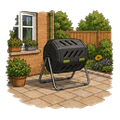 A patio, a courtyard or concrete ground, where a standard bin could not stand on soil. Simply plan for something to collect the liquid draining from the drum, as we explain below.
 An area with lots of rodents: closed and raised, the drum is hard for them to get into.
 A bad back: turning a handle or a drum takes far less effort than turning a heap with a fork.
 A small household composting mainly kitchen waste that wants a clean solution, with no smells or splashes.
On the other hand, if you have a large garden with plenty of green waste, a bin standing on soil or a multi-bin system remains more suitable: we compare them in our guide Compost heap or compost bin.
 When you empty a chamber, you get brown compost that is still fairly coarse, in which you may sometimes recognise pieces of waste. This is fresh compost. Immature compost can harm young plants, so you should not sow or plant directly into it.
You have two options:
To find out whether it is ready for the vegetable garden, our guide How to tell if your compost is mature presents three simple tests, including the cress test.
A rotating composter replaces the fork with a few turns of the drum. It is clean, easy on the body, suited to concrete surfaces and hard for rodents to get into. However, it is not necessarily faster than a well-maintained heap: it produces fresh compost in a few weeks to a few months, which then needs to mature for three to five months in a heap before going on the vegetable garden. Fill one chamber after the other, turn it every time you add waste, always add dry material, and bear in mind that it does not replace a bin for large volumes of garden waste.
Scan the code or visit mouttafarm.ie/guide: all our practical guides, with links to the products mentioned.


 France
 Belgium
 Switzerland
 Germany
 Austria
 United Kingdom
 Italy
 Spain
 Netherlands
 Portugal
 Sweden
 Finland
 Denmark
 Greece
 Poland
 Romania
 Czech Republic
 United States


