











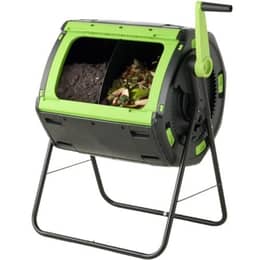
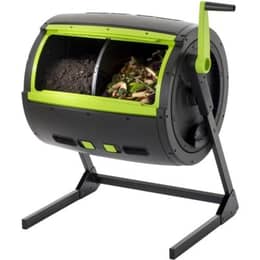
Maze 180L Dual Chamber Rotating Composter
Effortless outdoor composting
€183.48
Fast and odourless, compost worms eat your waste and turn it into worm casting for your plants.

From 2 to 4 trays, with an optional planter.

Up to 18 growing areas around a central wormery.

Terracotta with flower pot.

2 to 4 trays with a lower shelf.

Trays you add over time, for easy harvesting of vermicompost.

Turn your planters and flower beds into a wormery: WORMacotta, In-Ground.
 Practical guide

From the kitchen to the garden, your compost becomes simple, quick, and effective for everyone.
 Practical guide
 Practical guide
Live animals (worms and bait) and products to feed and look after pets and farm animals.

Eisenia compost worms for your wormery or composter.

Ultra-fresh worms: Compost, Dendros and Canadian from 100 g up to 1 kg.

Natural solutions dedicated to the wellbeing of horses, ponies and donkeys.

Optimise the health and performance of your farm.

Mealworms, natural and nutritious supplements.
Enhance your home with our decorative items and care for your house in a natural and sustainable way.
Tend your garden in an eco-friendly and nature-conscious way, for healthy and lasting plantings.
EM-based products created to enrich soils, protect plants, support animal health, and make everyday well-being and maintenance easier.

Contains a blend of 80 families of beneficial microorganisms.

Revitalise, purify and improve water quality in all your applications.

Stimulate soil microbial activity and plant growth.

Cleanse and maintain your environment naturally.

For the wellbeing and health of pets, livestock and horses.

Enrich your body care or dietary routines with essential enzymes.
 Practical guidePractical guide

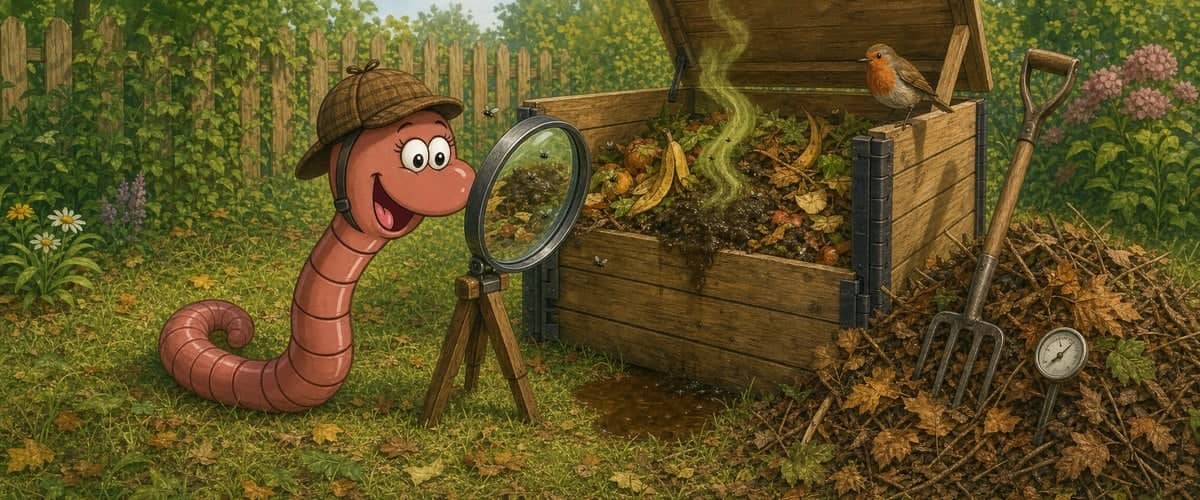
Healthy compost doesn't ask for much: it smells like a woodland floor, it shrinks in volume week after week and it ends up looking like good soil. When something is wrong, it lets you know quickly, through a smell, a texture or a heap that has stopped changing. Don't worry: almost all of these signals come down to just three settings: air, water and the balance between green and brown materials.
If you use a wormery, the causes are similar but the remedies are not the same: see our guide Bad smells in the wormery instead.
This is the most common problem. The micro-organisms that make good compost breathe: they need oxygen. When air stops circulating, other micro-organisms, which live without oxygen, take over. They then produce foul-smelling gases, but also methane, a powerful greenhouse gas.
Air is almost always lacking for the same reason: too much water, and materials that are too fine and pack down. A thick layer of fresh grass clippings, a large bucket of juicy peelings or several weeks of rain on an open bin are enough to block every gap in the mix.
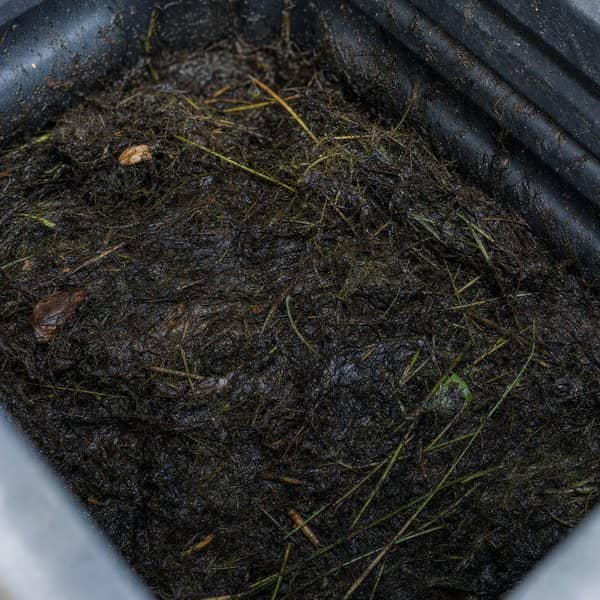
 Turn the mass to loosen it and let air in, with a fork or an aerator such as our Brass'Compost;
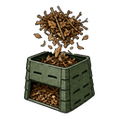 mix in coarse brown materials: shredded branches, dead leaves, straw, torn brown cardboard;
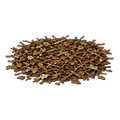 if the compost is really waterlogged, spread some of it out in the sun for a few hours, or mix in drier compost or dry soil;
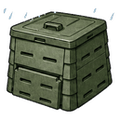 close the lid, or cover the heap with a tarpaulin, during very rainy spells.
Then check the result with the squeeze test: a few drops should bead between your fingers, without running. We explain this test and how often to turn your compost in our guide Compost moisture and aeration.
A cousin of the previous problem, this one is seen before it is smelt: a sticky, greenish mass, sometimes with liquid at the foot of the composter. The most frequent culprit is too many fresh grass clippings: tipped in on their own in a thick layer, they form a compact mat that air can no longer get through.
The fix is the same: shredded material or dead leaves, then a good mix. For grass clippings, get into the habit of spreading them out to dry in the sun before adding them, or keep some aside to mulch the vegetable patch and the base of shrubs. The right balance between "green" and "brown" is explained step by step in our guide Green and brown materials.
A sharp smell, reminiscent of certain household cleaning products, signals too much nitrogen. The mix contains a lot of green materials (grass clippings, kitchen waste, fresh manure) and not enough carbon-rich materials to go with them. The micro-organisms can't use it all, and the excess nitrogen escapes into the air as ammonia. That is fertiliser lost to your garden.
The remedy comes down to two steps: add brown materials, then mix. If you mow a lot, keep the surplus clippings for mulching. Another possible, more unexpected cause: lime, which we discuss below.
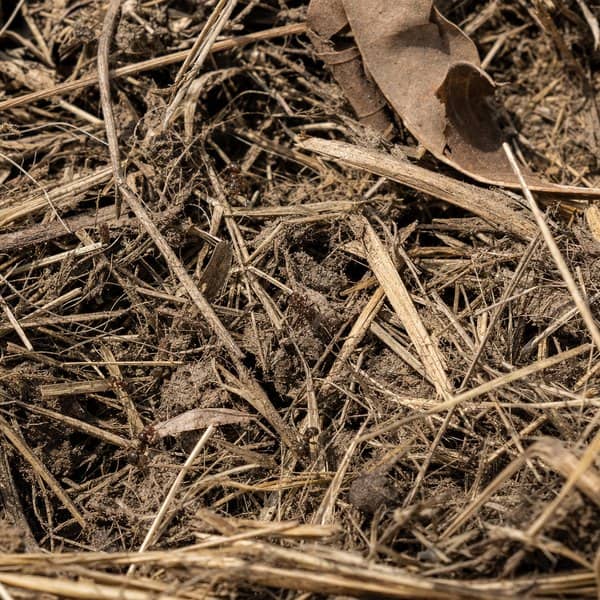
The opposite situation: you lift the lid and find shrivelled leaves, twigs and peelings, almost intact, weeks after you added them. The mix lacks water, and often green materials too. Without moisture, the micro-organisms slow down, then simply stop working.
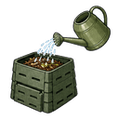 Water while turning, to moisten the whole mass and not just the surface;
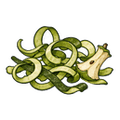 add moist green materials: peelings, vegetable tops from the garden, grass clippings in a thin layer;
 cut up or shred pieces that are too large, as they break down much more slowly;
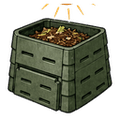 in summer, check the moisture more often.
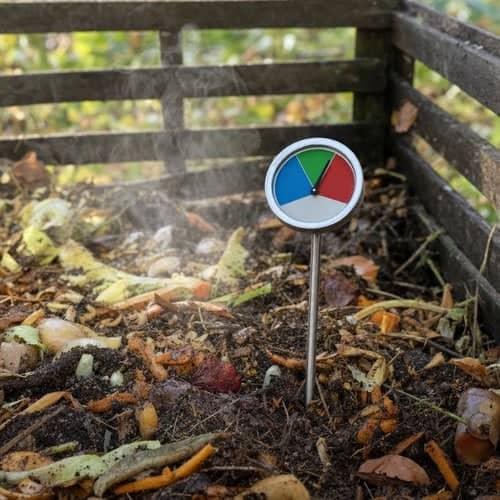 Not necessarily. The explanation is simple: in a household composter, the heat produced escapes easily, and composting usually happens without any marked rise in temperature. That doesn't stop you getting good compost; it simply takes a little longer.
If, on the other hand, nothing seems to have changed for weeks, run through the possible causes:
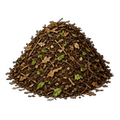 volume: a small heap or a half-empty composter holds its heat poorly; it is better to store your materials for a few days and add a larger amount at once;
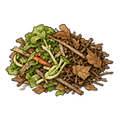 the mix: too much brown slows everything down, too much green suffocates the mass;
 water: too dry or too wet, the result is the same, everything stops;
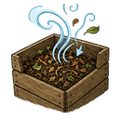 air: compacted compost works at a snail's pace;
 the season: in winter, activity naturally slows, and that is normal (see our guide Composting through the seasons).
One last scenario: your compost did heat up, but it no longer warms up again, even after a good turning. This is usually a sign that it has stabilised and is nearing the end of the process. Check its maturity with the tests in our guide How can you tell if your compost is ready?
Willy's tipWhen correcting compost that is too wet, don't just lay the brown material on top: mix it in through the whole depth, with a fork or an aerator. A dry layer placed on a waterlogged mass only hides the problem.
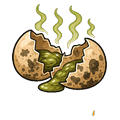 Rotten-egg or sewer smell: lack of air and too much water. Turn, add coarse brown material, protect from rain.
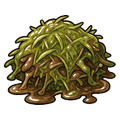 Slimy mass, leaking liquid: too many grass clippings or too much green at once. Add shredded material, mix, dry clippings before adding them.
 Ammonia smell: too much nitrogen, or lime added. Add brown materials, stop using lime.
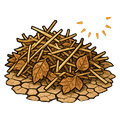 Dry, fibrous, nothing happening: too much brown, not enough water. Water while turning, add green, cut up large pieces.
 Doesn't heat up: small volume, cold season or unbalanced mix. Add larger amounts, rebalance, be patient.
 No longer warms up after turning: compost probably stabilised. Test its maturity.
You still read that compost should be limed to make it healthier. It is pointless, and even counterproductive: lime brings no benefit to compost. Finished compost is already slightly alkaline, and lime encourages ammonia to be released: you lose nitrogen, and you create precisely the smell you were trying to avoid.
The same caution applies to wood ash: sprinkled in small amounts, it causes no problems; added in large quantities, it makes the mix far too alkaline.
Let's be frank: when the air, water and green/brown balance are right, compost works very well without an activator, and a spadeful of mature compost or garden soil already brings in the useful micro-organisms. The rare cases where an activator can give things a boost are covered in our guide Compost activators: useful or not? If you'd like to try one, our Kit to make your own Bokashi & Compost activator lets you prepare it yourself.
Key pointsStrong smell: too much water or too much green, add brown and air. Dry compost that isn't changing: too much brown, add water and green. In both cases, a good turning is often enough to get everything going again.
Compost that smells bad is usually short of air, because it is too wet or overloaded with green materials: brown material, a good turning and a closed lid in rainy weather sort out most cases. Dry, stalled compost needs the opposite: water and green materials. A lack of heat is not a problem in itself in a household composter, as long as the volume is going down. Forget lime, keep a supply of dry material close at hand, and your composter will soon smell like a woodland floor again.
Scan the code or visit mouttafarm.ie/guide: all our practical guides, with links to the products mentioned.


 France
 Belgium
 Switzerland
 Germany
 Austria
 United Kingdom
 Italy
 Spain
 Netherlands
 Portugal
 Sweden
 Finland
 Denmark
 Greece
 Poland
 Romania
 Czech Republic
 United States


