











Best Seller
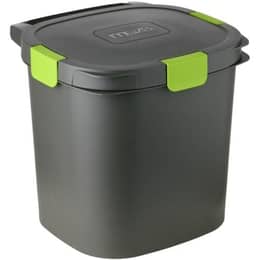
Bokashi Confort Composter
14-litre capacity, available individually or as a set of 2
€50.22
Fast and odourless, compost worms eat your waste and turn it into worm casting for your plants.

From 2 to 4 trays, with an optional planter.

Up to 18 growing areas around a central wormery.

Terracotta with flower pot.

2 to 4 trays with a lower shelf.

Trays you add over time, for easy harvesting of vermicompost.

Turn your planters and flower beds into a wormery: WORMacotta, In-Ground.
 Practical guide

From the kitchen to the garden, your compost becomes simple, quick, and effective for everyone.
 Practical guide
 Practical guide
Live animals (worms and bait) and products to feed and look after pets and farm animals.

Eisenia compost worms for your wormery or composter.

Ultra-fresh worms: Compost, Dendros and Canadian from 100 g up to 1 kg.

Natural solutions dedicated to the wellbeing of horses, ponies and donkeys.

Optimise the health and performance of your farm.

Mealworms, natural and nutritious supplements.
Enhance your home with our decorative items and care for your house in a natural and sustainable way.
Tend your garden in an eco-friendly and nature-conscious way, for healthy and lasting plantings.
EM-based products created to enrich soils, protect plants, support animal health, and make everyday well-being and maintenance easier.

Contains a blend of 80 families of beneficial microorganisms.

Revitalise, purify and improve water quality in all your applications.

Stimulate soil microbial activity and plant growth.

Cleanse and maintain your environment naturally.

For the wellbeing and health of pets, livestock and horses.

Enrich your body care or dietary routines with essential enzymes.
 Practical guidePractical guide

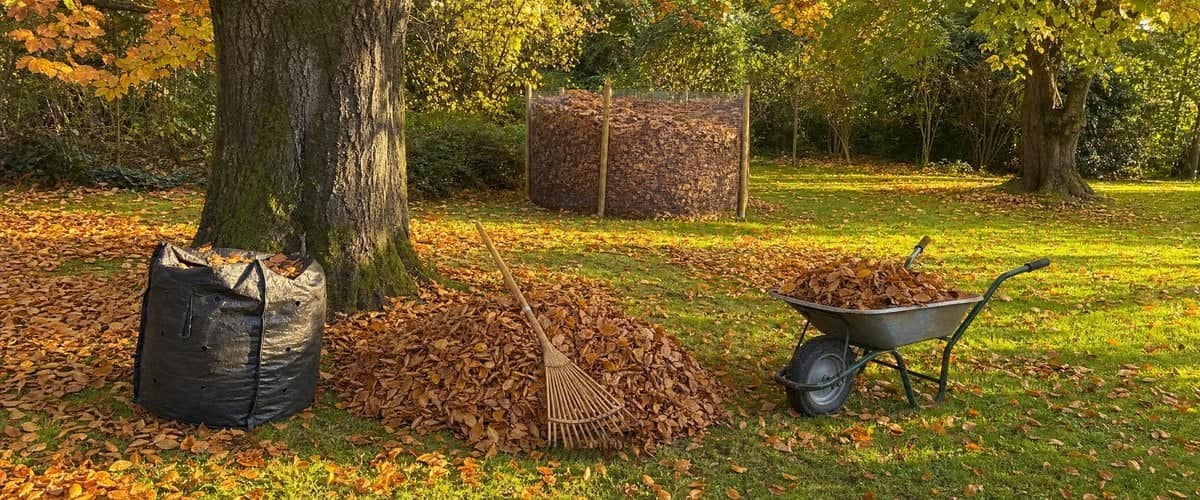
Every autumn, it is the same scene: leaves pile up on the lawn, along the paths and at the foot of the hedges. Many gardeners bag them up for the tip or, worse, burn them, which is prohibited. That is a shame, because fallen leaves are a free and plentiful resource.
You can of course add them to your compost bin. But you can also turn them into a product in its own right, much prized by gardeners: leaf mould. Here is how to make it successfully, which leaves to choose and how to use it.
In a compost bin, it is mainly bacteria that do the work, on a mix of green and brown waste. A heap of leaves on their own behaves differently: decomposition is carried out mainly by fungi, slowly and without heating up. That is why more patience is needed.
The result is different too. Leaf mould is low in nutrients: it is not a fertiliser. On the other hand, it is an excellent soil improver, with a fine, crumbly texture, which improves soil structure and helps it retain water. That is exactly what you want for sowing, mulching or lightening heavy soil.

Not all leaves break down at the same speed. Here are the general trends:
 Oak, beech and hornbeam make the best leaf mould and break down without any particular help.
 Sycamore, walnut, horse chestnut and sweet chestnut are much slower: shred them first, or put them in the compost bin instead.
 Holly, aucuba and cherry laurel, with their tough evergreen foliage, are best shredded and put in the compost bin.
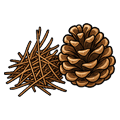 Conifer needles do eventually break down, but they take two to three years. Kept separate, they produce an acidic leaf mould, useful for ericaceous plants.
You will sometimes read that oak leaves are “forbidden” in compost. That is a myth: on the contrary, they are among the best. Thick, slow leaves, such as walnut, simply need shredding.
Two precautions: preferably collect healthy leaves, and leave out those from roses affected by black spot (marsonia). Also avoid leaves collected along major roads, which may be polluted, and pick out any litter if you collect them from the street.
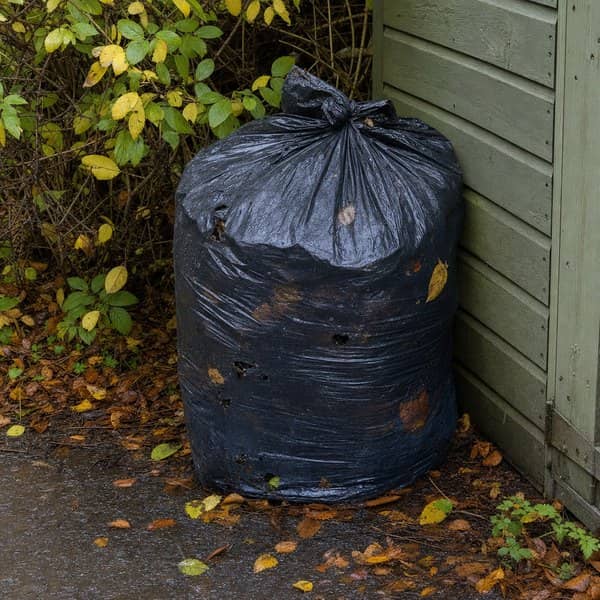
This is the ideal method for small gardens. Fill a large bin bag with leaves, moisten them if they are dry, then pierce a few holes in the bag with a fork or a knife to let air in. Close it loosely and store the bag in a shady corner, out of sight. Then all you have to do is wait.
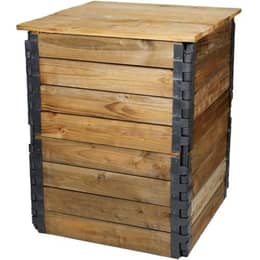
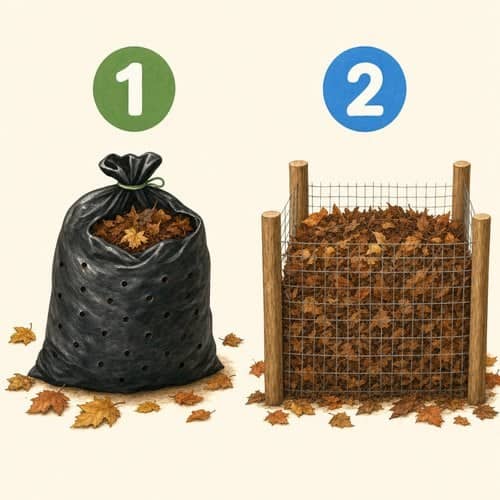 If you have a lot of leaves, build a square or round wire mesh enclosure, held up by four stakes, in a spot sheltered from the wind. The bigger the heap, the faster it breaks down. Fill it up over the course of the autumn and water it if it dries out, particularly during hot summers. A slatted compost bin such as the Compostys wooden compost bin can also serve as a leaf silo. In the illustration: the bag method (1) and the wire mesh cage method (2).
Willy's tipCollect your leaves in damp weather, just after rain: they pack down better, and you will not need to water them before bagging them.
There is no need to invest in a shredder for leaves. Simply run the lawnmower, with its grass box fitted, over the leaf-covered lawn. It chops and collects them at the same time, which noticeably speeds up their decomposition. Bonus: a little cut grass mixes in with the leaves and provides nitrogen that enriches the leaf mould.
On a path or a patio, rake the leaves into a pile, spread them in a thin layer over the lawn, then run the mower over them.
You need to be patient: most leaves take around two years to break down completely. Expect an initial product usable as a soil improver after about a year, then one to two more years to obtain fine, dark leaf mould rich in humus.
To save time:
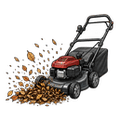 shred the leaves;
 keep them moist, never waterlogged;
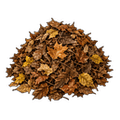 make the heap as large as possible;
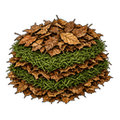 add nitrogen, for example by alternating layers of about 30 cm of leaves with a little roasted hoof and horn or poultry manure, or nettle tea.
These nitrogen additions are natural activators. We look at how useful they really are in our guide Compost activators: useful or not?
Depending on its age, leaf mould has several uses:
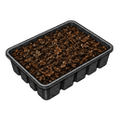 Sowing: well-rotted leaf mould, more than two years old, can be used as it is for sowing seeds.
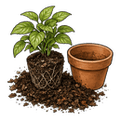 Potting: mixed in equal parts with sand, compost and good soil, it makes an excellent growing medium. We go into these mixes in detail in our guide Making your own potting compost.
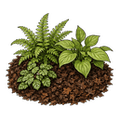 Mulching: younger or coarser leaf mould can be spread as a mulch at least 5 cm thick, from late autumn to late winter.
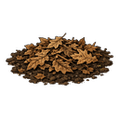 Soil improver: dug into the soil, it lightens heavy soils and helps sandy soils hold water.
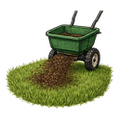 Lawn: sieved, it can be spread in a thin layer in autumn.
A heap of leaves may contain weed seeds: avoid using it where their germination would be a real problem.
Did you know?In the forest, nobody collects the leaves: they protect the soil from drying out, feed a host of organisms and slowly turn into humus. Leaf mould simply recreates this natural cycle in the garden.
Fallen leaves are also an excellent carbon-rich brown material for your compost bin. The problem is that they all arrive at once, in autumn, whereas your peelings arrive all year round. The solution: fill a few bags with dry leaves and store them next to the compost bin. That way you will have a supply of “browns” to balance your kitchen waste until spring. We explain this balance in our guide Green and brown materials.
For a wormery, however, we recommend brown cardboard as the dry material instead: leaves collected from the garden can bring in slugs, insect eggs or unwanted seeds. We explain this in our guide on what you can feed your worms.
Key pointsOak, beech and hornbeam: in a bag or a cage for leaf mould. Tough or evergreen leaves: shredded, in the compost bin. And in every case, keep a few bags of dry leaves in reserve for the year.
Fallen leaves are not waste but a resource. In a pierced bag or a wire mesh cage, kept moist and preferably shredded with the lawnmower, they turn in around two years into fine leaf mould, ideal for sowing, mulching and improving the soil. Slow or tough leaves are better off in the compost bin, where they will serve as brown material all year round. A little patience is all it takes to give back to the soil what the trees gave it in autumn.
Scan the code or visit mouttafarm.ie/guide: all our practical guides, with links to the products mentioned.


 France
 Belgium
 Switzerland
 Germany
 Austria
 United Kingdom
 Italy
 Spain
 Netherlands
 Portugal
 Sweden
 Finland
 Denmark
 Greece
 Poland
 Romania
 Czech Republic
 United States


