

































 BokashiNew in
Bokashi: compost all your kitchen waste, even without worms
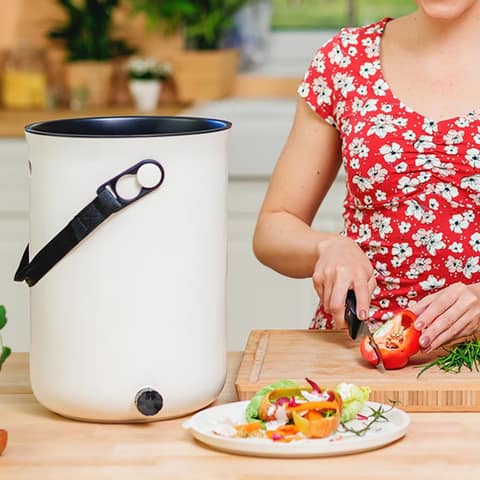
New at the farm: bokashi, a Japanese method that ferments your kitchen leftovers, including meat and dairy products. No smell, and not a single worm!

- Bokashi ferments waste instead of letting it decompose.
- It accepts the leftovers a wormery won't take: meat, fish, dairy products.
- An airtight bucket and an EM micro-organism activator are all you need to get started.
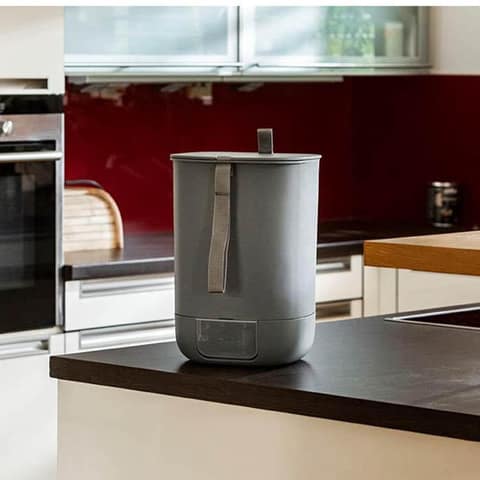
Do you like the idea of reducing your waste, but aren't quite ready to welcome earthworms into your kitchen? Or perhaps you already have a wormery and don't know what to do with leftover meat and cheese? Moutta Farm is welcoming a new family of composters: bokashi buckets.
What is bokashi?
"Bokashi" is a Japanese word meaning "fermented organic matter". The principle is simple: instead of leaving your waste to decompose in the open air, it is fermented in a closed bucket.
This fermentation is carried out by effective micro-organisms, known as EM, supplied by an activator that you sprinkle over the waste. These "friendly" bacteria transform the organic matter by maceration, rather like sauerkraut. The result: no rotting and no unpleasant smells in the kitchen.
All your meal leftovers, even the ones Willy refuses
This is bokashi's great strength. In a wormery, the worms don't like meat, fish or dairy products. The bokashi bucket, on the other hand, accepts them:
- fruit and vegetables, raw or cooked;
- meat, fish and fish bones;
- dairy products;
- ready meals, bread, cakes;
- coffee grounds.
However, you should never put in plastic, glass, metal, liquids, ash, sand or excrement. The full list is on our page what to put in a bokashi bin.
How does it work day to day?
It takes just four steps:
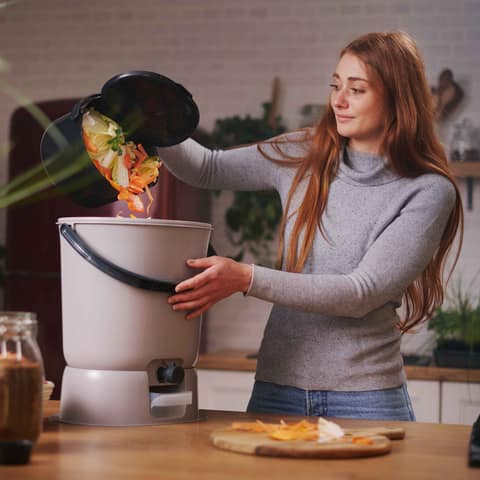
- Place your kitchen leftovers in the bucket.
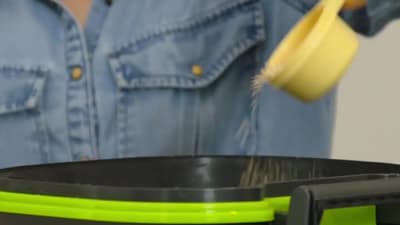
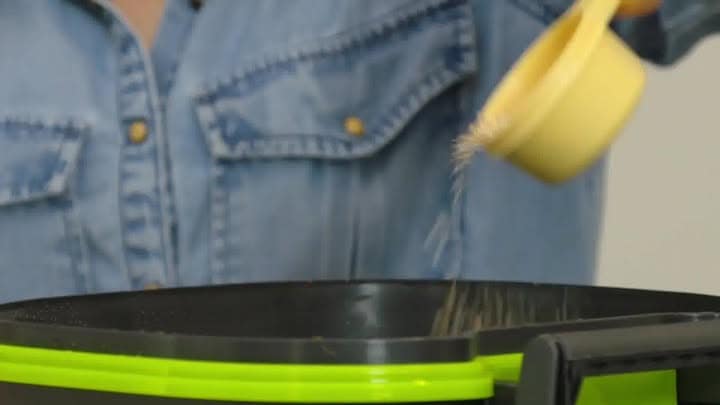
- Sprinkle a thin layer of bokashi activator over the top.
- Press down firmly to push out the air: fermentation takes place without oxygen.
- Close the airtight lid.
During fermentation, a liquid drains to the bottom of the bucket. You collect it using the tap. Once the bucket is full and fermentation is complete, the fermented waste goes into the garden, the compost bin or even the wormery, where it enriches the soil.
Bokashi or wormery: why not both?
Bokashi doesn't replace the Willys, it complements them. The bucket deals with the leftovers the worms won't eat, and the wormery turns peelings into a very rich vermicompost. Many families use both together. To choose the method that suits you, read our comparison bokashi, compost or vermicompost.
To find out everything about this method, head to our page bokashi: what is it?, then discover our bokashi composters.
Going further


New posts, tips and behind the scenes: Willy and Emy write to you.

 France
 Belgium
 Switzerland
 Germany
 Austria
 United Kingdom
 Italy
 Spain
 Netherlands
 Portugal
 Sweden
 Finland
 Denmark
 Greece
 Poland
 Romania
 Czech Republic
 United States
