












[ UL/2/IV ]
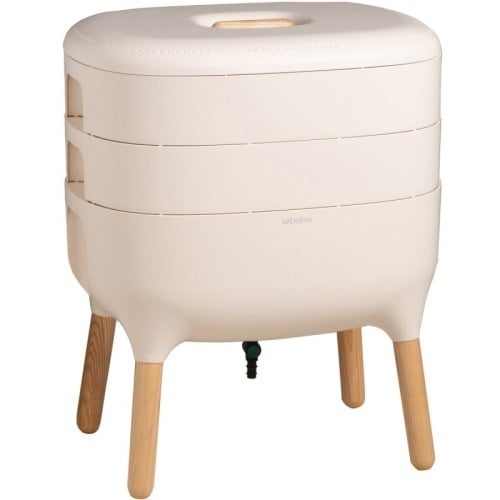
Wormery Urbalive
2 plates - Ivory
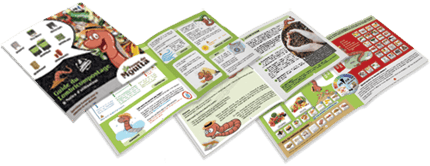
See the description
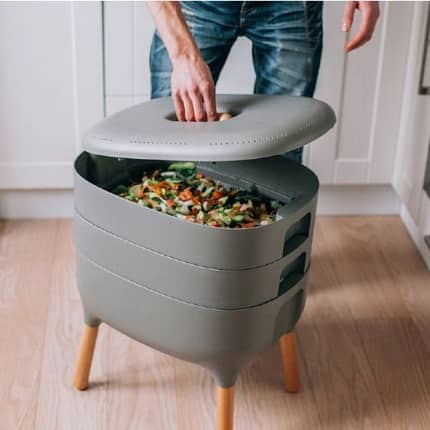
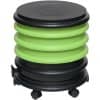
- Transform your kitchen waste into a natural, nutrient-rich compost.
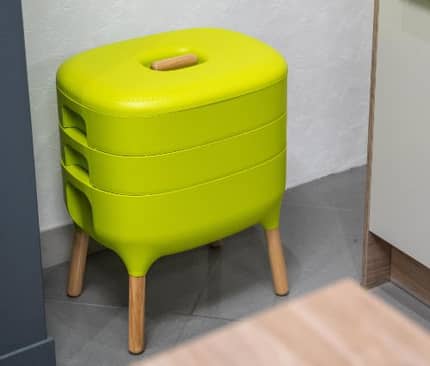
- Its modern and stylish design by Jiří Pelcl, Red Dot Design Award winner, brings elegance and sophistication to your home.
- Composting is swift and efficient thanks to its handy 2 or 3 trays.
- Wooden legs and durable plastic ensure both longevity and an attractive look.
- A clever filter prevents compost worms from falling into the juice tray.
SIZE 2 plates

2 plates
3 trays
COLOUR Ivory
152,73 €
In stock
Delivery to you between Thursday 15 October and Monday 19 October, starting from 10,50 € for the country  Ireland. Calculate your delivery fees in your basket, we deliver to 41 countries.
Ireland. Calculate your delivery fees in your basket, we deliver to 41 countries.OPTIONS +7 available Bundle and Save


-
+
Pay in 2x, 3x or 4x with
Pay in instalments with
For this purchase of 152,73 €, you can pay in:
2 instalments by card
Due today77,69 €
Then 1 x per month76,36 €
Total amount due154,05 €
Including fees1,32 €
3 instalments by card
Due today53,55 €
Then 2 x per month50,91 €
Total amount due155,37 €
Including fees2,64 €
4 instalments by card
Due today42,14 €
Then 3 x per month38,18 €
Total amount due156,68 €
Including fees3,95 €
Borrowing money costs money and must be repaid. Check your ability to repay before committing.
How does it work?
- Add your items to the basket and place your order.
- At checkout, choose payment in instalments with Alma.
- Fill in the requested details on Alma’s secure page and you’re done.